



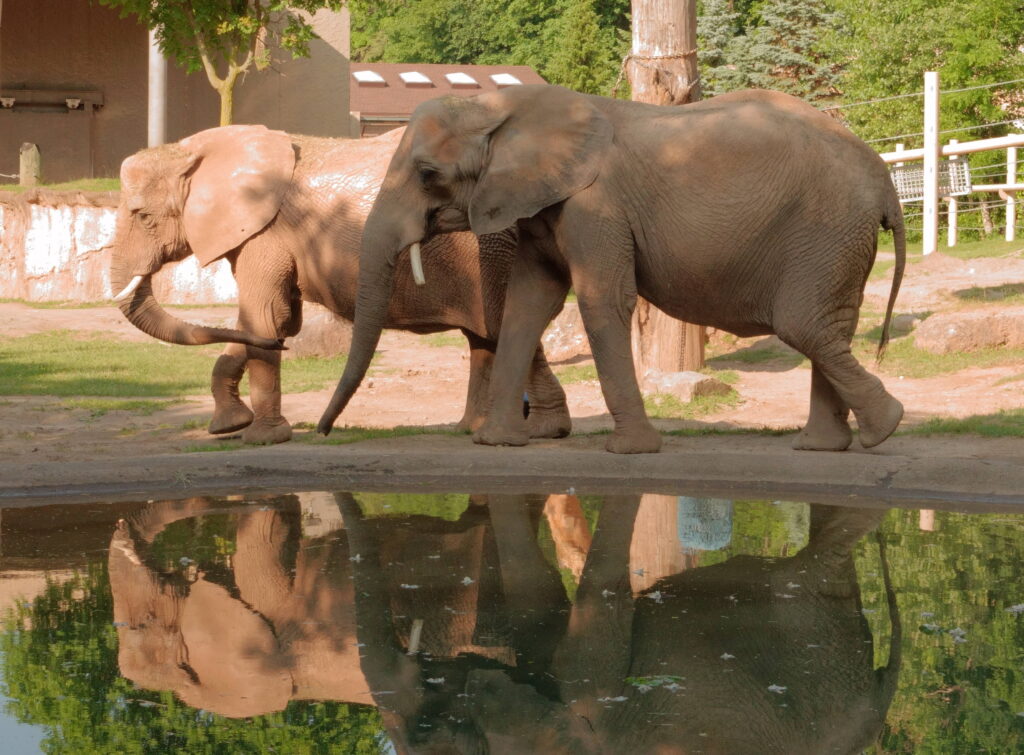
What has twelve legs, weighs more than twelve tons, and acts as an ambassador to an international foundation? Why the Seneca Park Zoo’s (SPZ) trio of African elephants, of course. Meet Genny C, Lilac, and Mokie!
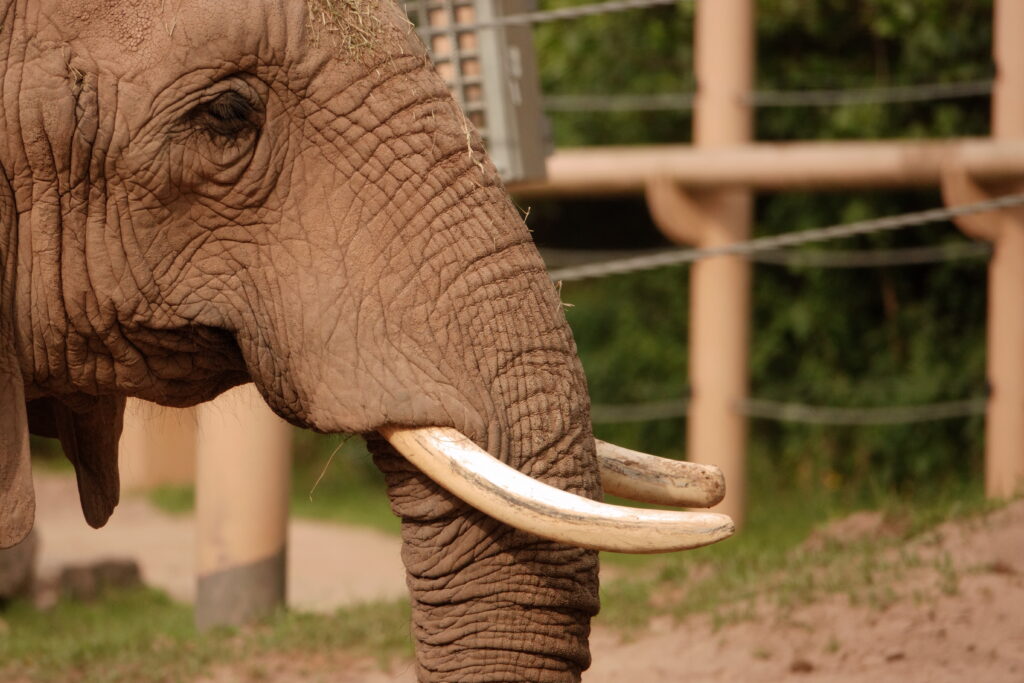
At age forty-nine, Genny C is the oldest elephant at SPZ and one of the oldest in American conservation care. Genny C is a patient and vocal elephant who enjoys spending time with her caregivers. Because of her age and arthritis in her joints, her tusks were trimmed. This takes some weight and pressure off her legs. The shorter tusks also make it easier for her to get up after sleeping on her cozy hill in the barn. After all, a lady’s got to rest!
Lilac, age forty-eight, was born in 1978 and came to SPZ in 1979 with Genny C. She is the spunky girl, always interested in the new enrichment toys and games the zookeepers provide. She enjoys playing chase—even if Genny C and Moki aren’t into it—and makes her trainers work hard to win her over. See if you can spot her fuzzy red hair on top of her head!
Moki, age forty-four, came to SPZ in 2015. She is the elephant who is extremely food-motivated and loves sharing hay baskets with Genny C. Moki is the heaviest of the bunch at 9,000 pounds. She enjoys waving and stretching her trunk—and can even make a unique sound from it!
All three are beloved ambassadors for their species and the only African elephants in New York State. “Their presence has inspired many New York residents to care for and conserve elephants and the places they live,” says SPZ Zoo Keeper, Kat Kleinschmidt. “African elephants are very expressive and it is rewarding to learn each of their personalities.”
Elephants are the largest living animal on the planet, so it’s no wonder they impress zoo visitors. Out of the three species of elephant, Genny C, Lilac, and Moki are from those that grow to be the biggest: African bush elephants. They are slightly larger than African forest elephants, and have wider ears than Asian elephants. Over the course of the day, they eat 300 pounds of food (including leaves, branches, fruit, and grass) and drink fifty gallons of water!
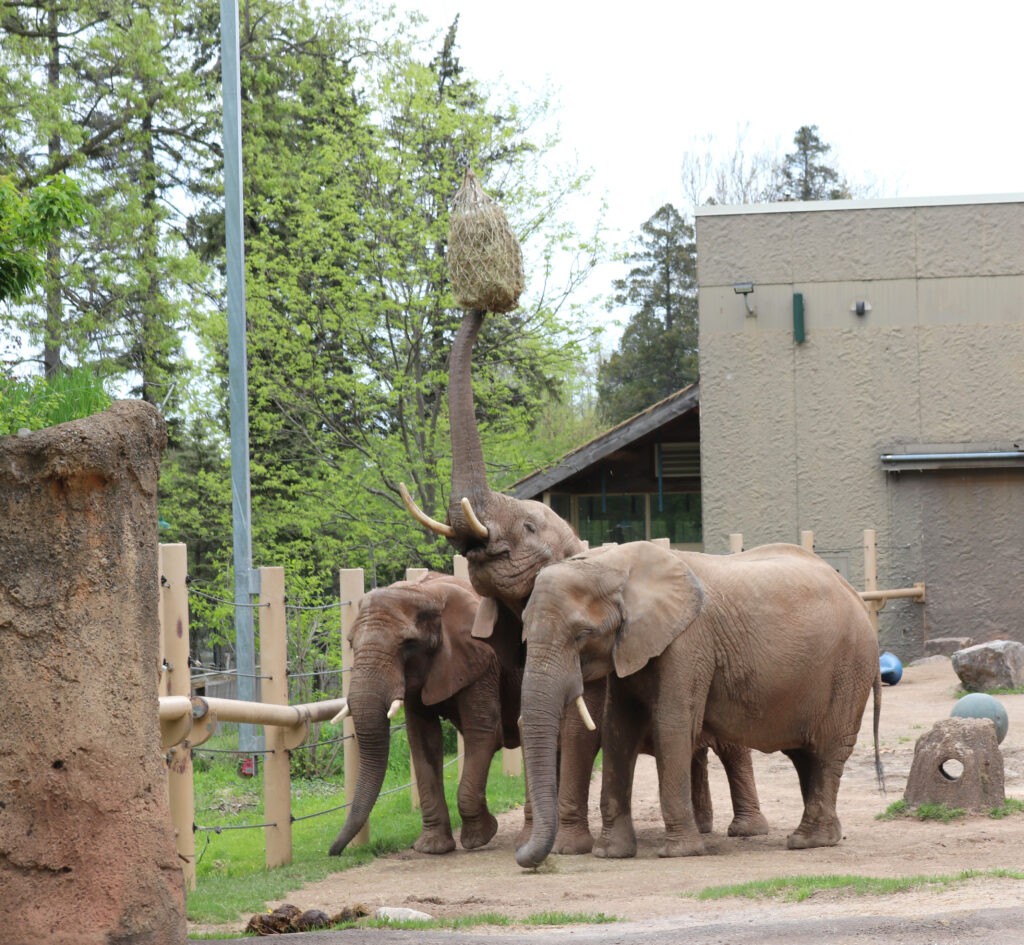
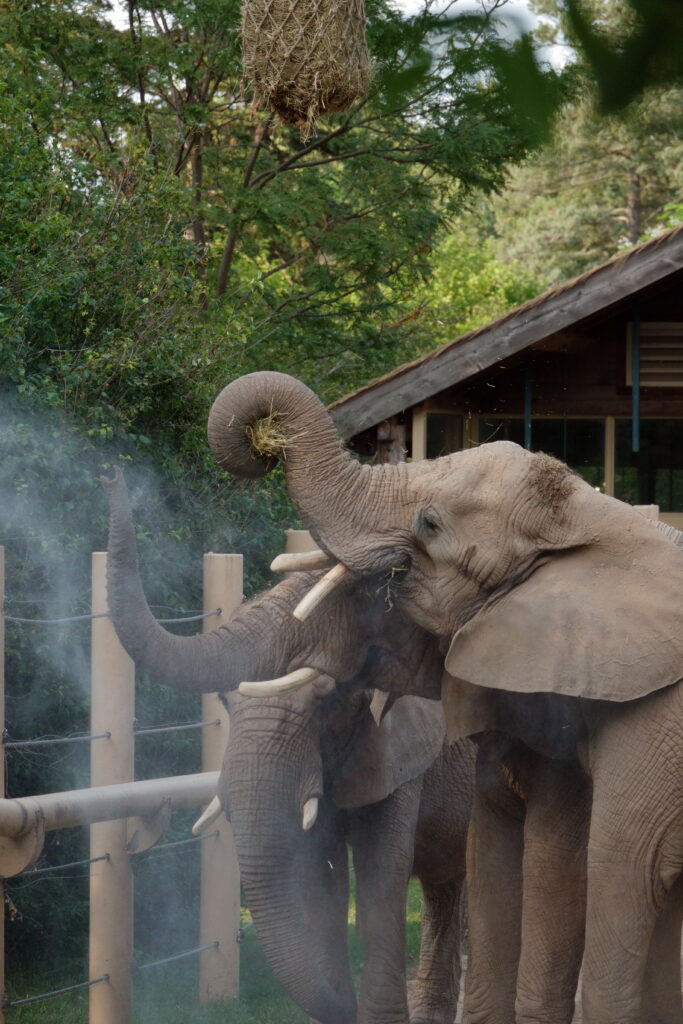
These weighty friends are extremely strong and smart. All three understand and respond to more than fifty verbal commands. This also makes creating enrichment opportunities a challenge—the zookeepers have to always be one step ahead of them. They give the small “herd” balls to play with, ropes to tug, and containers filled with treats for them to manipulate. That is where their trunks become key.
An elephant’s trunk has more muscles in it than the entire human body! Not only can an elephant siphon up to two and a half gallons of water into its trunk to drink or spray, but it can also act like a hand, nose, foot, and snorkel, reaching out to eight feet long. When a baby elephant is born, it it takes longer to learn how can stand and walk quickly, but to operate its trunk.
Both male (“bull”) and female (“cow”) African elephants have tusks, which are used for digging, lifting, moving, and defending. While people can be right or left-handed, elephants can be “right-tusked” or “left-tusked.” You can usually tell which side they favor because one tusk will be more worn down than the other. These special teeth will grow throughout their lives.
Sadly, an elephant’s tusks are one of the reasons they are an endangered species. Poachers (people who illegally hunt animals) hunt elephants so they can take and sell their ivory tusks. A second main reason for their endangerment is environmental. Humans are reducing the range of the elephants’ forests and grasslands in Africa (and Asia).
By the end of 2026, the Seneca Park Zoo Society will have donated $100,000 to the International Elephant Foundation.
“The International Elephant Foundation is a global leader in protecting African and Asian elephants,” says Kleinschmidt. “Their support in conservation projects assists in reducing human-elephant conflict, restores ecosystems, combats poaching, and uplifts local communities who live alongside elephants.”
Every visit to SPZ helps promote the understanding and importance of each species, the environment, and animal rescue efforts. For anyone who would like to get to know Genny C, Lilac, and Moki a better, tickets can be bought for an Elephant Encounter. The price of $150 includes a conservation donation and makes a great gift for those age eight and up. Available Sundays and Thursdays, visitors can tour the elephants’ barn and learn more about each of the girls!
Whether you can come to SPZ just once, monthly, or weekly this season, make sure to take the “Step into Africa” and say hello to these amazing elephant ambassadors.
senecaparkzoo.org/african-elephant
This article originally appeared in the Summer 2026 issue of (585) Kids.
Views: 12