




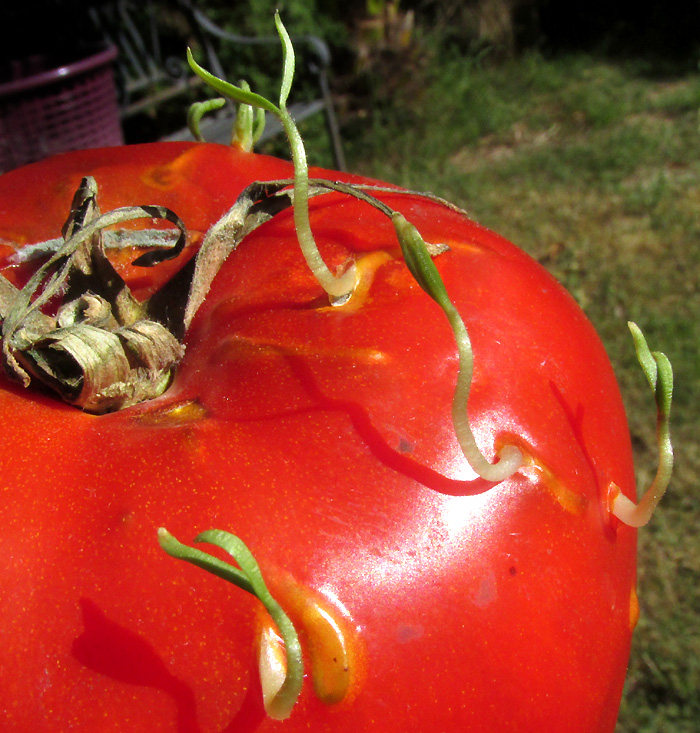
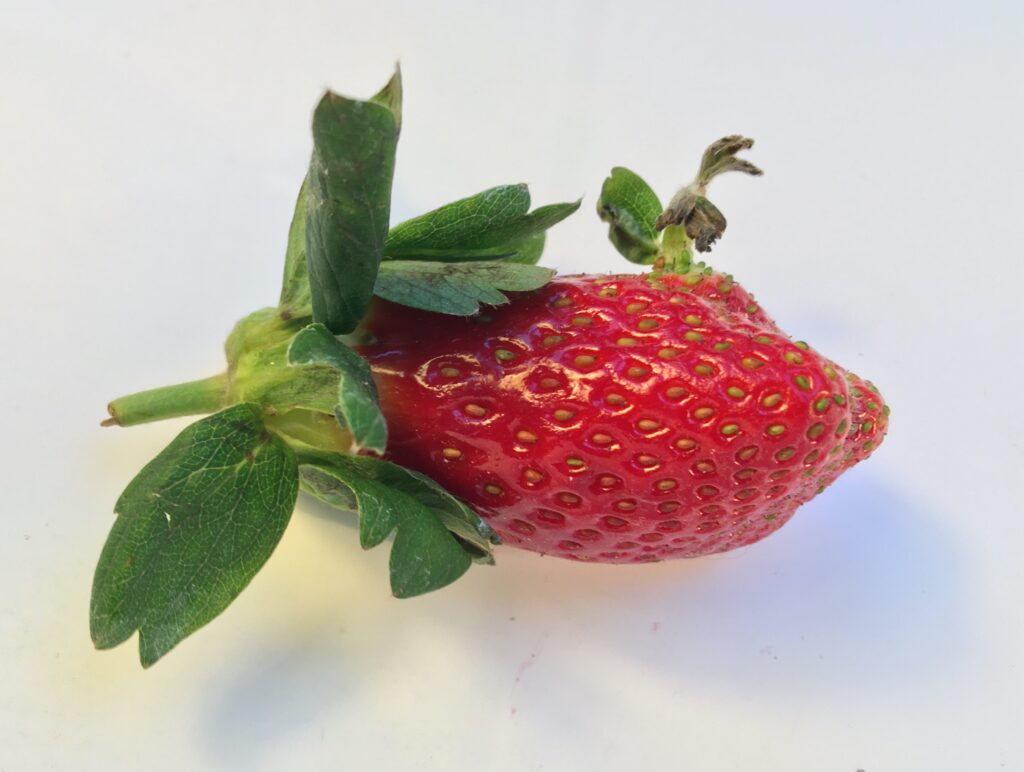
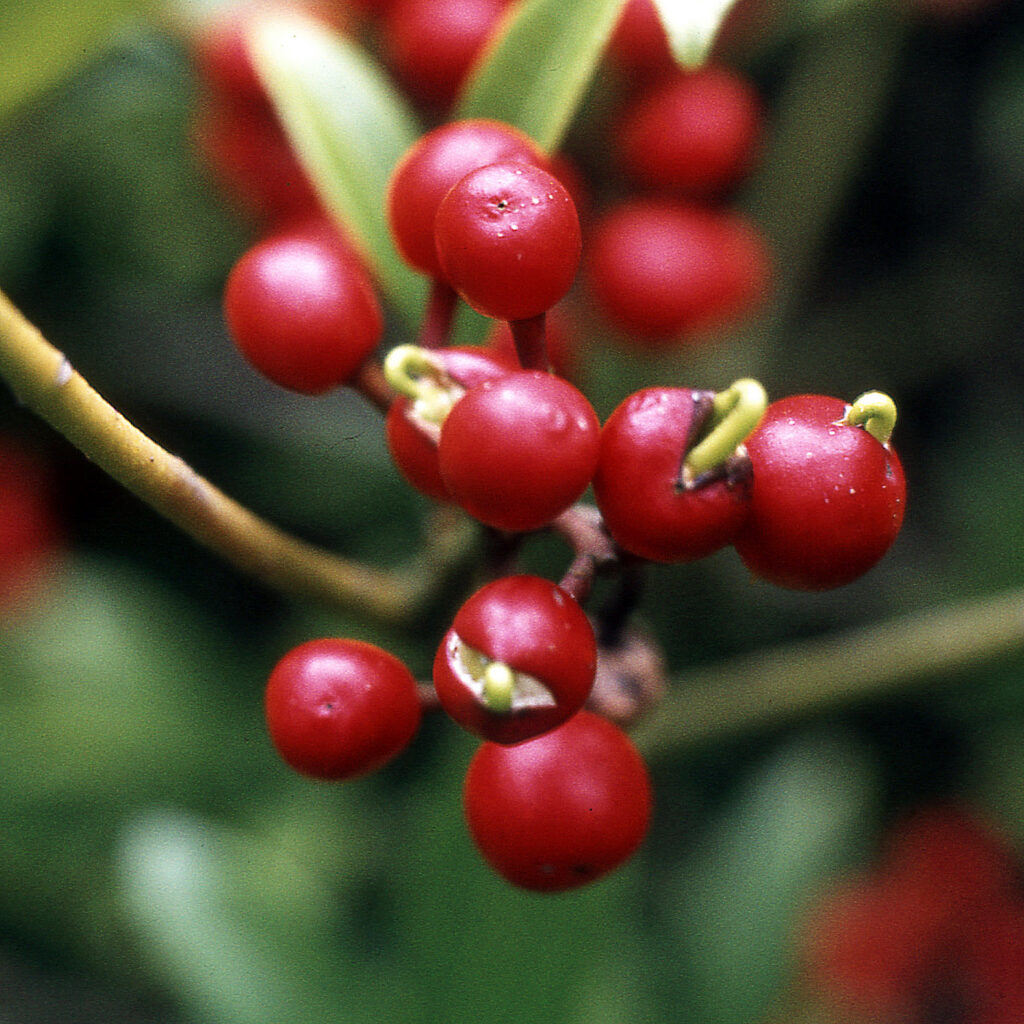
Have you ever cut into a pepper and found a pepper growing inside? How about a tomato?
Vivipary means “live birth.” In the animal world it means giving birth to offspring that grow in the female’s body. (Thus we humans are viviparous.) In plants vivipary is a condition that occurs when the plant’s seeds begin to germinate before they are separated from the parent fruit. In order to succeed seeds need to spread out from each other so they don’t compete.
In most plants a hormone, abscisic acid, stops germination from occurring until after the fruit decays or the seeds are dispersed. Sometimes there isn’t enough hormone produced due to growing or harvesting conditions. Vivipary can occur in tomatoes, peppers, mangroves, citrus fruits, corn, strawberries, avocados and many other plants. In corn it may occur when the kernels have lost about 80% of their moisture and then it rains. Germination occurs from all the individual corn kernels … quite a sight!
Is vivipary bad? (I admit it’s fun to see.) Vivipary can be a problem for producers where it is often caused by growing conditions we cannot control. An example of this is vivipary in pecans. If pecans germinate before they are harvested there will be no pecans to sell. Growers thin out pecan fruits to reduce the chance of this happening.
LOOK FOR VIVIPARY IN THE FOLLOWING FRUITS:
– Apples – it is most common in ‘Pink Lady’ and other high-moisture-content varieties
– Citrus fruits – when overripe
– Corn – when kernels are dry and then get wet
– Peppers – these sprouted seeds can be planted! I did it.
– Pumpkins and other squash – you probably have seen this.
– Tomatoes – these sprouted seeds can be planted too!
– Strawberries – seeds are on outside of the fruit so vivipary is easy to see and you’ll see lots of tiny leaves. The strawberry fruit doesn’t even look like a strawberry!
Vivipary in plants is seldom helpful with the exception of tropical mangroves. When their fruit decays and the developed seedling falls it is able to root and develop rapidly.
Fascinating!
Carol Ann Harlos is a Master Gardener with Cornell Cooperative Extension, Erie County.
This article originally appeared in the March/April 2026 issue of Upstate Gardeners’ Journal.
Views: 22