


Have you ever stopped to think about how the human body is an amazing machine? It can grow, feel, think, heal, move, hear, adapt, see … need I go on? Now a new exhibit at the Rochester Museum & Science Center (RMSC) will have you in awe of your body’s power—and its potential for more! Super Human: Power of Technology opens at RMSC on Friday, October 2, and museum staff can’t wait for visitors to check it out.
“A few years ago, we ran a survey asking people about the types of topics they would like to see from traveling exhibits at the RMSC,” says Calvin Uzelmeier, vice president of programs and exhibits at RMSC. “Near the top of the results were the human body, human medicine, and medical technologies.”
RMSC began searching for something special that would fulfill those interests. When they learned about Super Human, they were excited to book them for Rochester families. Another bonus? It was developed by Sci Tech, the same Australian science center that created RMSC’s popular Astronaut exhibit from the past year!
According to the website about the Super Human experience, it “explores how technological advancements and medical breakthroughs have revolutionized the way we live, opening new possibilities and making the world a more inclusive place. A world where people can see, hear, and communicate more easily—where we can use technology to increase the potential of the human body.” Many of us already use some of these tools, like glasses, hearing aids, and communication apps.
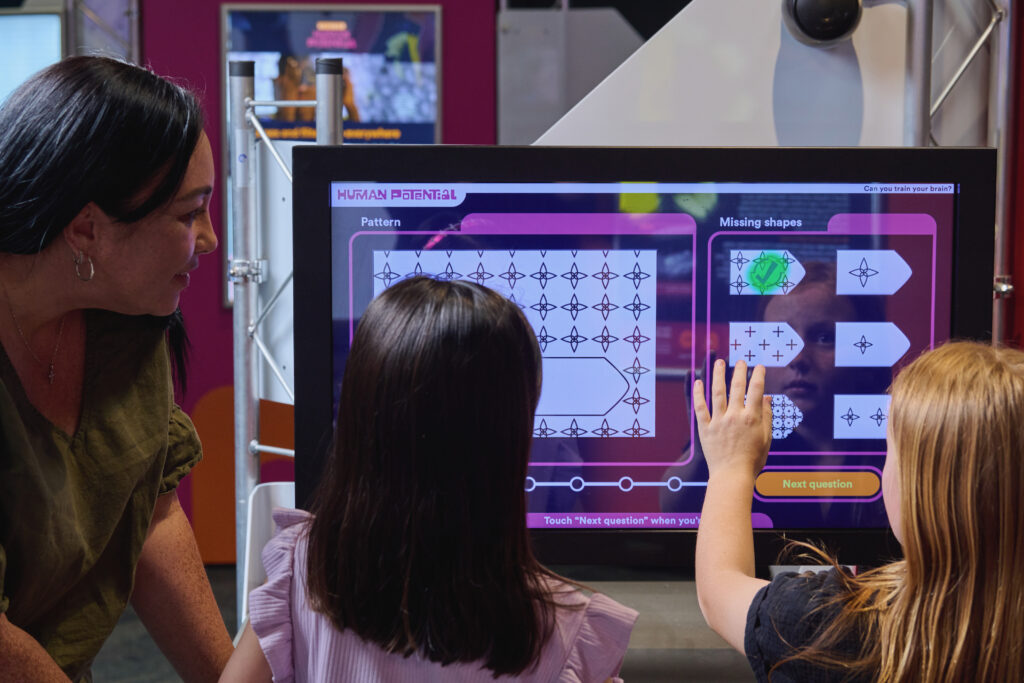
“One of the things I love about the exhibition is how the experiences are built to encourage people to do things together and have conversations about what they are experiencing,” says Uzelmeier, who adds that having fun, learning, and socializing are at the heart of what an RMSC experience should be.
The activities are targeted to ages 5 to 12 and their families, but anyone interested should check it out. For example, visitors can:
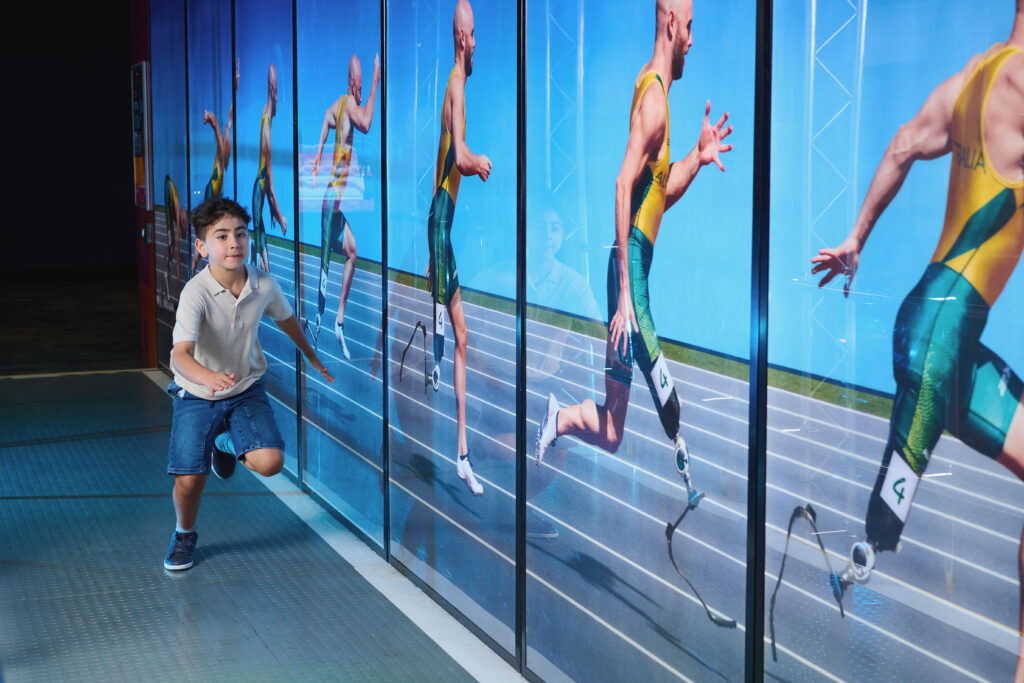
• Race against a simulated Paralympian with prosthetic limbs.
• Pilot a virtual jet pack and land it before running out of fuel.
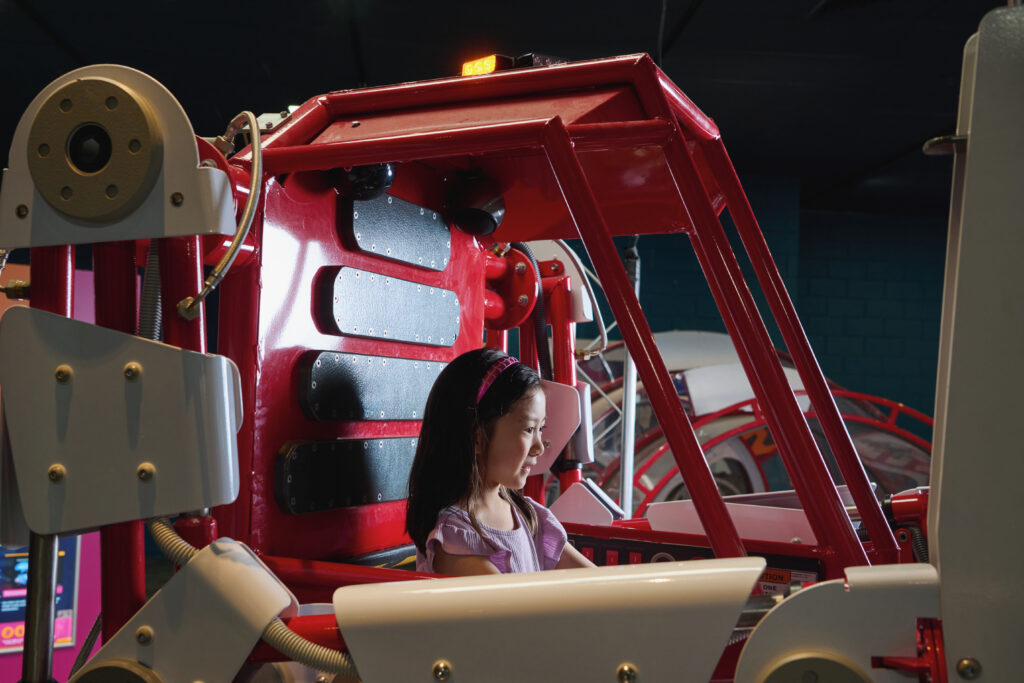
• Sit inside a giant exoskeleton and practice lifting heavy loads.
• Try to move a ball using mind control.
• See in the dark with night-vision goggles.
• Control a robotic arm through their own gestures.
• Use voice commands to activate appliances.
• Test their aerodynamics in a wind tunnel.
Plus so much more! With twenty-three different displays to engage with, there is something fun for everyone.
Another thing this exhibit makes clear is that scientists and inventors take a lot of their ideas from nature. They ask, “How do nocturnal animals see in the dark, and how can I apply that to human eyes?” Or “How do birds fly, and how can I mimic their wings for humans?” Then they experiment with science and tech ideas that might work.
While all these gadgets are really cool, there is another side to human enhancements: ethics. Ethics are our standards for what is right and wrong. Just because humans can do or create something, does it mean we should?
The exhibit will challenge guests with ethical questions like, “Should gene editing be used to enhance human abilities?” Families and friends can discuss their answers, looking at the pros and cons of ever-advancing technology. When you focus on those tools that assist people with a physical or sensory impairment, it’s hard to argue against it.
“I hope visitors come away with a greater appreciation for the medical marvels that have revolutionized the way we live, and recognize the potential in themselves to discover the next great advancement,” says Uzelmeier.
Speaking of medical marvels, it is worth noting that the top two employers in the Rochester area are related to medicine. Anyone getting their annual check-up probably visits an office that is part of the University of Rochester Medical Center or Rochester Regional Health. Both are staples in our medical community, employing around 50,000 practitioners plus educators and researchers. Being around all those buildings and personnel can lead to inspiration for kids, teens, and young adults to seek medical careers. If Super Human helps get youth and their caregivers excited about science, technology, engineering, and math (STEM), that can help a whole lot of people and communities in the near future.
“Projections indicate employment in healthcare jobs in the US are going to grow much faster than the average for all other occupations over the next decade, and a reliance on technological advancements in healthcare must meet population needs,” says Uzelmeier. “We need to encourage both the current and next generation of emerging professionals to pursue careers in the fields of healthcare.”
“Everything from bionic arms to jet packs to cochlear implants were created by someone who was once a kid wondering, “Can I do that?’” he says. “I hope everyone comes away from Super Human realizing they are a super human, capable of any of those things, and more.”
This article originally appeared in the Fall 2026 issue of (585) Kids.
Views: 1