




GARDEN COACHES AND CONSULTANTS—SHOULD YOU HIRE ONE?
If you are planning a garden from scratch, or you have an existing garden but you need hands-on help and advice, a coach could be just what you’re looking for. Unlike a landscaper who does the work for you, a coach can teach you how to develop and maintain your own garden, working with you on skills like pruning, soil preparation, watering, and mulching. They can do a walkthrough of your garden and possibly give you ideas you may not have considered, as well as recommending plant varieties and tools. And coaches are not just for beginners. “Clients benefit from a garden consultant’s extensive experience with plants that work well in upstate New York growing conditions, as well as a fresh set of eyes to help come up with new solutions to existing garden challenges,” says Chrys Gardener of Chrys Gardener Designs in Ithaca. Among the services that she likes to provide are “coming up with different ideas for garden layout including planting beds, paths and outdoor entertaining areas, and providing quick sketches on site to help clients visualize some of these ideas.”
A coach can prove far superior to online searches—nothing beats a knowledgeable person. “A garden coach gives you something Google can’t,” says Kathleen Kepler of Sara’s Garden Center in Brockport. And that is “personalized, on‑site guidance tailored to your yard, your goals, and your skill level.” Getting things right the first time using a coach could potentially save a lot of work and frustration—and even money. “Instead of guessing which plants will thrive, a coach helps you choose the right varieties for your sun, soil, and space,” Kepler explains. And before you give the task to an AI agent, you might want to consider human-based knowledge and creativity for your growing space. “We’ve seen more AI designs than ever this season,” Kepler says, “and they are 99% generating designs using the same plants over and over and over again!” She stresses the need for personalized choices over generic suggestions: “Your plant choices need to fit your garden conditions and ideas for maintenance. AI is not going to give you that.”
PLANT BULBS, BUT MAKE IT UNIQUE
Looking for something more inspired than planting a few more tulips and daffodils this fall? For a more colorful landscape when spring comes, branch out by trying out some cool bulb specimens that will add interest and dimension.
Alliums: Laurie Broccolo of Broccolo Tree and Lawn Care in Fairport loves alliums, and she points out that they aren’t limited to the tall globular specimens—they come in a huge variety of sizes, shapes, and colors. “There’s so many different kinds … there are shorter ones,” she says. She recommends checking out the “Mediterranean bells” variety, noting that they are beloved by hummingbirds.
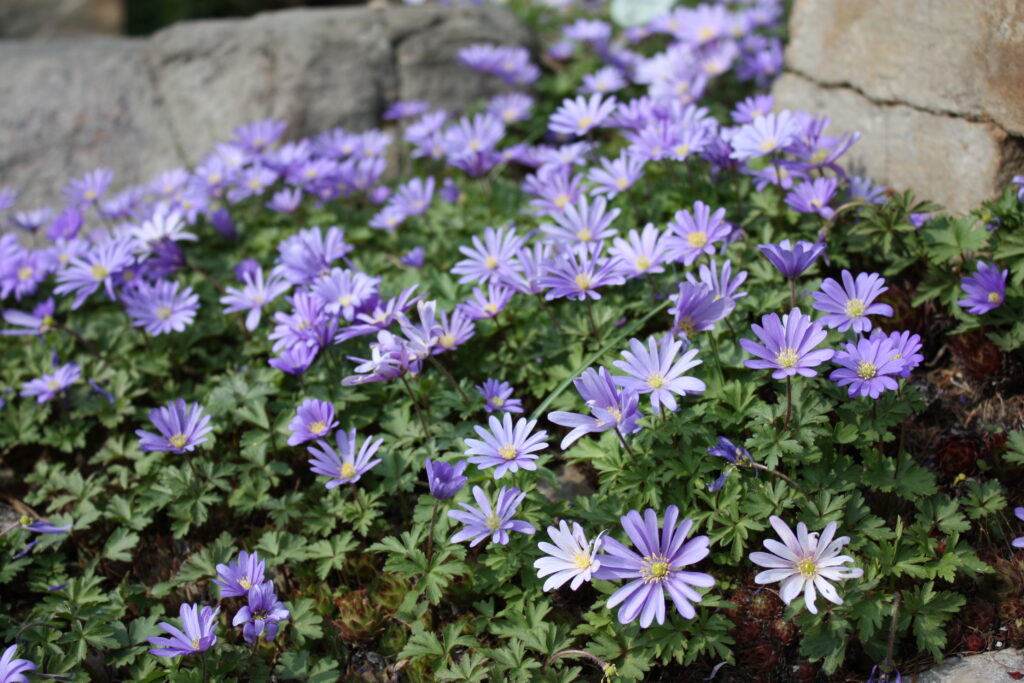
Balkan anemone: Kepler states that this is a customer favorite for its “charming, sweet, daisy-shaped flowers that come in blue, white, or pink.” They are easy to grow, she notes, and “they reseed politely without overcrowding and once you plant some, you never have to do bit of maintenance.”
Camas: Broccolo is also a fan of camas, known as the camas lily, camassia, or Indian hyacinth. It’s a perennial native to North America and its spiky blue, lavender, or white flowers bloom in late spring or early summer.
Fritillaria: This is a plant genus that boasts dozens of varieties; Broccolo likes the crown imperial type for its unique shape.
Minor bulbs: Kepler makes a case for revisiting “the small early spring bloomers that you never think about until you see them in bloom,” including crocus, snowdrops, scilla, and species tulips. Aesthetically, “they’re powerful for layering,” she says, and “one of the easiest ways to add depth, rhythm, and surprise to your planting schemes.”
HELP YOUR TOOLS HELP YOU—CARE AND SAFETY
A well-stored, properly maintained garden tool is a safer bet for everyone.
Keep them dry: Always store tools dry. Keep them off the floor of your gardening shed or garage. Never leave them outside, even if you will be picking them up again the next day. This helps avoid rust and breakdown. “Just make sure that they’re clean of dirt and debris and things like that before [you] put them away,” says Lauren Domuracki, certified landscape technician and assistant manager at Broccolo. Wipe or spray them down with water and store them dry—if the day doesn’t lend itself to drying in the sun, use a rag or paper towel.
Keep them sharp: “Your spade better be sharpened,” Broccolo says. “You know, it’s a lot less stressful if it cuts right through the sod. And as we do a ton of edging so [we’re] sharpening those tools, constantly.” At their garden center, they sharpen frequently—once a year isn’t enough for a tool getting heavy use.
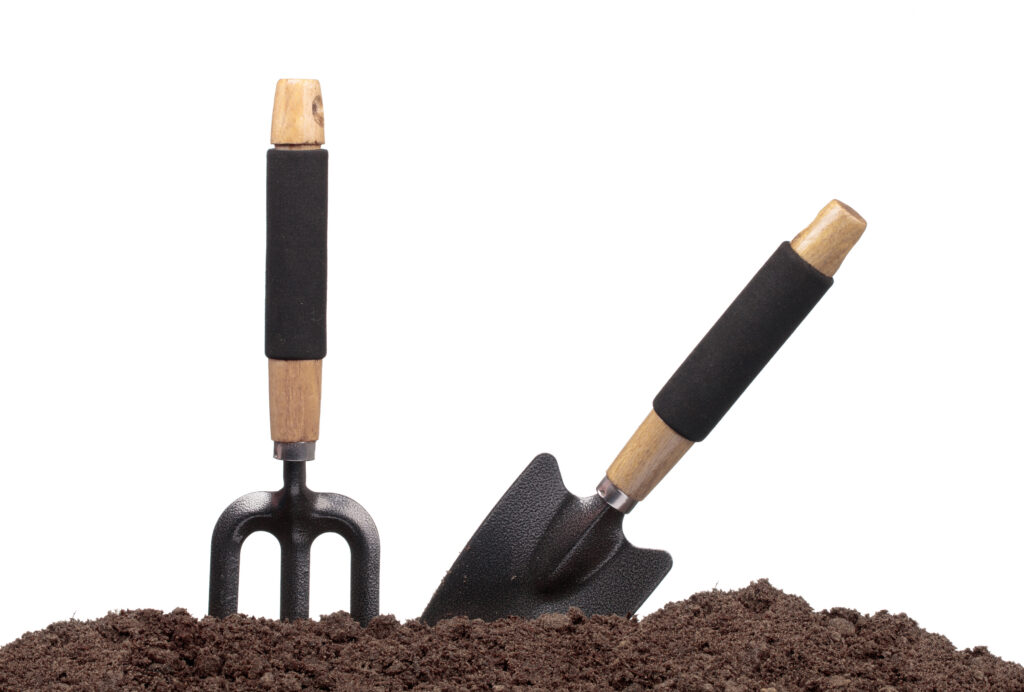
Use good quality and consider comfort: Felco is a favorite brand at Broccolo. If you have arthritis or issues with hand strength, Laurie Broccolo says, look for special tools such as the Felco 12 pruners, which have a revolving handle grip. Kepler also likes Felco pruners. “They’re a bit more money but worth their weight in gold,” she says. “You’ll use them often, so you want a well-made pair.” She also recommends Bully Tools, particularly the 12-gauge edging and planting spade. “The long handle version is easy on the back and provides better leverage. There’s a short handle one too, if preferred, and you can customize the handle material and grip design too!” She recommends purchasing on bullytools.com to avoid knockoffs. And of course, if a tool is broken, don’t keep using it—repair or replace it.
Pay attention: “One thing I would say about safety with your tools is making sure that you’re paying attention,” says Domuracki. “That and taking it slow. I was not doing both of those things one day, and I cut the tip of my finger off.” It’s crucial to slow down and consider “no matter how big or small it is, being conscious and appreciative of the fact that you’re working with a tool.
Carolyn Sperry is is a freelance writer in Rochester. She has published nationwide, won the Gotham Writers Stories Everywhere competition, and writes poetry featured in several journals.
This article originally appeared in the September/October 2026 issue of Upstate Gardeners’ Journal.
Views: 7