




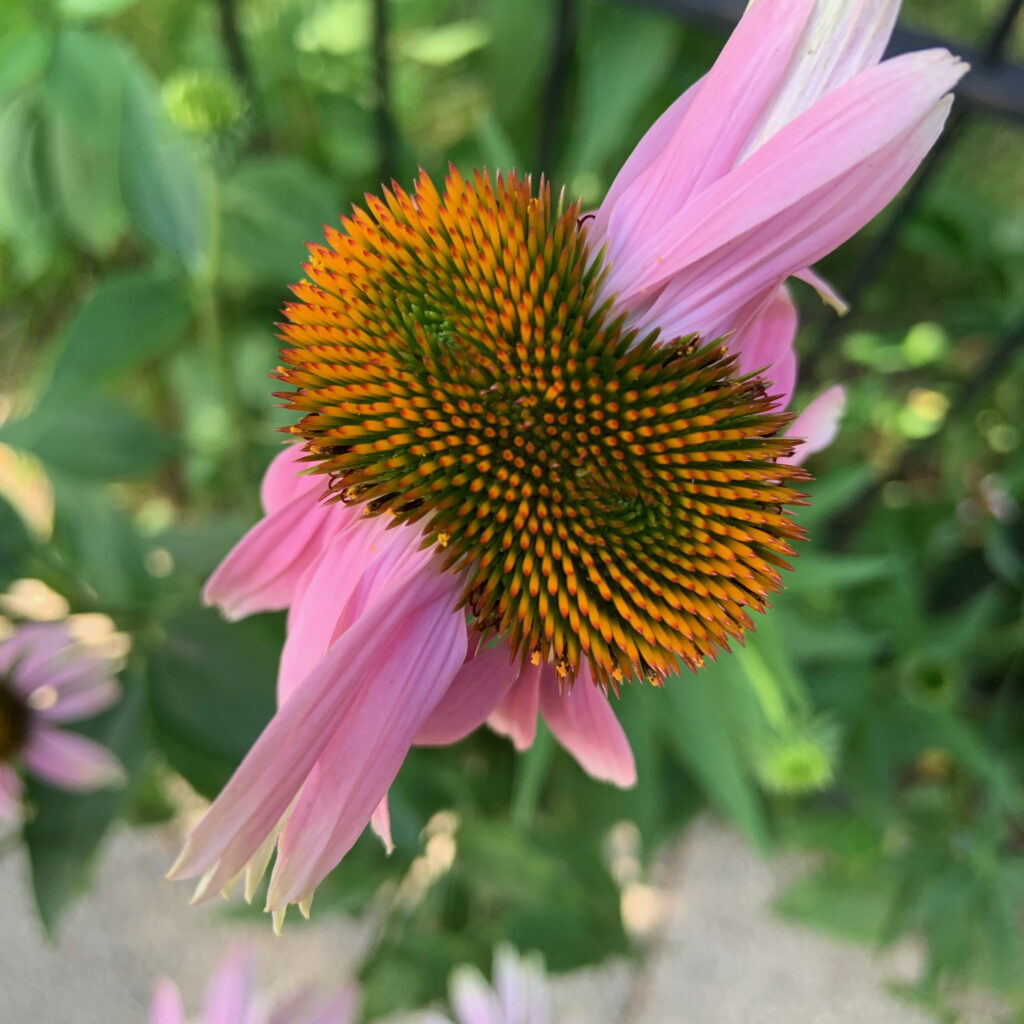
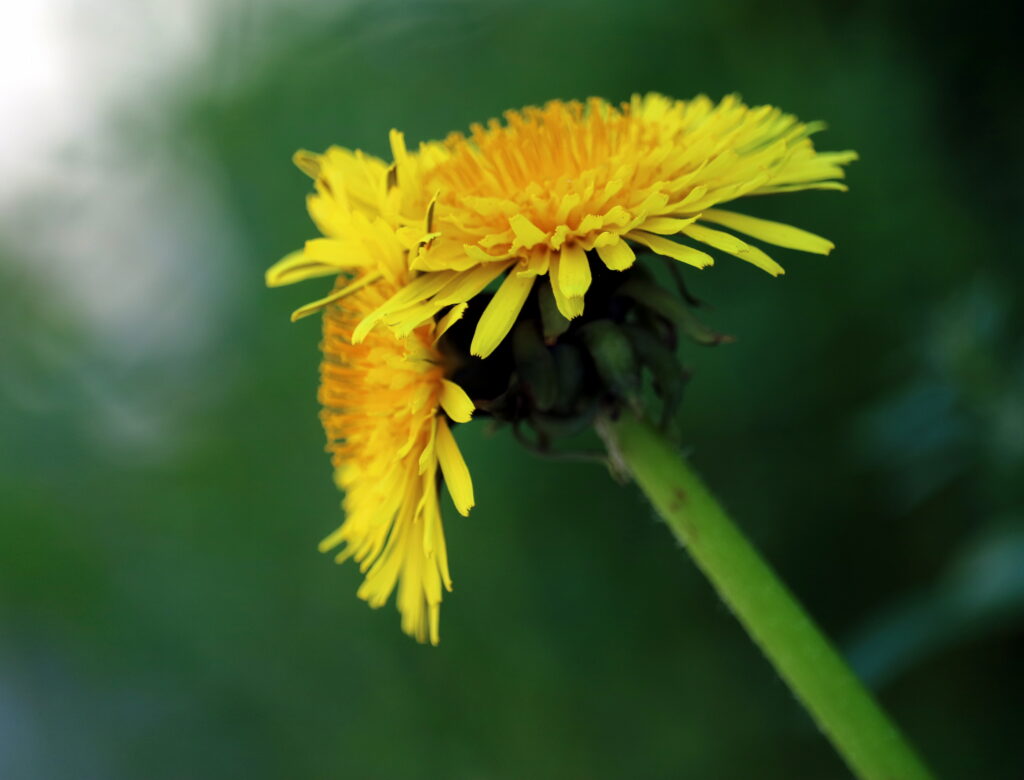
Recently I received some pictures from a woman who was both concerned and mystified at the strange growth pattern of some flowers. (I was delighted.) The blossoms looked squished … the stems were thicker than normal. Instead of a single flower at the top of a stem, individual flowers were replaced with multiple (usually double) flowers. The tops of the flower stems were wider than usual to accommodate the flowerheads.
They were exhibiting fasciation (from the Latin fascia which means stripe), an uncommon but fascinating growth change which usually affects stems and/or flowers. Fasciation only occurs in vascular plants but never in non-vascular plants such as liverworts or mosses.
What causes this? There are many things that can go wrong when plants grow, but they seldom occur—probably because nature has a way of keeping these conditions in check. The cells (apical meristem) located at the tips of stems and roots divide, causing growth in those areas. Sometimes the normal growth becomes distorted even to the point of multiple flowerheads emerging from on the same point. This is “fasciation.” Oddly enough fasciation doesn’t seem to hurt the plant itself. It doesn’t die. It simply looks strange!
Fasciation can also be caused by a sudden plant mutation or by tiny insects that interfere with the plant hormones that control growth. Fasciation can also be induced by a plant’s response to indiscriminate pruning. I remember being in a local plaza one summer when workers cut back all the container plants in flower in the middle of the summer with power tools. I assume this was to keep them from growing taller. I was upset and revisited that plaza several weeks later. The plants lived. Some plants grew new but deformed flowers … yes fasciation! (The rest simply looked horrible.)
Fasciation in lilies has been linked to the bacterium Rhodococcus fascians and occasionally to viruses. The bacterium is considered a pathogen because it also causes leafy gall disease. In lilies, the stems are flattened and the flowers distorted, making them unmarketable.
Many times, fasciation occurs for no reason that we know. Cockscomb celosia exhibits fasciation. The growing tip grows sideways instead of upward. The flowers resemble a rooster’s comb. In this case the condition is caused by an inherited trait that many people like.
Looking for fasciation? Look for many small leaves or stems resembling (and called) witch’s brooms. You may observe many flowerheads at one point instead of a single flowerhead. Look for stems that are flat instead of round in cross section. Look for weird stems that have ribs. If you see it in your garden, appreciate it. It is unique! Don’t like it? Remove it.
Fasciation has been recorded in many different species. Some collectors of cactus collect plants that exhibit fasciation. They are propagated vegetatively to continue their uniqueness. It has been found in both conifers and broad-leafed trees. Other plant groups that have exhibited fasciation include rose, willow family members, asters, daisies, and succulents. Its unpredictable appearance and the unusual forms it creates make it an intriguing phenomenon. Fasciation is truly fascinating!
Carol Ann Harlos is a Master Gardener with Cornell Cooperative Extension, Erie County.
This article originally appeared in the November/December 2026 issue of Upstate Gardeners’ Journal.
Views: 0