




It’s a bittersweet goodbye to the growing season for me. There’s always just one more flower about to bloom, and I’ll gather bouquets every day until the season’s frosty end. Then my knees remind me that watching snowflakes with a good book and a mug of hot cocoa can be a welcome respite.
If you’re a gardener like me who gathers seeds for saving and starts plants indoors, there really isn’t too much of a gap to struggle through without working on a garden-related project. It seems that the seed catalogs come earlier and earlier every year, and I try my best not to crack them open until after the New Year. Once the hard frosts take the last of the zinnias, it can be a long time until we have abundant color in the garden again. I think that’s what I miss most during wintertime, the bright colors. From the bright green grass and tree canopies to the rainbow of blooming colors, the contrasting dull hues of winter can leave me restless for the growing season’s brightness.
We do our best to prolong the season, from taking cuttings to root in the sunroom to bulbs to force on the windowsill. However, I have never been very good at keeping things alive inside during winter, and other than seed starting, indoor growing in the off-season is not for me. Cue my latest winter plant hobby that dovetailed with my recent cutting garden focus: dried flowers. The best part? You can’t kill a drying plant in the winter by over- or under-watering it, bad lighting, or other pesky live-plant-maintenance needs.
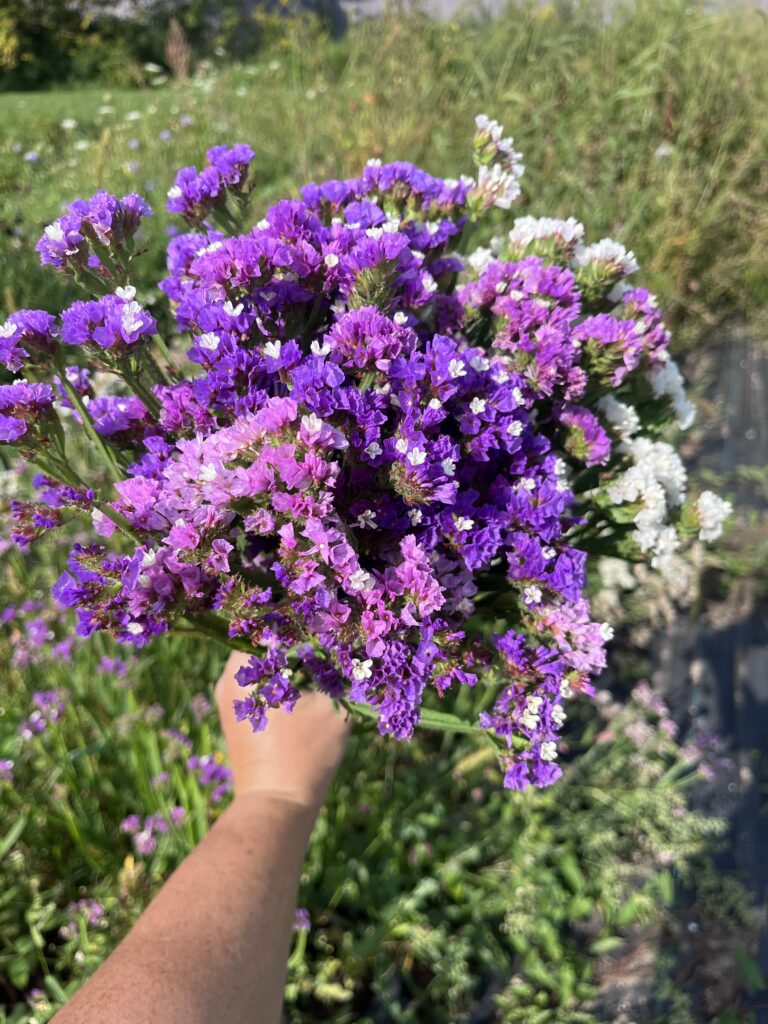
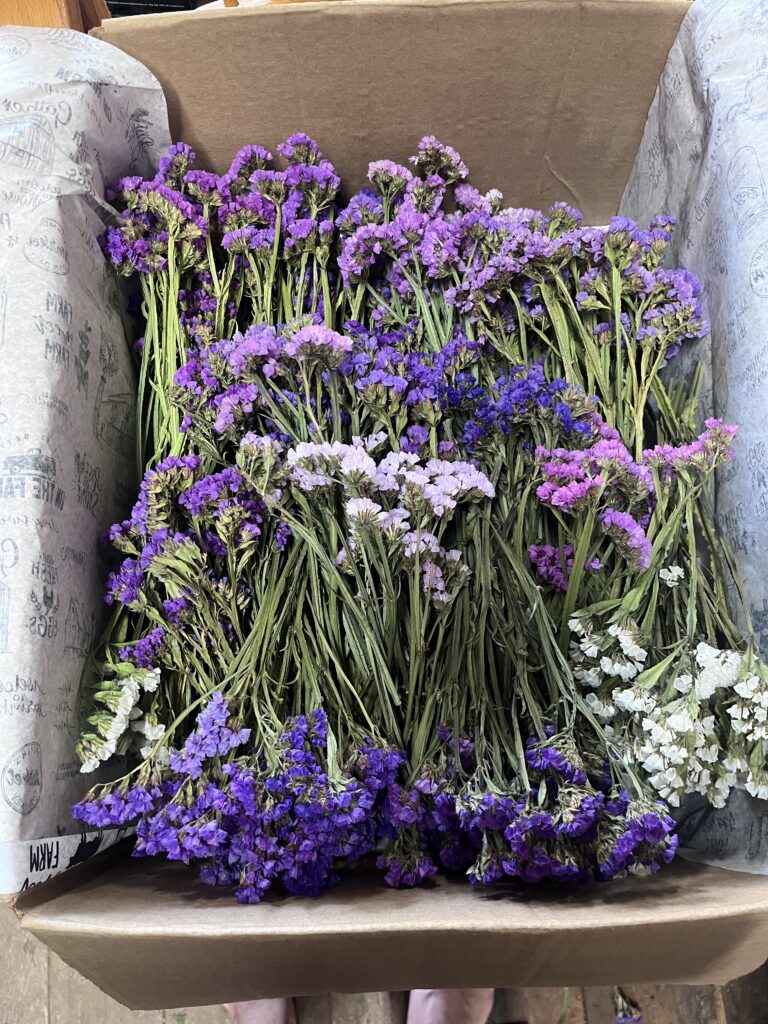
When I began my cutting garden, one of the most reliable filler flowers also happened to be the easiest flower to dry: statice (Limonium sinuatum). Not only does it come in a rainbow of colors including deep purple, bright yellow, and creamy white, it’s easy to tell when statice is ready to harvest. The colorful parts of the plant are actually the calyx, or sepals, which are outer modified leaves that protect and support a flower, while the true flowers are small and white, nestled inside the sepals. Wait to harvest for drying until a third of the true flowers are open. A secondary sign that statice is ready to cut is the sound of the plant. It will turn more papery and rustle the more it matures. As with most cutting flowers, the more you cut, the more you get, so I gather every stem I can and begin drying flowers in late summer.
HOW TO DRY
The easiest method for drying flowers is to tie a bunch of stalks with twine (I also use floral wire) and hang them upside down in a cool, dark, dry location. I strip off all leaves and side buds from each stalk to expedite the drying process and prevent mold on some of the fleshier flowers. I tend to bundle in groups of a dozen stalks to ensure good air flow. I watched in horror our first winter when I was in a building heated by an old coal stove and most of my houseplants turned to dust. The upside? What my houseplants hated, my dried flowers love.
Within a month in these conditions, most bundles will be dry. Check for dryness by bending the stems; if they snap, they’re dry! If you don’t plan on using the flowers immediately, it’s a good idea to store them to retain maximum color. I store my bundles in cardboard boxes wrapped in tissue paper. While this is a practical step to prevent fading, opening a box full of purple statice in the dead of winter is like a gardener’s Christmas morning!
MY DRIED FLOWER PLANT LIST
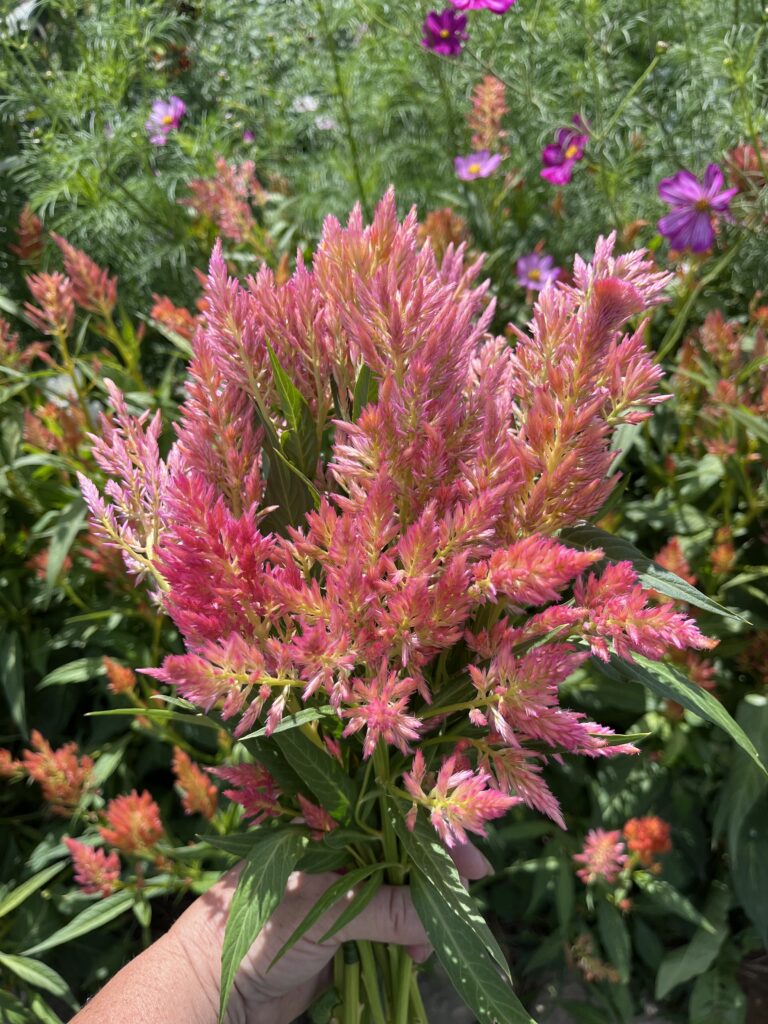
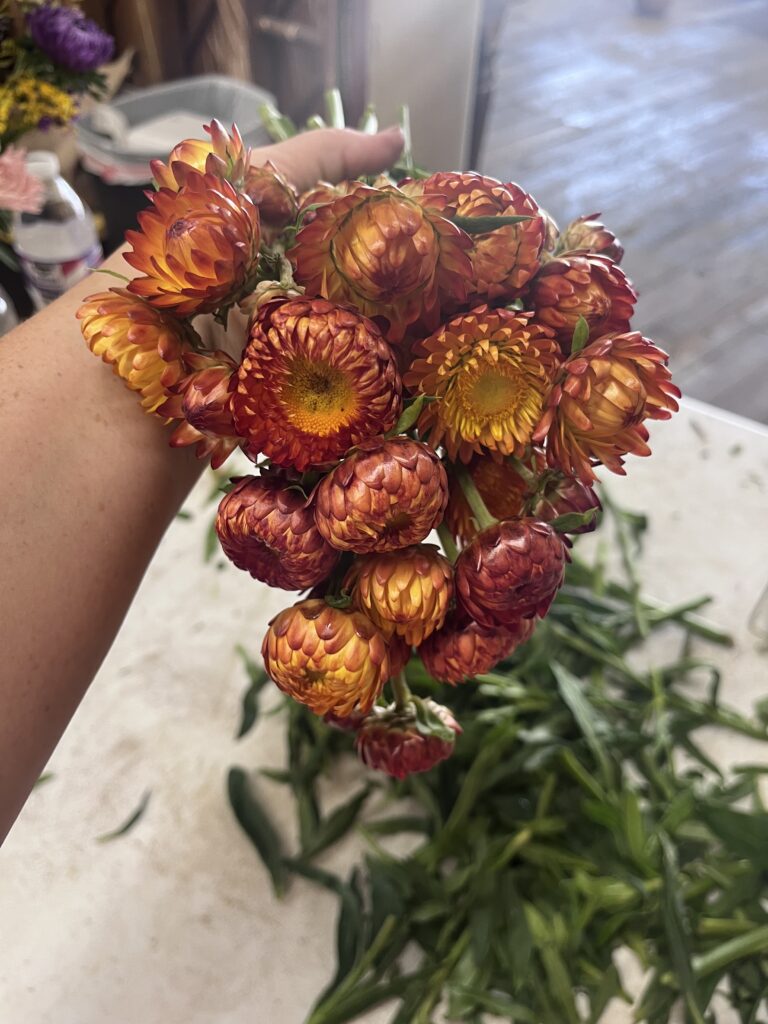
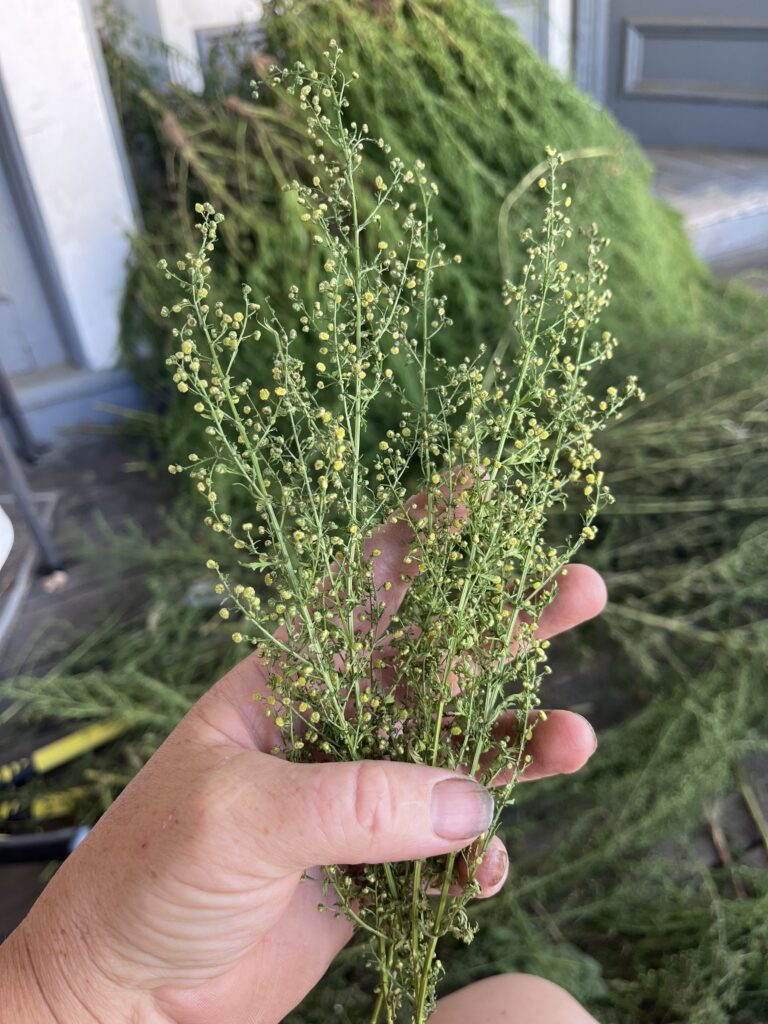
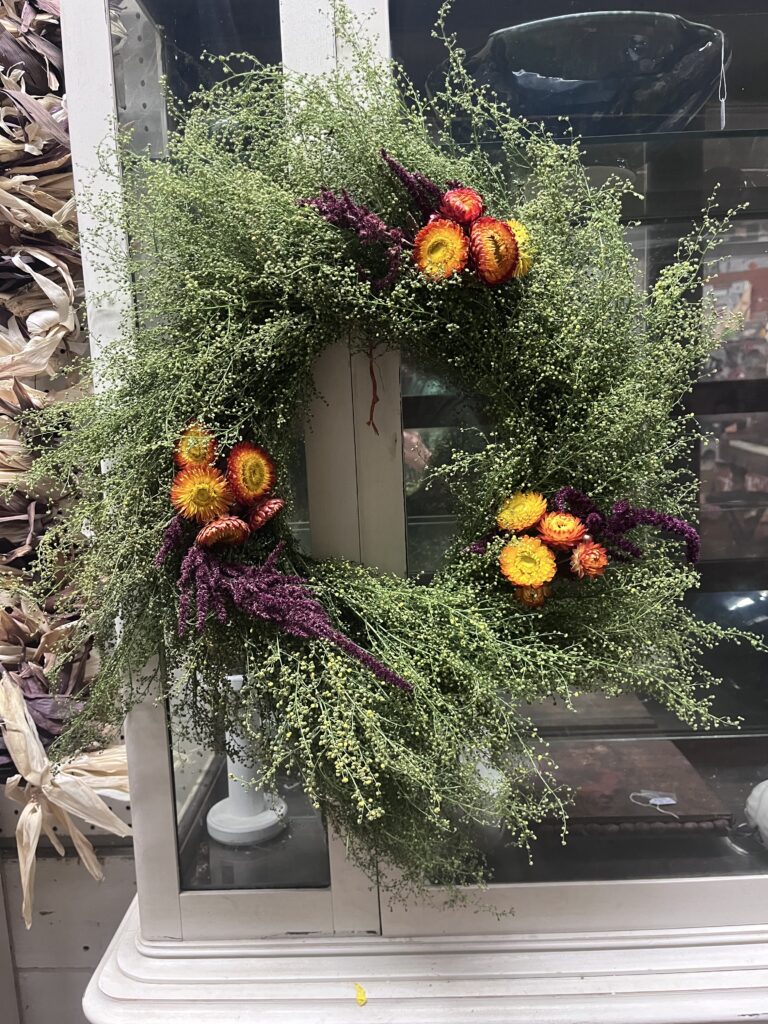
I didn’t plan to be a lover of dried flowers. It started as most gardening hobbies do, curiosity and a fun experiment. One winter while looking through seed catalogs, I spotted a plant that caught my eye: sweet Annie (Artemisia annua). The write-up talked about its foliage making a dependable filler flower, with a sweet, old fashioned fragrance that made it a great base for autumn wreaths. I can’t say I put much more thought into growing it other than, “I wonder what that would look like in my garden?” Three years later it’s a dried flower garden staple, providing me loads of fragrant branches to serve as greenery filler, wreath base, and its fragrance makes it an excellent sachet and potpourri filler. In addition to statice and sweet Annie, the dried flowers I grow from seed include celosia (Celosia spp.), gomphrena (Gomphrena globosa), giant orange marigolds (Tagetes erecta) strawflowers (Helichrysum bracteatum) yarrow (Achillea millefolium), and red spike amaranth (Amaranthus cruentus). Panicle hydrangeas (Hydrangea paniculata) are a fantastic dried flower—just ensure you give them enough time to mature before cutting without waiting too long, as they will turn from that beautiful creamy-maroon to brown rather quickly, I’ve found.
Herbs make great dried flowers, and their fragrance adds a lovely sensory dimension to dried flower arrangements. Two of my favorites are anise hyssop (Agastache foeniculum) and lavender (Lavendula spp.) As with other aspects of gardening, experimenting is part of the fun. This year I hung up a bunch of almost everything I grew to watch how it dried. I found that China asters look darling when dried but need a protectant spray to hold their delicate petals.
DRIED FLOWER PROJECTS
I find that gardeners are some of the most generous people I know, and drying flowers helps carry that generosity into the holidays. Aside from bouquets, dried flowers can be made into centerpieces, wreaths, swags, potpourri, and ornaments, just to name a few. One year I used dried hydrangea flowers as decorative filler inside cellophane-wrapped gifts. The possibilities are endless! Homemade gifts add that extra thoughtfulness that makes it a creative treasure. With a dried flower gift, the season-long care of a plant from tiny seedling to colorful art form is the ultimate creative curation.
Bonnie Warriner is a horticulturalist and budding flower farmer with a love for capturing beauty in pictures and words. You can find her among the wildflowers and goats on her family’s 150-acre farm in Jasper, New York.
This article originally appeared in the November/December 2026 issue of Upstate Gardeners’ Journal.
Views: 1