





Back in 1995, no one knew that Garden Walk Buffalo would take on a life of its own.
Jim Charlier, a Buffalo art director and designer who has been involved since the event’s humble beginnings, took an out-of-town friend on the walk that first year, just for something to do. That summer, it was a block club event consisting of twenty-nine gardens in the Norwood/West Utica neighborhood. Right away, Charlier liked it and wanted to participate.
“There’s no criteria,” he says. “There’s no judging. There’s no cost.” Then and now, participants wanting to show off their gardens only need to be friendly and ready to welcome visitors.
This year’s event will take place Saturday and Sunday, July 25 and 26, from 10 a.m. to 4 p.m. “We have visitors from the neighborhood, from other local towns, from across the state and country, and even from other countries coming to Buffalo to see the beauty of the gardens,” says event co-chair Beth Kreutzer. In addition to seeing the gardens, she says, “visitors also get to really experience … places they wouldn’t see on a typical visit to Buffalo. There is amazing architecture and great little restaurants and shops. There are so many hidden gems, tucked away off the beaten path. Garden Walk Buffalo gives the visitors a chance to really explore.”
Marvin Lunenfeld, the original founder of the walk, was adamant about it being egalitarian: open to the public, open for everyone.
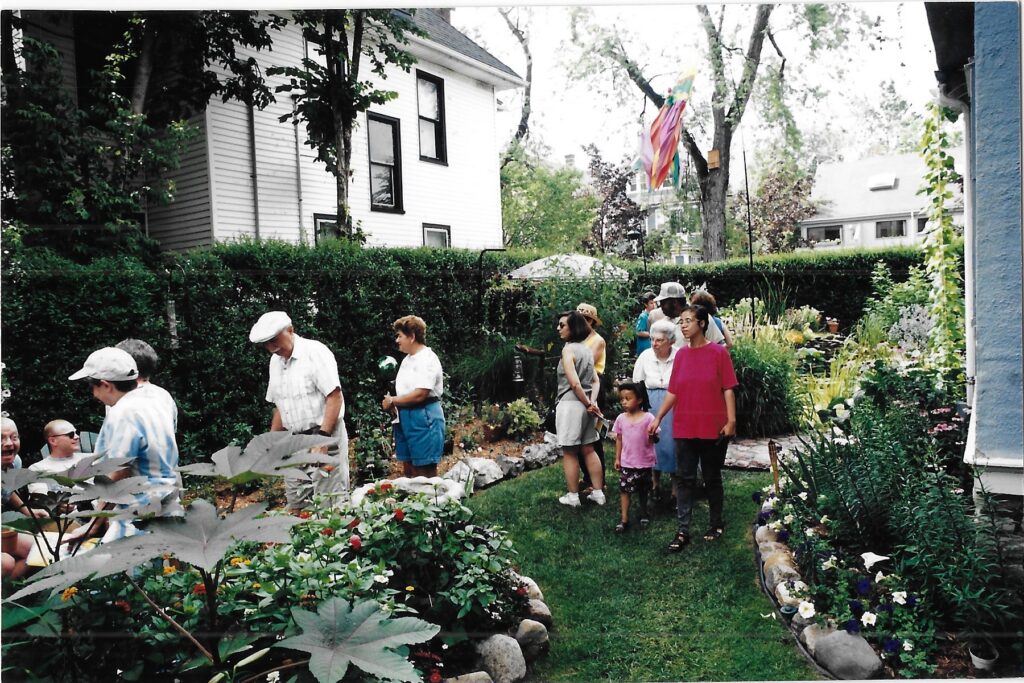
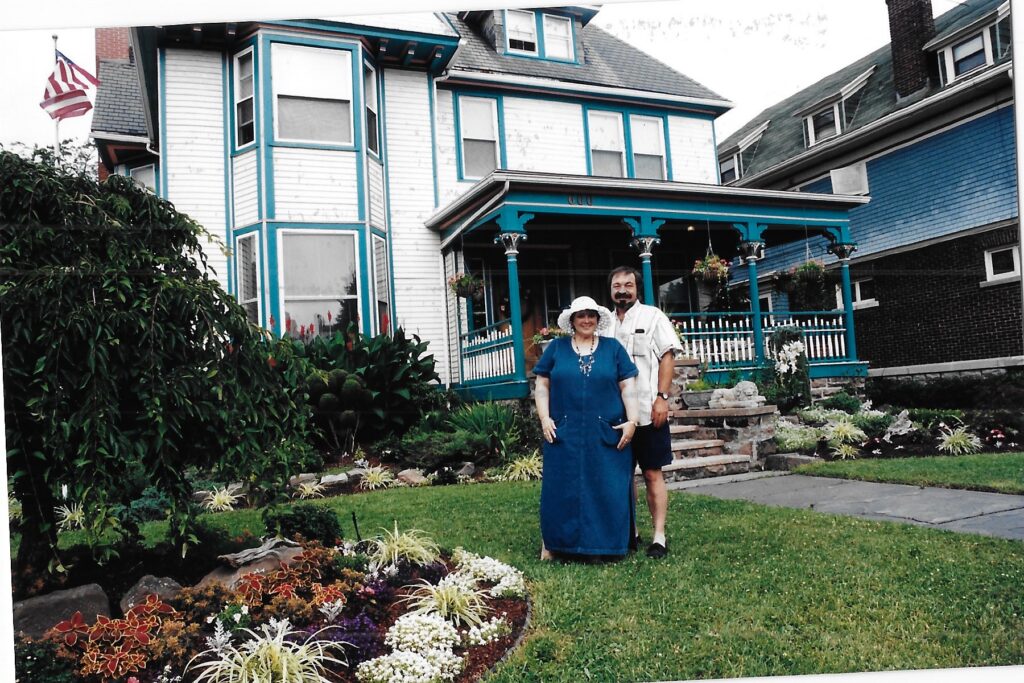


Prior to the founding of Garden Walk Buffalo, Charlier says, “most garden tours were … I hate to say it, but garden tea party kind of things with, like, six houses.” Those types of events often had an upscale feel, charging a high admission fee to raise money for a charity, and showcasing estate gardens in upscale neighborhoods, often tended by [professional] gardeners. “More like the ‘ladies who lunch’ kind of a tour. And we sort of broke that mold.” In Buffalo, he explains, whoever lives in the house does the gardening. And any resident who is proud of their garden is welcome to participate.
He and his wife first participated in 1996. “Back then, we would do lick-and-stick parties because we had to [send] mail everywhere.” By year three, Charlier was designing the poster for the event. He then created a map of the garden walk that participants could use, then ended up running the event for seven years. The event expanded to the Allentown neighborhood in 1998, and to the lower west side in 2000. In 2004, two hundred gardens participated.
The event is now the largest garden walk in the United States, and a garden destination that has garnered a national reputation. “We do want to keep it contained in a footprint,” Charlier explains, noting that garden tours are best when they are in a defined area for walkability. This year, around 300 gardens will be on the tour. Since there is no admission fee and no tickets are sold or collected, it’s hard to know how many people walk through the event. A consultant back in 2011 estimated that attendance was between sixty and seventy thousand people per year. That translated to a roughly $3.4 million economic impact for the city. The pandemic shrank the event somewhat. But turnout is still impressive.

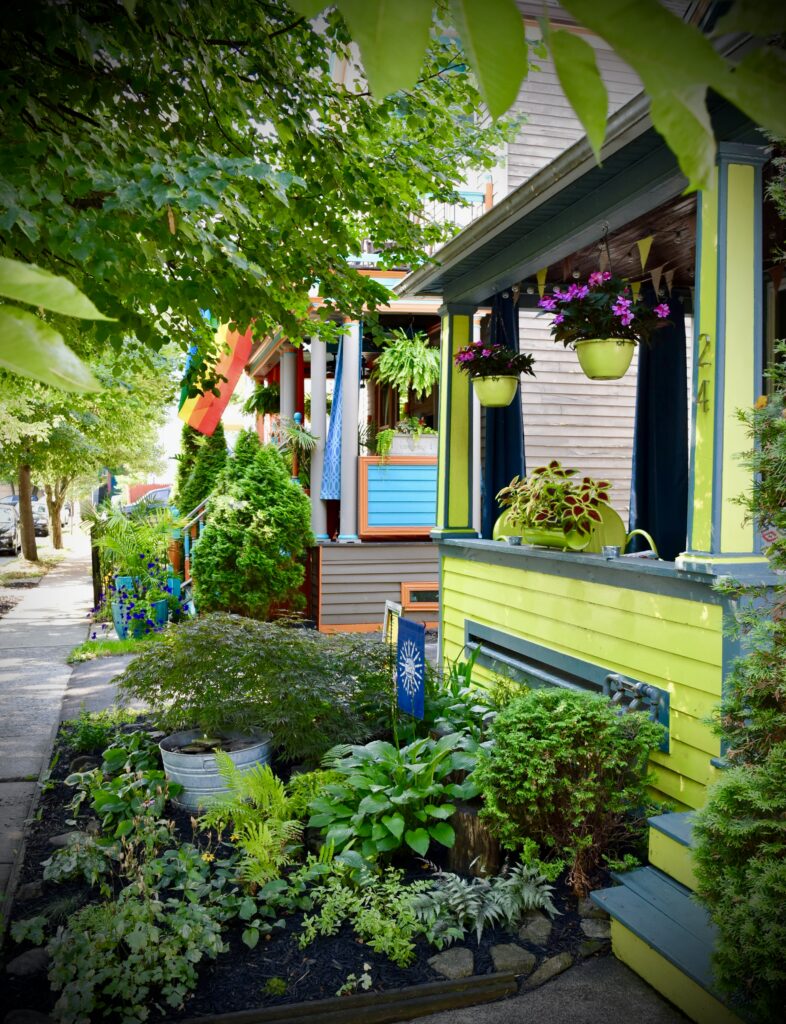

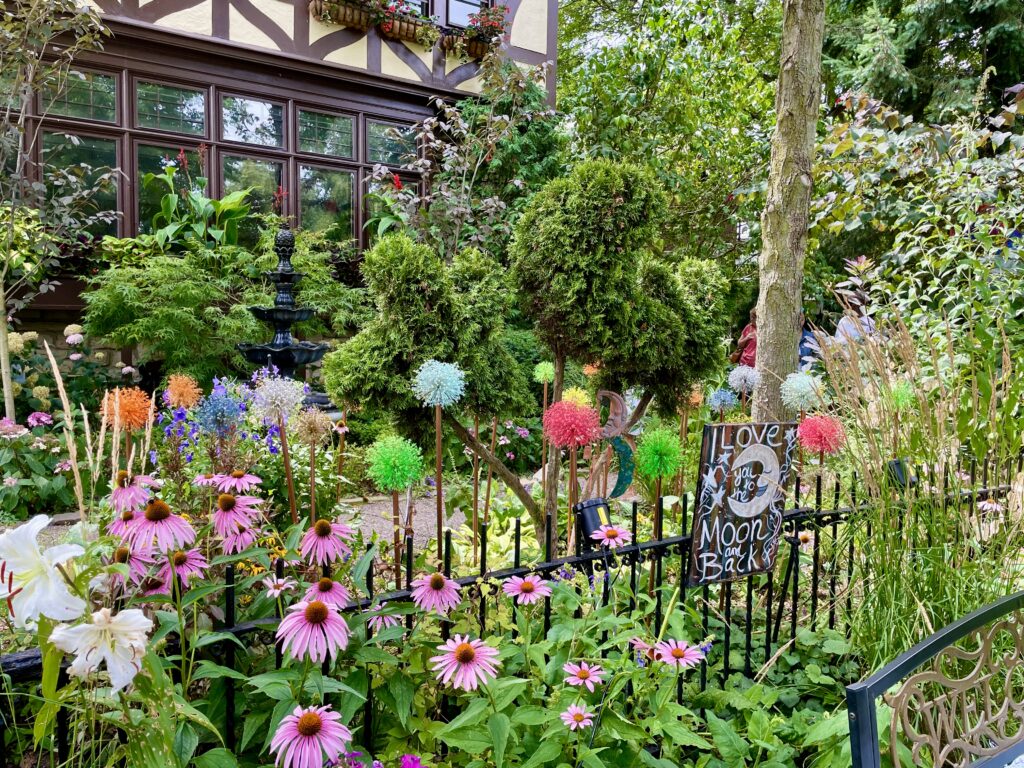

The walk has had a lot of help along the way. Visit Buffalo, the Olmsted Parks Conservancy, and the Plant WNY (the association of nursery and landscape tradespeople), among others, have been invaluable partners. Eventually, promoters created a larger organization, Gardens Buffalo Niagara. That organization now promotes fourteen independently run events around the region, including the East Side Garden Walk, a garden art sale, and garden walks in smaller communities such as the North Tonawanda Garden Walk. “In August, we do an urban farm day. We’ve got the garden art sale coming up,” Charlier says. That event, too, is getting bigger every year, he explains. “Now, it’s on the grounds of the botanical garden.” Profits from the Garden Walk fund grants to block clubs and other community groups. “We’ve given out more than $200,000 since 2005. This year, we gave out $40,000.” The impact of the garden walk has been profound, both financially and for the image of Buffalo, which Charlier says people think of as “a snow city, definitely a rust belt city. And the gardens are like the antithesis of that.” Envisioning Buffalo as a city of beautiful gardens and friendly gardeners could be a stretch for some people. “But, Buffalo’s called the City of Good Neighbors, and this event helps that.”
The Garden Walk functions as a how-to guide for other cities who have put together their own garden walks— there are more logistics involved than people might realize. There is a lot to consider, like infrastructure, communication, and marketing. “The people from GardenWalk Cleveland came to Buffalo many, many years ago,” Charlier explains. “We sent them all our information on insurance, what we do, how we solicit gardens, anything we could give them, we gave them, and they’ve been running a very successful garden tour. Same with Memphis.” When asked what advice he would give to a community wanting to start a garden walk from scratch, he says, “Start small. Find ways to do it that won’t stress you out.”
Of everyone involved, he says, the gardeners themselves are the most critical to the event’s success. A lot of them consider it a public service they do, and it is a way for everyone to give something back to the community. “You know, if you’re not joining boards and making things happen in the city, you can at least open up your garden and welcome people.”
This year, a shuttle bus will be available for the garden tour. A wristband for the shuttle costs $10 for the weekend if purchased in advance or $15 the weekend of the event. Each bus will have a guide from Explore Buffalo, an organization that gives history and architecture tours, so riders will learn more about the city as they go. Year thirty-two of the walk will be an exciting one, says co-chair Barb Cavanagh, and the event seems to have influenced people’s opinions about Buffalo. “Talking to visitors from all over and seeing their enthusiasm is very gratifying for everyone on the Garden Walk Buffalo committee who work hard getting ready for this much-anticipated event.”
For more information including maps of Garden Walk Buffalo, visit gardensbuffaloniagara.com/garden-walk-buffalo
Carolyn Sperry is a freelance writer in Rochester. She has published nationwide, won the Gotham Writers Stories Everywhere competition, and writes poetry featured in several journals.
This article originally appeared in the July/August 2026 issue of Upstate Gardeners’ Journal.
Views: 103