




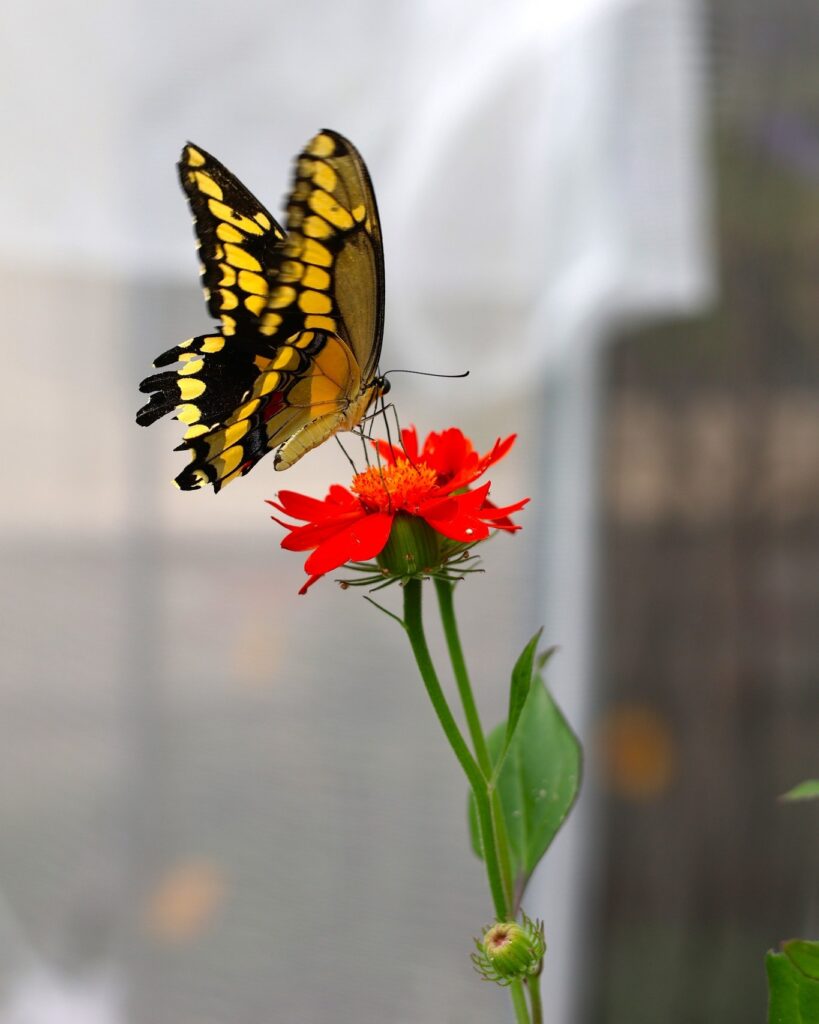
LIVE BUTTERFLY EXPERIENCE RETURNS TO BUFFALO’S BOTANICAL GARDENS
The Butterfly Experience will be returning to the Buffalo and Erie County Botanical Gardens this spring and summer starting on May 16. Hundreds of butterflies will take flight in the Tropical Orchard greenhouse. The live butterfly exhibit will be open daily from 10 a.m. to 4 p.m. and will run through July 19. Visitors will be able to get up close and personal with hundreds of different butterflies native to the continental United States and take in in the beauty while learning about the important role pollinators play in their ecosystems.
Various species including swallowtails, monarchs, painted ladies, and red admirals will fill the 1,200-square-foot greenhouse, along with dozens of fruit-producing and nectar-rich plants and for them to feed on. The space will also feature a pupa—also known as an emergence case—display. Here visitors will get to witness the third stage of a butterfly’s metamorphosis, when caterpillars finally emerge as butterflies from their hard outer casings called chrysalides.
For those looking for an even more in-depth visit with the butterflies, a limited number of tickets will be available for the new Butterfly Release encounters held on select Saturdays. These exclusive events offer early access to the Botanical Gardens before they open to the public. Participants will have the opportunity to learn about butterflies’ life cycle, behavior, and role in our larger ecosystem. The encounter ends with participants taking part in releasing new butterflies into the exhibit.The Butterfly Releases will take place on May 23, 30, June 6, 13, 20, 27, July 11, and July 18 from 9 a.m. to 10 a.m.
Tickets for both the Butterfly Experience and the Butterfly Release are on sale now at buffalogardens.com.
DELPHINIUMS FOR DAYS
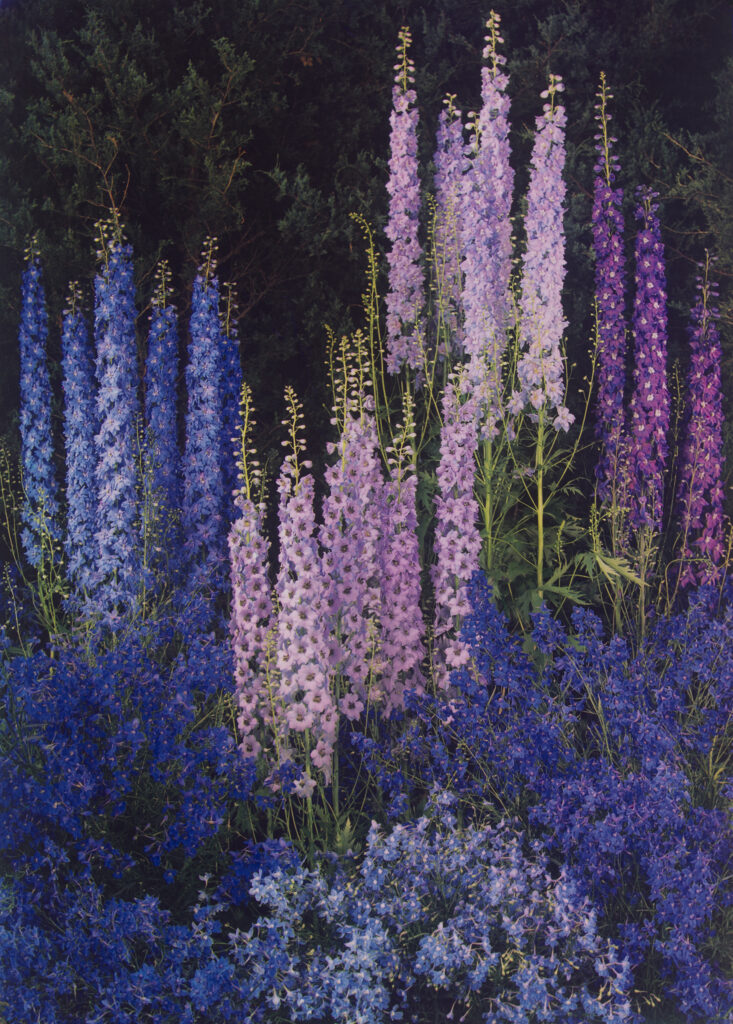
The company 1-800-Flowers has recently named Delphiniums as the 2026 flower of the year. These perennials are named after the Greek word for dolphin, delphis, because the shape of the unopened flower buds closely resembles a dolphin. Delphiniums are known as one of the few true blue flowers, most commonly blooming in hues of blues and purples, but can they be found in shades of pink, red, yellow, and white.
For gardeners in western New York, delphiniums are a perfect fit thanks to our region’s climate. Unlike many flowering plants, they prefer mild summers and can struggle in extreme heat, which gives local gardeners an advantage. Planting in the spring, after the last frost, gives them the best start. Whether you’re using transplants or starting from seed, choosing a sunny location with rich, well-draining soil is key to helping them thrive.
Because delphiniums can grow several feet tall, they make a striking addition to any garden, but they do need a little extra care. Strong winds can easily knock them over, so staking them early or planting them in a more sheltered spot can help protect them. Keeping the soil consistently moist and adding compost or fertilizer throughout the growing season will also encourage stronger growth and fuller blooms.
Delphiniums should begin to bloom in early-to mid-summer, adding striking elegance to the garden. Cutting them back after the first bloom can encourage a second round of flowers later in the season, allowing gardeners to enjoy their color and height all summer long. Delphiniums are a great choice for any local gardener looking to bring color, height, and a classic garden feel to their outdoor space.
EDWARD STEICHEN IN THE GARDEN
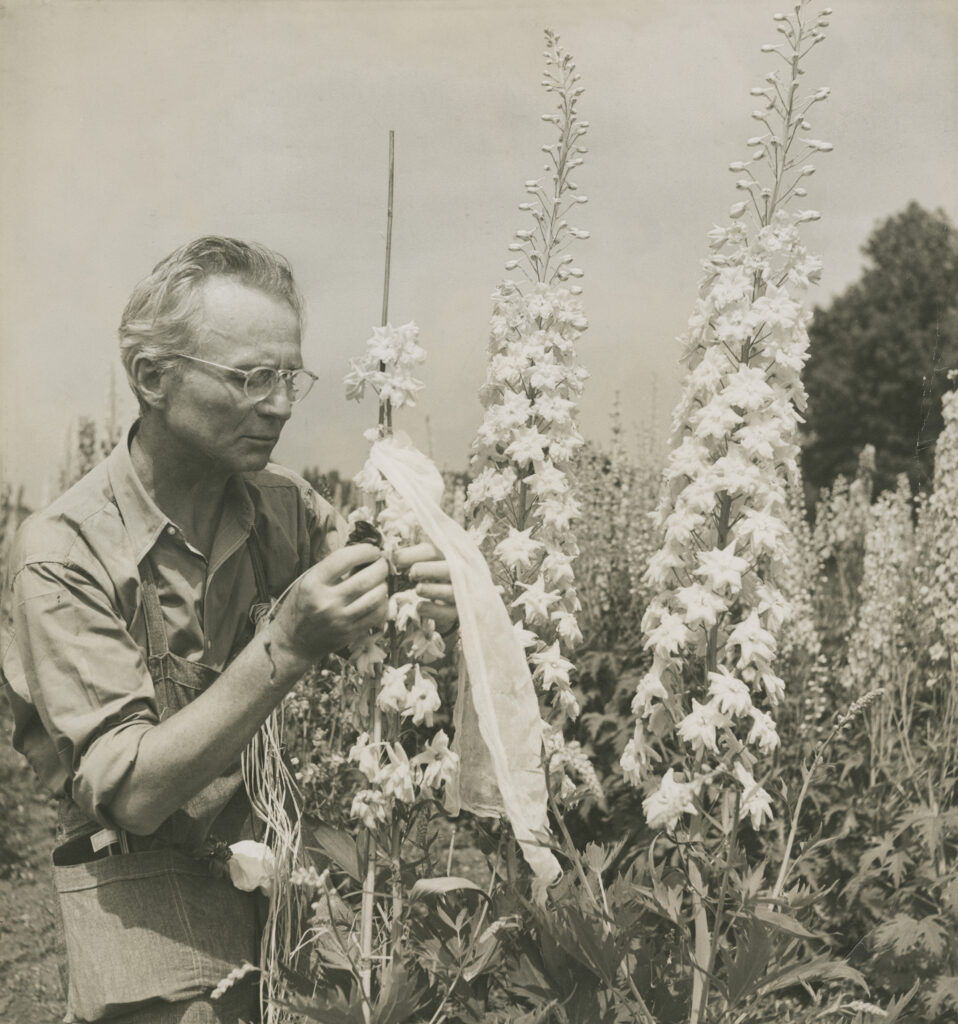
On view from March 27 to September 6, the exhibition Edward Steichen in the Garden at the George Eastman Museum in Rochester is centered around his fascinating work in the horticultural world. Spanning his work in painting, photography, and plant breeding the exhibition examines the complex story of a revolutionary artist of the twentieth century.
Between 1923 and 1938, Edward Steichen was the highest-paid photographer in the world. Working as chief photographer for Condé Nast’s Vogue and Vanity Fair, Steichen produced work that was particularly captivating, blending Pictorialism with modern fashion. Aside from fashion photography, Steichen’s work in the horticultural world was also revolutionary, specifically in plant breeding. His fascination with the delphinium inspired a decades-long mission to cultivate the perfect blue variety, which Steichen would later name the ‘Connecticut Yankee.’
Author of Edward Steichen in the Garden, Sarah Anne McNear, says few gardeners have taken up plant hybridization as a hobby in the way Steichen did. “Once we become gardeners, we all have things that interest us, but Steichen went right for that,” says McNear. Steichen sought to create enduring beauty through genetic manipulation. Believing that plant hybridization was a creative art form, Steichen said he was as much an “author of his delphiniums” as he was of his photographs, McNear explains.
The idea of gardening as a refuge plays a monumental role in the exhibition. The gallery moves chronologically, presenting Steichen’s return to gardening after traumatic events. Eastman photography curator Daniel Peacock notes that the gallery tracks the moments when he returns to the garden. “In his work with plants and in the creative endeavor of hybridization and [in] the immersion of gardening—which took his attention away [from strife]—helped him process difficult events.” Experiencing two world wars, a divorce, and the death of his parents, Steichen consistently returned to the garden, whether in New York, France, or Connecticut.”
According to Peacock, a particular draw of the exhibition is how viewers notice the transformation of Steichen’s work across mediums over time. “For an institution so focused on photography, I don’t think we’ve ever shown this many paintings at once,” says Peacock. “I’ve heard from painters who have come to see the show who have been really interested in the way his painting style changes over the years and at the same time how his photographs are changing,” he adds.
Steichen’s appreciation for nature was often reflected in his photography and paintings, but it wasn’t until he developed a love for gardening that his plant hybridization work truly began. As an aesthetic, scientific, and experimental gardener, Steichen’s endeavor to create the ‘Connecticut Yankee’ delphinium reflects an almost obsessive dedication. Byron Smith, landscape manager at the museum, notes that Steichen’s process of breeding thousands of delphiniums, and discarding more than 900 of them because they just “weren’t right,” suggests an extreme level of commitment. “But to do all of that labor as an art form is impressive,” Smith adds.
Edward Steichen in the Garden invites visitors to an inspirational display of what it means to be a gardener. For Steichen, his work in the garden was not separate from his artistic practices; it was an extension. For any gardener who has taken chances in their garden and understands the patience cultivation takes, the exhibition offers more than history—it offers recognition. Learn more information about the exhibition at eastman.org.
AWARD-WINNING GARDEN
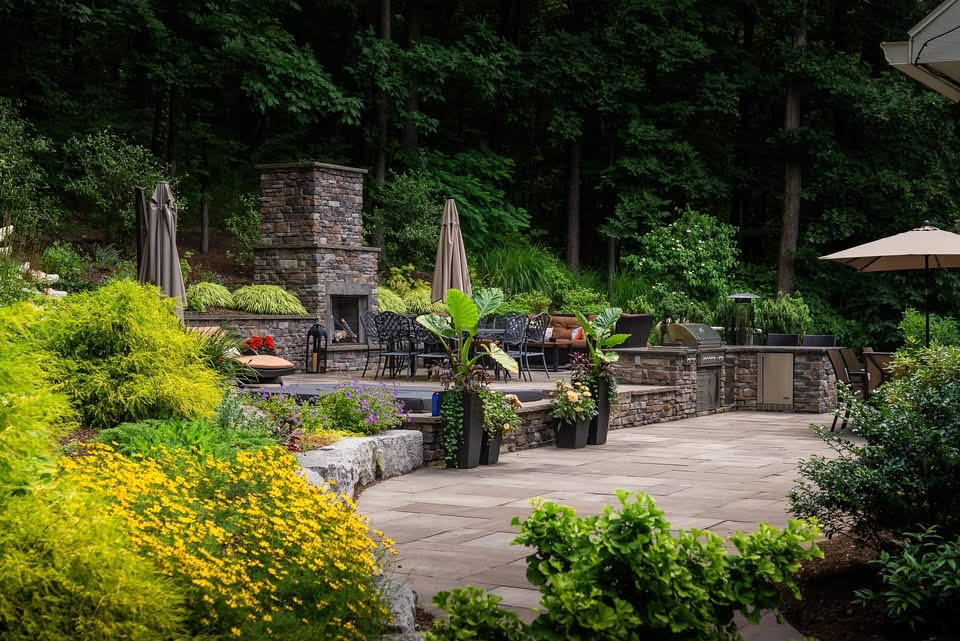
Ted and Yudelka Jordans’ Rochester-area backyard landscape is a standout example of thoughtful design and transformation. The property is a featured stop along the Kiwanis Garden Tour on June 27. The landscape design was honored with two New York State Landscape Awards in 2025. Purchased just before the COVID pandemic, the property’s original twenty-five-year-old landscape had deteriorating retaining walls, overgrown plantings, and a steep slope that directed runoff toward the home. In collaboration with local engineers, these challenges were resolved with new retaining walls, improved drainage, and permeable pavement all while preserving mature trees and transplanting cherished plants. The clients’ vision—an outdoor fireplace, space for football games, a dining area, outdoor kitchen, waterfall, spa, and fire pit—is seamlessly integrated to create a cohesive, functional outdoor living space ideal for both relaxation and entertaining. The garden was designed by Ann Hubregsen and installed by Josh Landscape Co.
The Kiwanis Garden Tour is on June 27 and begins at 11 a.m., rain or shine. Learn more and purchase tickets at bushnellsbasinpittsfordkiwanis.org.
Jayme Seiple is studying sociology with a minor journalism major and Keith Docherty is a journalism and broadcasting major, both at SUNY Brockport.
This article originally appeared in the May/June 2026 issue of Upstate Gardeners’ Journal.
Views: 9