



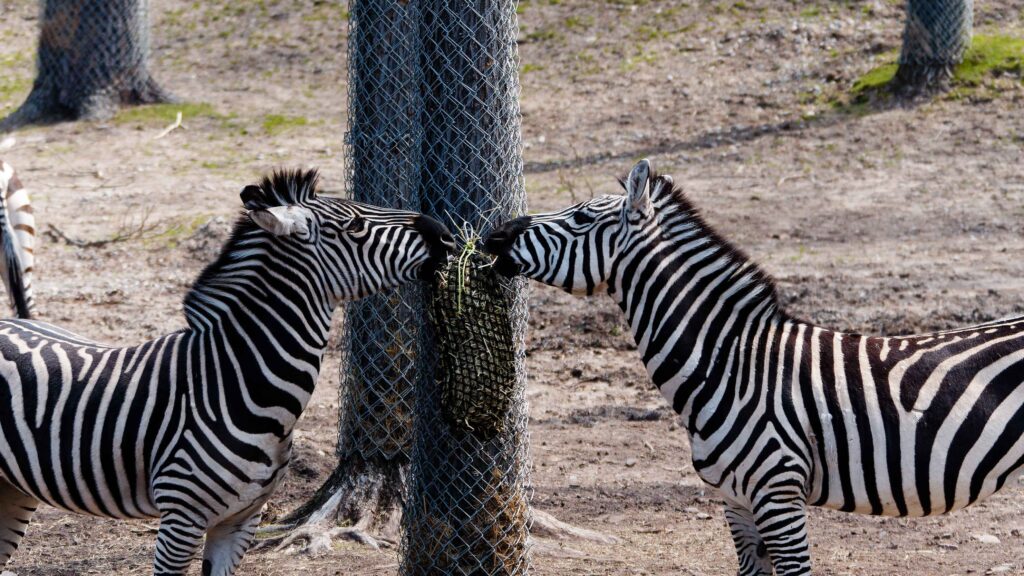
Q: Why do zebras have stripes?
A: Because they don’t want to be spotted!
Joking aside, a zebra’s stripes really do keep them from becoming easy prey in their natural rage! When the herd stands together, their patterns blend into each other, making it difficult for predators to single out an animal. And when a herd, or “dazzle,” of zebra can number around one thousand animals, that is a lot of stripes!
While they don’t need to worry about being stalked by lions at the zoo, zebras sure do look cool in their black and white coats. Morgan Saidian, zoologist at the Seneca Park Zoo certainly thinks so. “Technically, zebras are black with white stripes. Each one’s stripe pattern is unique.” Just like a human fingerprint!
Want to see these fancy stripes for yourself? Visit the Zoo’s three plains zebras, Lydia, Liberty, and Dottie!
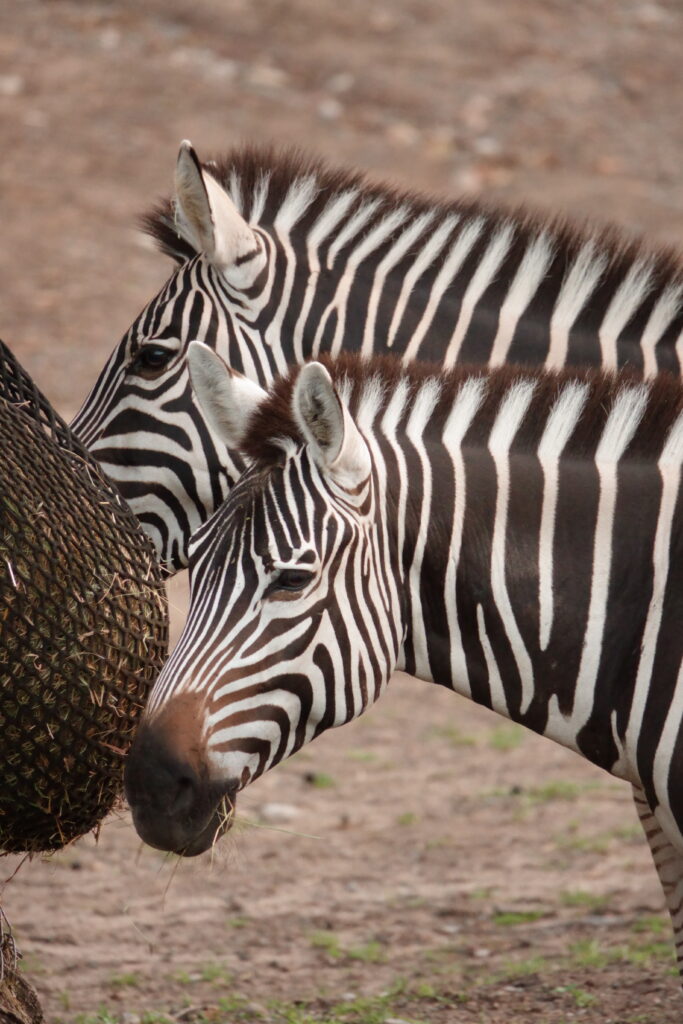
“To tell the zebras apart, Liberty has a brown nose. Lydia has a black nose, and her stripes go all the way down to her hooves. Dottie also has a black nose, but she does not have stripes on her lower legs near her hooves,” says Saidian.
Dottie is the “baby” of the bunch at nine-years-old. Liberty is ten, and Lydia is the oldest at thirteen. In nature, zebras can live to be twenty-five years old, but in zoos they can reach age forty. All three girls came to the zoo in the fall of 2018, when the Animals of the Savanna exhibit opened. That was also when the Masai giraffes moved into the zoo, sharing their yard with the zebras.
“During the day, our zebras and giraffes live together very well and respect each other’s space,” says Saidian. “Occasionally, we do see some cute moments. At night, our security cameras have gotten footage of all the giraffes and zebras laying down together in the indoor yard.”
This behavior reflects how the two species interact in the African savanna, where they often graze together. The giraffes towering necks give them sightlines to incoming predators. Meanwhile, the zebra herd helps conceal the giraffes with their disorienting stripes.
Another plus to their symbiotic relationship? They aren’t competing for the same food! The giraffes munch leaves from the tree tops and zebras eat grasses and shrubs near the ground.
Speaking of food, the three girls share twenty-five pounds of hay each day. They also each get 1-2 pounds of “zebra grain,” which are pellets that contain vitamins and nutrients specifically for zebras.
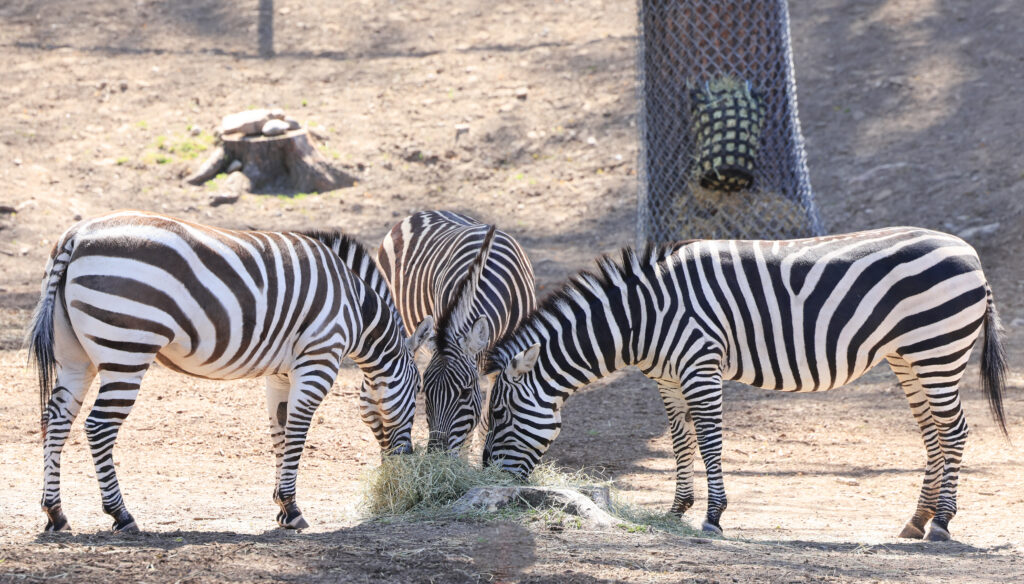
“Their favorite treats are carrot sticks. We use them when we train the zebras,” says Saidian. “For enrichment, they enjoy leaves of romaine lettuce.” Needless to say, these animals are happily vegetarian.
There are three species of zebra throughout Africa: Grevy’s zebra, which are endangered; Mountain zebra, which are vulnerable; and plains zebra, which are “near threatened.” Over the past thirty years, their numbers have continuously decreased. People hunt them for their furs, and many of their natural migration routes are blocked by fenced-in farms. Plus, Masai giraffes are endangered, and as we’ve seen, the two species rely on each other. Less of one type of animal can leave both species more vulnerable.
Fortunately, the zoo is committed to global conservation efforts. Buying a ticket or membership to the zoo and spending time learning about the wildlife all contribute to saving animals worldwide, including the zebras and their giraffe friends.
Besides, visiting the animals is fun! For example, once you identify Lydia, Liberty, and Dottie by their nose color and stripe patterns, you can watch them and learn about their individual personalities.
“Lydia is very patient with baby giraffes and helps us get them used to being around zebras,” says Saidian, sharing her own observations. “Dottie is curious about new things and always checks out new enrichment items. Liberty is very solid with her training. Once she learns something, she has got it down.”
All three of these girls are very smart and trained to be voluntary participants in their own health care. While zebras may look similar to horses and share a common ancestor, they are actually much more aggressive and can have dangerous kicks. This makes their training important. Zoo zebras know how to gently offer their front feet to the zoologist for hoof cleaning and trimming. They also allow the zoologist to give them injections if they need a vaccine.
“Currently, we are working on training them for voluntary blood draws,” says Saidian.
If you visit them this winter, they are probably staying warm in their indoor area. That said, they do get curious about the snow and will check it out, so make sure to give them a warm hello on your next visit!
This article originally appeared in the Fall 2026 issue of (585) Kids.
Views: 3