Almanac 2026
JANUARY/FEBRUARY While everyone else is making resolutions that may or may not work out, gardeners are busy making lists and plans for spring. PLAN: Dig



JANUARY/FEBRUARY While everyone else is making resolutions that may or may not work out, gardeners are busy making lists and plans for spring. PLAN: Dig

BUFFALO REGULAR CLUB MEETINGS African Violet & Gesneriad Society of WNY meets the third Tuesday of the month, September–August, at 7 p.m., Greenfield Health &

2445 Organics 63 Main Street Massena, NY 13662 607-752-0544 ed********@gm***.com 2445organics.com We offer indoor gardening systems that provide year-round availability of fresh food and other

Welcome to our annual directory and almanac. This year we decided to highlight birds of the month. I didn’t even realize that, just like gems
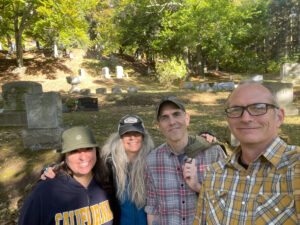
One of my favorite family activities this time of year is to wander local cemeteries. Some people find that a bit odd, but cemeteries are

BUFFALO REGULAR CLUB MEETINGS African Violet & Gesneriad Society of WNY meets the third Tuesday of the month, September–August, at 7 p.m., Greenfield Health & Rehab
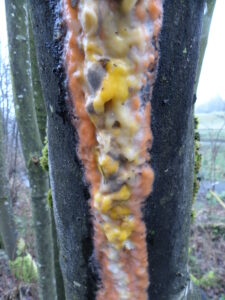
Picture this: you’re admiring your yard on a warm afternoon when you notice dark, wet streaks running down your favorite maple. The bark looks slimy
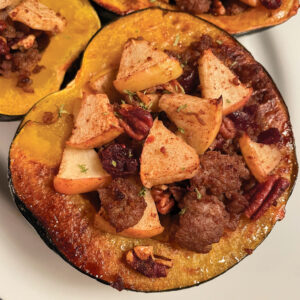
INGREDIENTS: 2 acorn squash, halved and seeded 1–2 tablespoons olive oil 1/2 pound pork sausage, cooked and drained 1 apple, diced 1/2 cup chopped nuts
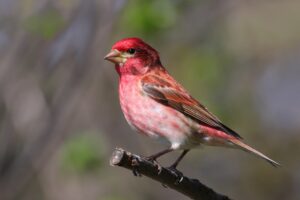
Migration season is always an exciting time in the spring, but there is also a lot of bird movement that happens in the fall and
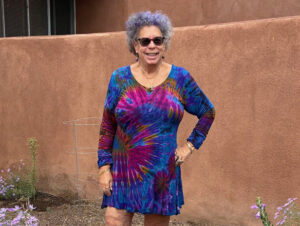
It’s taken me until age seventy-two to learn the joy and fulfillment of having a garden. My mom was an avid and respected gardener in
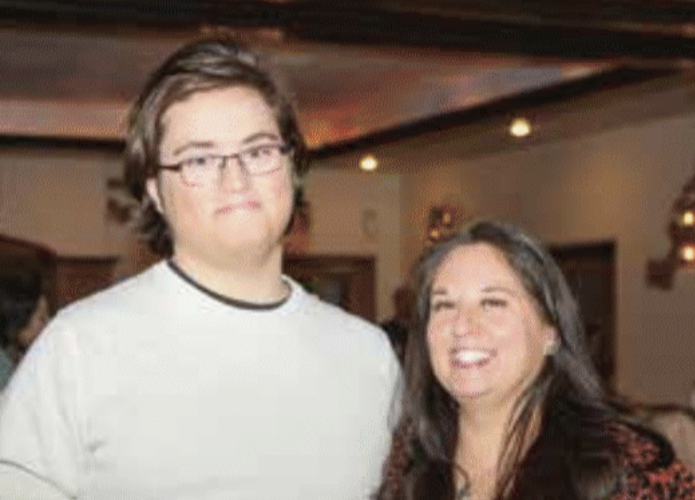
This is where I typically wax poetic about spring and getting fresh air after a hard winter, but outside my window there is quite a bit of snow, and it is seventeen degrees. I know that by the time this issue is ready it will be melted and the spring flowers will be here. By then the neighborhood kids will have their bikes out in force. There is an unused parking lot across the street from my house next to the banks of the Erie Canal.
For twenty-four years I’ve had the privilege of watching scores of parents take their little ones out to this empty lot learn to bike. We did the same with our kids, though I have to admit biking was not easy or natural for them. I wish I knew of R Community Bikes when the kids were learning to ride; having a resource like that might have helped them enjoy the process a bit more. Heck, having a resource like R Community Bikes would have helped me with my biking skills. I admit that these days I prefer a nice walk to bike ride, but maybe someday I will reembrace biking. We'd like to offer a special thank you to our cover model, KJ Sager Engebrecht!
—Christine Green, Managing Editor


JUSTICE IN ACTION
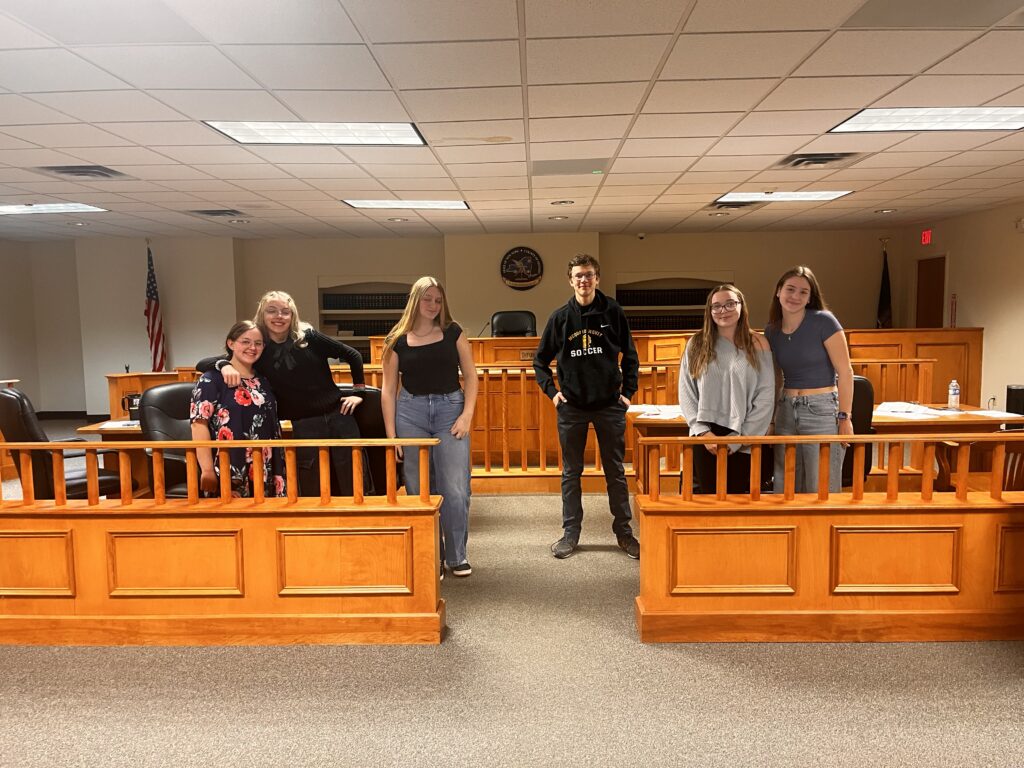
Youth in Ontario County have a unique opportunity to gain leadership skills and hands-on experience in community impact by volunteering with Ontario Cares Youth Court.
In Youth Court, first-time, low-risk youth offenders are referred in lieu of other disciplinary actions like family court, probation, or suspension, according to Tina Shumpert, youth program director at Ontario Cares.
During volunteer training for the program, which takes place twice a year, youth volunteers will prepare to assume the roles of judge, jury, prosecution, and defense in Youth Court.
Volunteers will lead questioning and determine the appropriate consequence, whether that be community service, an online course, a written essay, etc. The offender then has thirty days to follow through.
“Youth who have gotten in trouble have already had to answer to adults … for what they have done,” says Shumpert. “The peer-based approach gives youth the opportunity to not only understand from one youth to another what happened and why, but it also gives them the opportunity to provide peers with an alternative restorative solution.”
Spring training will take place Wednesdays from April 8 through May 27 at the Ontario County Safety Training Building in Canandaigua. Registration is required. (585) 396-4519
BLENDING FUN, FITNESS, AND HEALTH
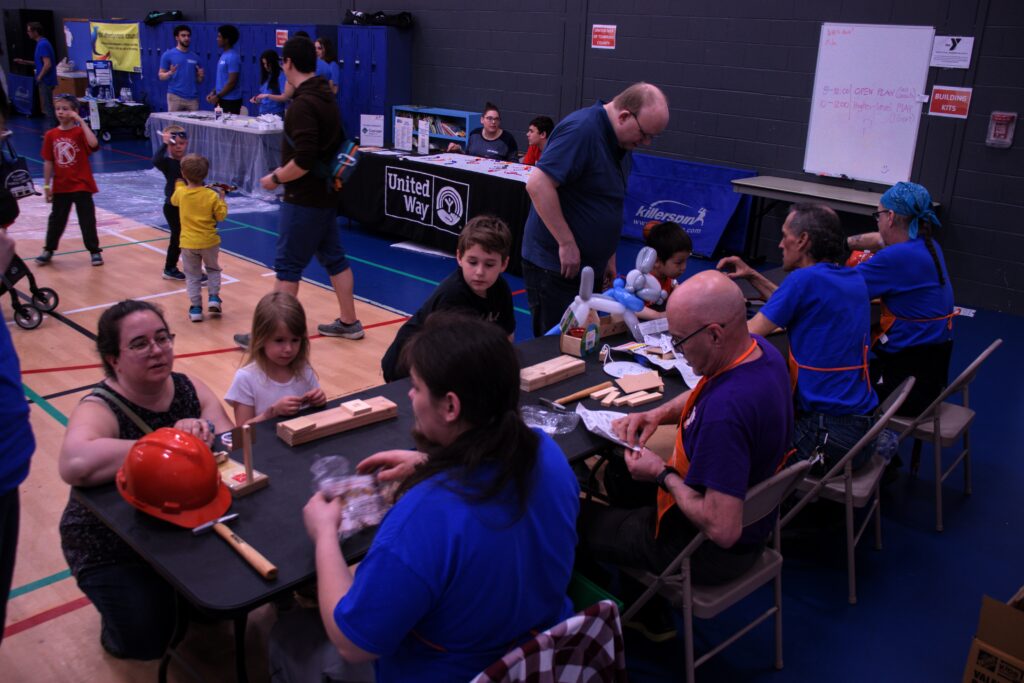
The focus behind Ithaca YMCA’s Healthy Kids Day is to provide a mix of fun—like face painting and a bounce house—with resources like exercise classes and health screenings.
“Health can be intimidating, especially for children,” explains Johnathen Rockwell, the location’s communication director. “Blending fun and activity with health resources makes staying healthy more approachable for families and keeps kids engaged with what they are learning.”
The thirty-fourth annual event, which has drawn more than 300 visitors in the past, will take place from 1–3 p.m. on April 18 this year.
A variety of organizations that support the wellbeing of families will be onsite to answer questions about the resources they provide, as well as to facilitate fun activities for attendees.
A favorite memory of Rockwell’s—one he says encapsulates the event—was when an impromptu tug of war game broke out between parents, children, staff, and YMCA’s leadership team at a previous Healthy Kids Day.
He adds, “Those spontaneous moments of fun are only possible when the whole community is together, and we really love bringing those to life.” ithacaymca.com
PIRATE PALOOZA
Hotel Canandaigua launched Corsair’s Cove, its outdoor tiki bar, last year with a pirate theme.
Soon, the idea for a complementary, family-friendly event took shape, and ultimately became Pirate Palooza.
The first event took place last year and drew about 300 visitors. For this year’s free event on June 6, event organizers are introducing more vendors, more entertainment, and more activities and games (with prizes) for kids.
The event will feature dozens of vendors, Nolan’s famous lobster rolls, and a beer and wine garden for the adult attendees. For kids, there will be bounce houses, games and activities, giveaways, live music, and, of course, pirates.
All attendees are encouraged to wear their best pirate costumes. This year’s event will benefit the nonprofit Happy Tails Animal Rescue.

SUPPORTING STRONG KIDS
This year marks the thirtieth anniversary of Stroll for Strong Kids and 5K, one of the largest fundraising events for Golisano Children’s Hospital.
A lot has changed during those thirty years: most importantly, the participation and support by the community. During the Stroll’s first year, 500 people participated; last year, 7,000 participants showed up.
All proceeds from the event—which takes place this year on May 30 in Genesee Valley Park—support the work done by the hospital, which provides care to more than 86,000 children each year. Golisano Children’s Hospital has been ranked as one of the top fifty children’s hospitals in the country for multiple specialty areas by U.S. News & World Report.
To support the event, participants can pledge, walk, or run the 5K. Event organizers encourage participants to show up dressed as a favorite real-life or fictional superhero this year.
“We hope everyone who takes part feels a real sense of pride in knowing their support helps make miracles happen every day at Golisano Children’s Hospital,” says Betsy Findlay, senior director of advancement at the hospital.
“Just as importantly, we hope they feel the sense of community that makes this event so special, bringing together families, patients, and supporters who have all been impacted by the hospital’s incredible care.”
urmc.rochester.edu/locations/golisano-childrens-hospital
This article originally appeared in the Spring 2026 issue of (585) Kids.
APRIL 17–18
BIG NIGHT FOR SALAMANDERS
Every spring, mole salamanders come out from their underground homes and travel to nearby shallow wetlands to breed. Genesee Country Village & Museum will host a guided, one-mile evening hike to spot the migrating salamanders and learn more about them. Hikers will then gather around a campfire for a reading of Big Night for Salamanders by Sarah Lamstein. Recommended for ages three and older; purchase tickets in advance.
7 p.m.
Genesee Country Village & Museum
1410 Flint Hill Road, Mumford
538-6822 (gcv.org)
APRIL 18
HEALTHY KIDS DAY
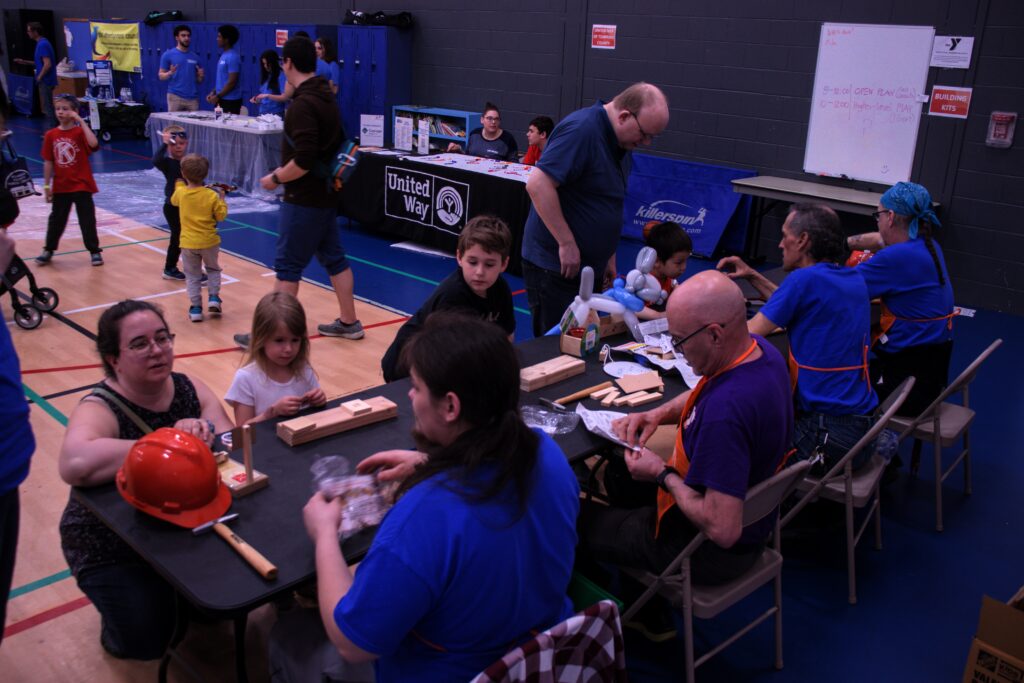
For thirty-four years, the Ithaca YMCA has celebrated keeping families and kids healthy with Healthy Kids Day. the event will blend fun activities—like face painting and a bounce house—with health screenings, exercise classes, and more. A number of organizations from across Tompkins County will be onsite, offering activities.
1–3 p.m.
Lansing Harbor
50 Graham Road West, Ithaca
(607) 257-0101 (ithacaymca.com)
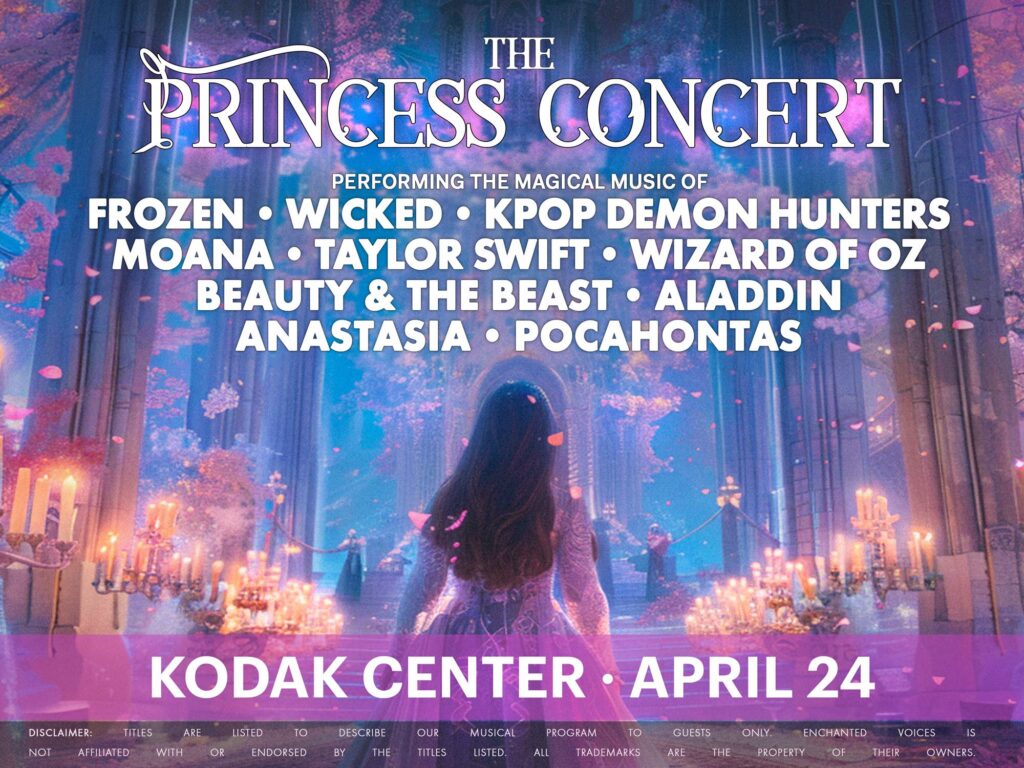
APRIL 24
THE PRINCESS CONCERT
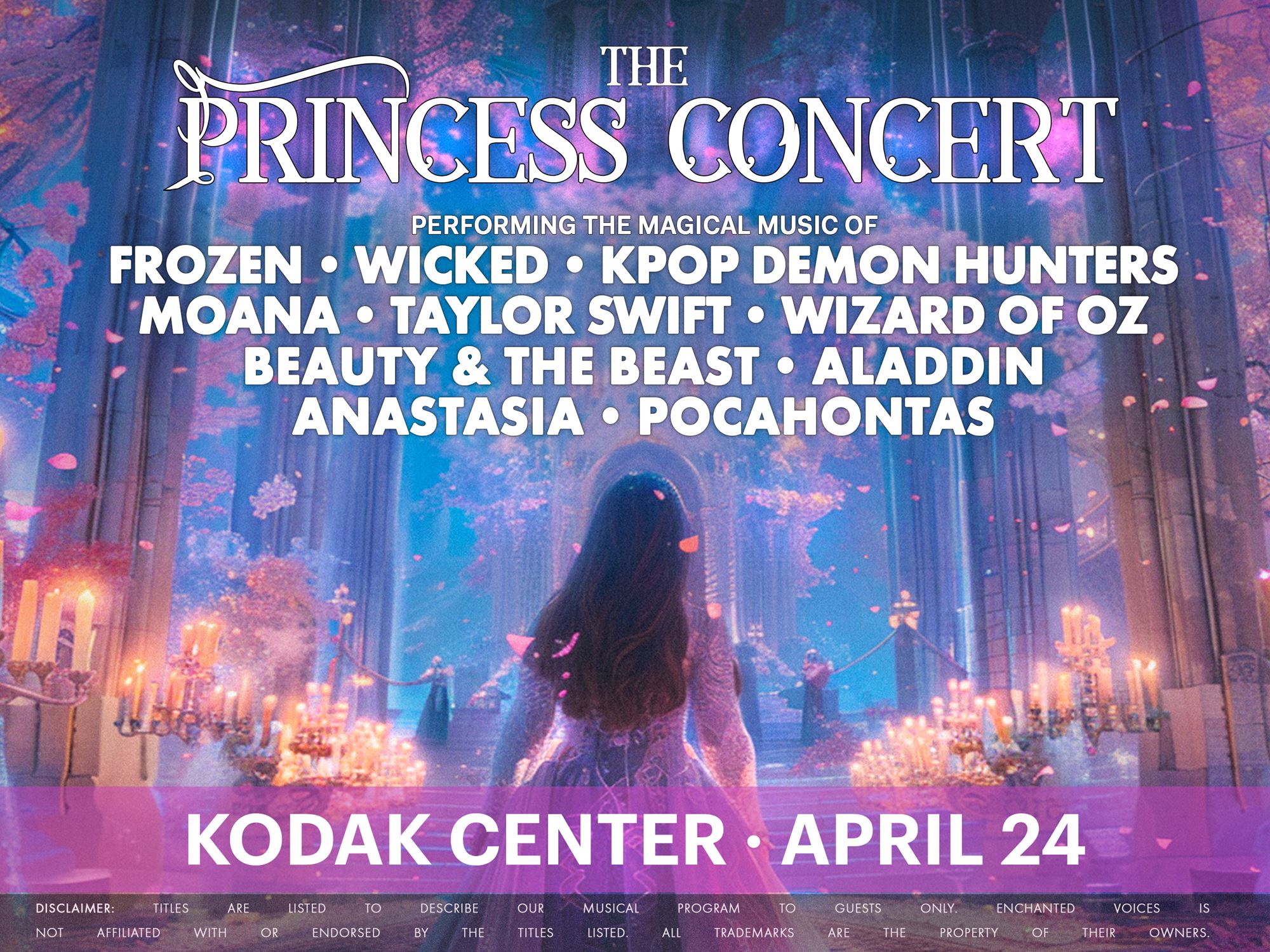
The stars of The Princess Concert will be performing songs from beloved movies like Moana, Wicked, KPop Demon Hunters, and more. Familiar tunes from pop stars like Taylor Swift and Coldplay will also be featured. Participating singers have performed on the West End (a.k.a. London’s Broadway) and for royalty.
6 p.m.
Kodak Center; 200 West Ridge Rd.
254-0181 (kodakcenter.com)
APRIL 25
DAY OF DANCE!
A variety of dance performances will take place throughout the day during Strong Museum of Play’s Day of Dance! There will be free dance lessons by Draper Dance, and there will also be story time about dance. Visitors will have an opportunity to create a ribbon wand.
11 a.m.–3 p.m.
Strong Museum of Play; One Manhattan
Square; 263-2700 (museumofplay.org)
APRIL 25–26
BRICKUNIVERSE ROCHESTER
Recommended for kids from four to fourteen, BrickUniverse is a celebration of all things LEGO. Visitors will be able to meet local LEGO enthusiasts and famous LEGO artists from around the country. Large-scale LEGO builds will be on display, some large enough to step into. There will be opportunities to build for all ages, and vendors will be onsite, selling LEGO brick accessories. Check website for times.
The Dome Arena/Minett Hall
2695 East Henrietta Rd., Henrietta
APRIL 30–MAY 3
GARDEN BROS NUCLEAR CIRCUS
Billed as “The Largest Circus on Earth,” Garden Bros Nuclear Circus features more than sixty performers from all areas of the world. This 100-minute performance will include clowns, daredevils, aerial artists, stunt drivers, and more. Check website for times.
Mall at Greece Ridge
271 Greece Ridge Center Dr.
(941) 222-0812
MAY 2
PAW PATROL PAW-TY
The Playpen is hosting a Paw Patrol Paw-ty for kids ages one to ten. In addition to open play, there will be a Paw Patrol-themed craft and activity, as well as cupcakes, juice, and a goodie bag available.
Register online.
The Playpen
1205 Mayberry Pl., Macedon
(315) 584-1273 (theplaypen.org)
MAY 8
ROCHESTER LILAC FESTIVAL
Three stages will host hundreds of performers during the Rochester Lilac Festival. Kids can explore rides, games, entertainment, and more. Visitors can indulge in local food and craft beverages and explore hundreds of varieties of lilacs in Highland Park.
Through May 17
Highland Park
180 Reservoir Ave.
MAY 9
ROCHESTER DACHSHUND PARADE
The twenty-fourth annual Rochester Dachshund Parade will feature a fashion show, oompah music (think the brass music you’d hear at Oktoberfest), a parade, and more.
Parade will begin around 11:30 a.m.
10 a.m.–12 p.m.
Washington Square Park
181 S. Clinton Ave.
MAY 28–30
MENDON FIRE CARNIVAL
This year’s Mendon Fire Carnival, which benefits the town’s fire department, will feature fireworks on Thursday night, a chicken barbecue Friday night, and the Fireman’s Parade on Saturday. Rides will be running each day, and unlimited ride passes are available online. There will also be live music in the beer tent each evening.
Mendon Fire Hall
101 Mendon Ionia Rd., Mendon
624-1738 (mendoncarnival.org)
MAY 30
STROLL FOR STRONG KIDS AND 5K
Walkers and runners are encouraged to dress as a favorite real-life or fictional superhero at this year’s Stroll for Strong Kids and 5K. This year marks the thirtieth anniversary of this fundraising event to support pediatric patients at Golisano Children’s Hospital.
The stroll begins at 10:30 a.m., and the 5K race begins at 8:30 a.m.
Genesee Valley Park
1000 E. River Rd.
JUNE 6
TWO-GETHER TIME
In this hands-on class for artists five years and older with an adult, kids will color and assemble a wind chime. Next, kids will paint a pot and choose a flower to plant inside.
9–10 a.m.
Broccolo Garden Center
2755 Penfield Rd, Fairport
424-4476 (broccololawnandlandscape.com)

JUNE 6
PIRATE-PALOOZA
For the adult visitors of the second annual Pirate-Palooza, a beer and wine garden will be onsite, as well as dozens of vendors. For the kids, bounce houses, games, activities, and live music will be featured, and, of course, pirates! This event is free for the community.
Noon–4 p.m.
Hotel Canandaigua
205 Lakeshore Drive, Canandaigua
577-3500 (bit.ly/piratecdga)
JUNE 13
MOVIES IN MANDEVILLE: HERCULES
A Hercules-themed lobby party will kick off this Movies in Mandeville event, complete with games, activities, and themed snacks. At 2 p.m., the Disney film will screen in the theatre. Guests are encouraged to dress as characters in the film, or as heroes, Greek gods and goddesses, or mythical creatures.
1 p.m.
Clemens Center
207 Clemens Center Parkway, Elmira;
(607) 734-8191 (clemenscenter.org)

JUNE 14
PRINCESS BRUNCH
Ariel, Ursula, and more will be present as diners feast on a brunch buffet during this Princess Brunch. The characters will perform live musical numbers and host a sing-along. A photo opportunity will be offered after the performance. Guests are encouraged to dress in costume. Suggested for kids between three and eight years old.
10:30 a.m.
The Old Farm Café
3450 Winton Pl.
667-0954 (bit.ly/ofcbrunch)

JUNE 15
PLANET K-POP: THE ULTIMATE K-POP TRIBUTE CONCERT
In full celebration of K-Pop culture, Planet K-Pop: The Ultimate K-Pop Tribute Concert will feature live singers and dancers performing songs from KPop Demon Hunters, BTS, BLACKPINK, Huntr/x, and more. The audience will experience onstage dance battles and surprise cast interactions.
7 p.m.
Kodak Center
200 West Ridge Rd.
254-0181 (kodakcenter.com)
JUNE 21
FATHER’S DAY BBQ
20 Deep Winery will be hosting a Father’s Day event with the help of Pat’s Pigs, serving up a full barbecue spread. The event will also feature live music and lawn games, as well as a pizza food truck and Fairport’s The Ice Cream Factory. 20 Deep wines will be available, as well as a selection of local beers and non-alcoholic options.
11 a.m.–7 p.m.
20 Deep Winery
187 Mendon Ionia Rd, Honeoye Falls
204-7953 (20deep.com)
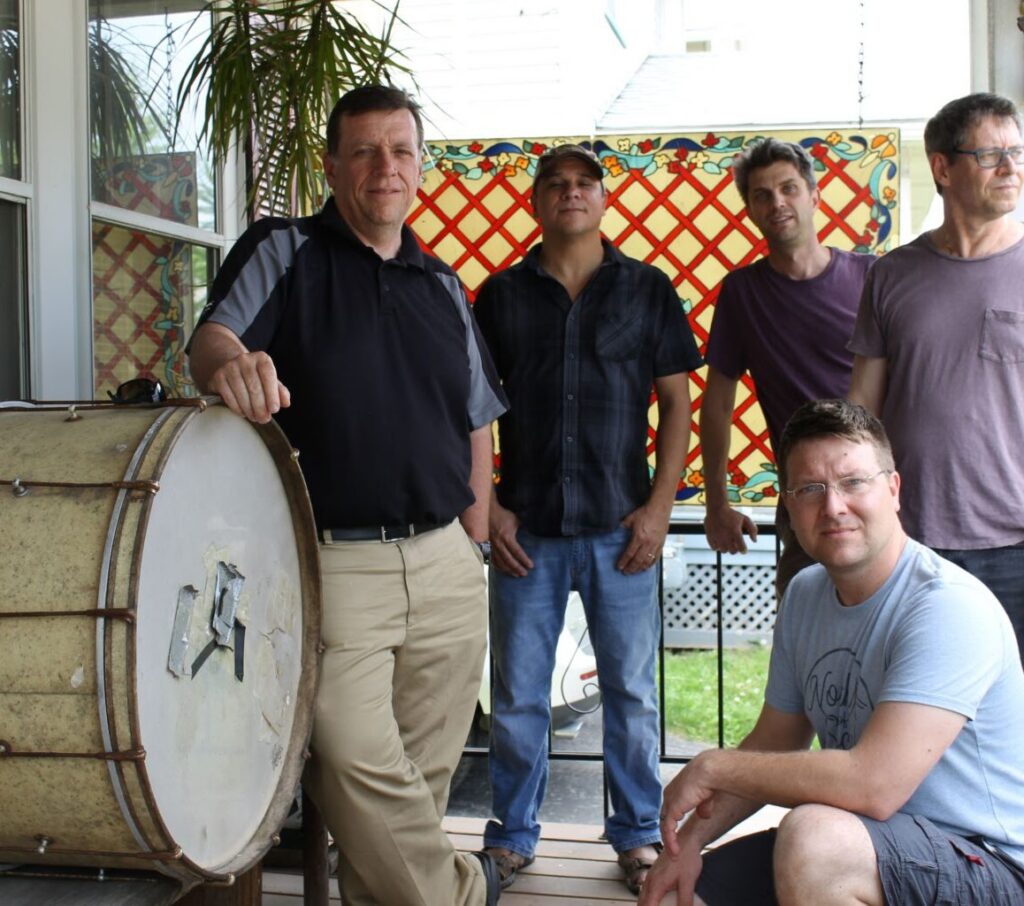
JUNE 26
MUSIC ON THE LAWN: GRAND CANYON RESCUE EPISODE
Bring your own blanket and chairs to Long Acre Farms Music on the Lawn event, featuring Grand Canyon Rescue Episode, an acoustic-electric Americana band. This free event is rain or shine, and food and beverages will be available for purchase. Food options will include wood- fired pizzas, as well as fare from the LAF Grill and the Rolling Stoves barbecue food truck.
5:30–9 p.m.
Long Acre Farms
1342 Eddy Rd., Macedon
(315) 986-4202 (bit.ly/LongAcreMusicLawn)
Except where noted, all events take place in the area code (585).
Have an event of your own to publicize? You can add it to our online calendar at 585mag.com. You may also email details to cg****@58****.com .
This article originally appeared in the Spring 2026 issue of (585) Kids.

If you have teenagers in your house, ask them to help with meal planning. I am serious—ask them what is trending on TikTok and they will be able to tell you. Many of the videos show viral food trends and recipe ideas. There are also videos for home recreations of popular restaurant dishes.
This is a fun way to get teens involved, though they still probably won’t think you are cool.
Our current favorite is the Trader Joe’s dumpling bake. There are many recipes online; below is the recipe that I have tweaked for our family. I add more green veggies, double the dumplings, and add a can of chickpeas for extra protein and fiber.
I put out a variety of toppings including chopped scallions or chives, peanuts or cashews, sesame seeds, chili crisp, and sambal olek.
This is a great meal to take to friends. It can also be made in advance and left for your family on a busy weeknight.
Enjoy!

INGREDIENTS
2 packages frozen dumplings/potstickers—chicken,
pork, vegetable, or a combination
1 can coconut milk
1 bottle Thai curry sauce
3 tablespoons soyaki or soy sauce
1 package fresh baby spinach
Zucchini, cubed
1 can chickpeas, drained
DIRECTIONS
1. In a 9x13 pan mix the can of coconut milk, 3/4 bottle curry sauce and soyaki sauce. Lay dumplings (still frozen) in a single layer, add in spinach and zucchini, dump in chickpeas. Stir to ensure everything is covered.
2. Cover with aluminum foil and bake for about 35 minutes at 400°F.
3. Serve with a side of rice or noodles and some steamed green beans or snap peas.
This article originally appeared in the Spring 2026 issue of (585) Kids.

Spring in Rochester is a great time to get outside, get muddy, and see what’s springing up. It’s also a good time to plant new seeds that will sprout this season —and continue to grow year after year. We’re not just talking about daffodils, daylilies, and black-eyed Susans; we’re talking about the seeds of literacy! Whether the kids in your life are babies or teens, give them books to explore with a caregiver or on their own. Early introductions to literacy skills will create the pathways in their brains now that will keep them reading, learning, and growing in the future. Need some suggestions? Check with your local library or look for one of these outdoorsy-themed books below!
PICTURE BOOKS
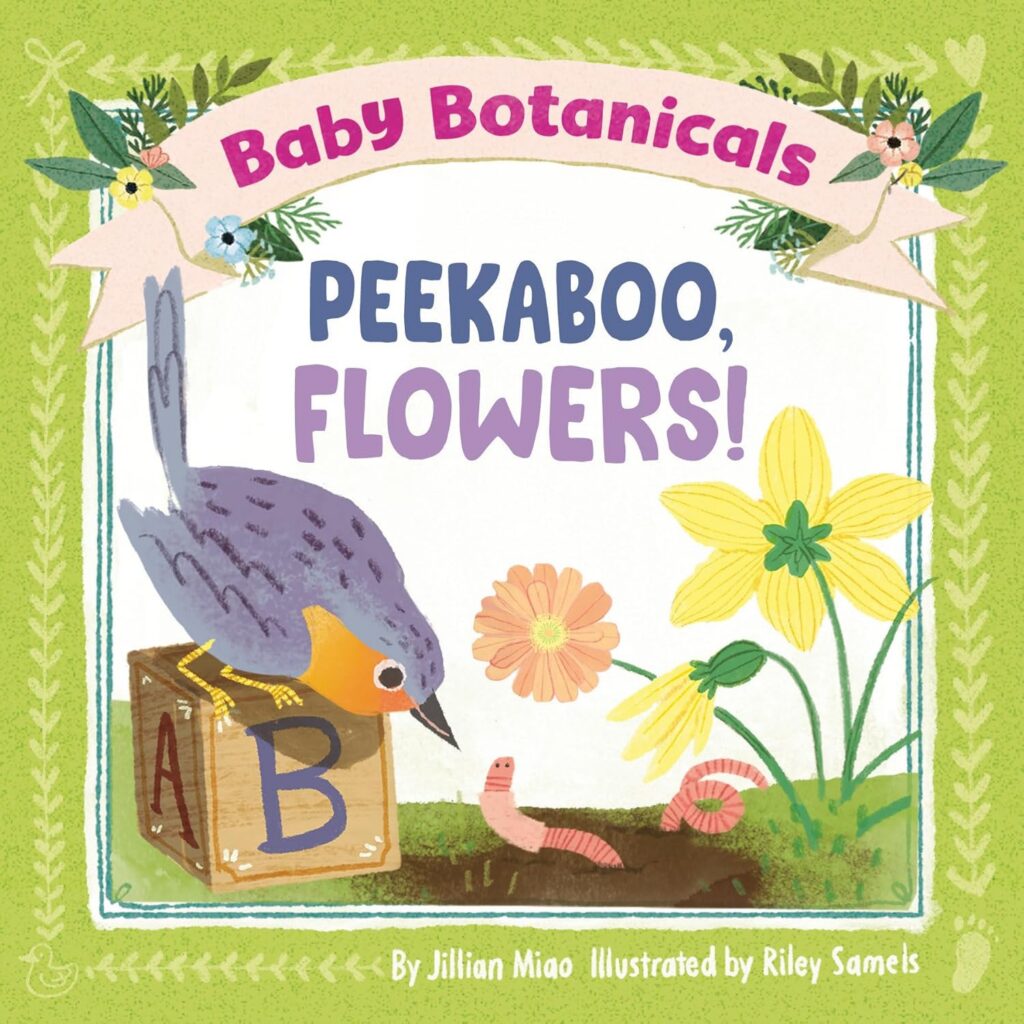
Baby Botanicals: Peekaboo, Flowers! & Good Morning, Garden!
By Jillian Miao & Riley Samels
Doubleday, 2026
Rhyming text and bright illustrations will get readers excited to point out the plants and animals in these two books.
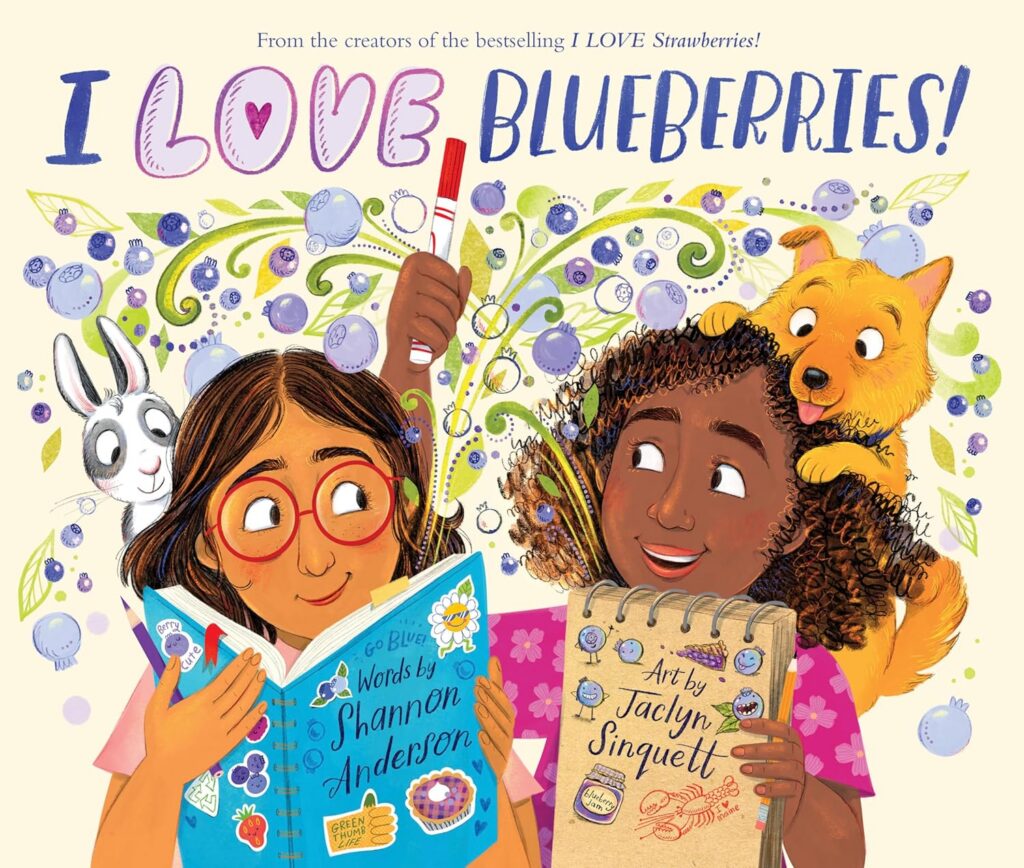
By Shannon Anderson & Jaclyn Sinquett
Feeding Minds Press, 2025
Through journal and sketchbook entries, two girls figure out how to grow blueberries in their classroom.
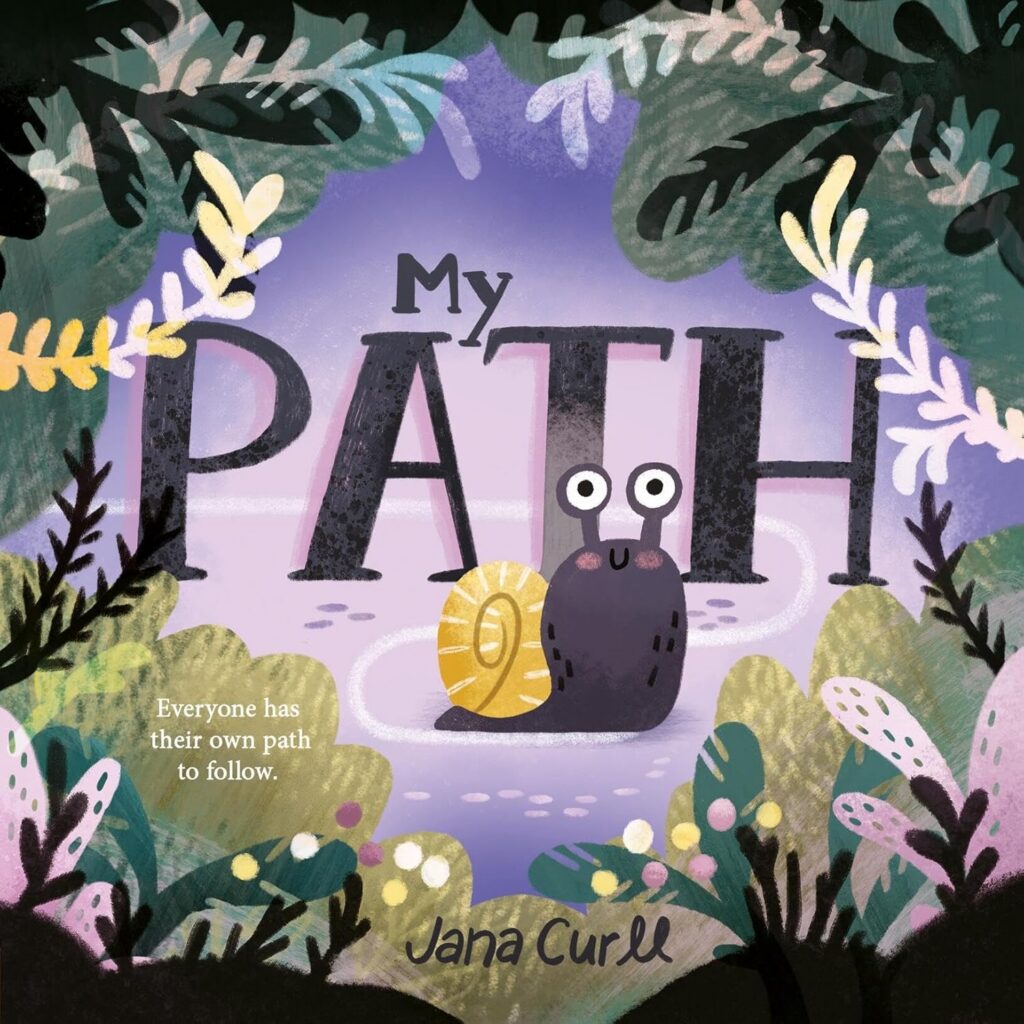
By Jana Curll
Nosy Crow, 2025
A snail finds its path through the outdoors—sometimes making its own way—in this literal and metaphorical story.

By Sherri Maret
Muddy Boots, 2026
Count from day one to day twelve, with each number revealing a naturally magical piece of spring.
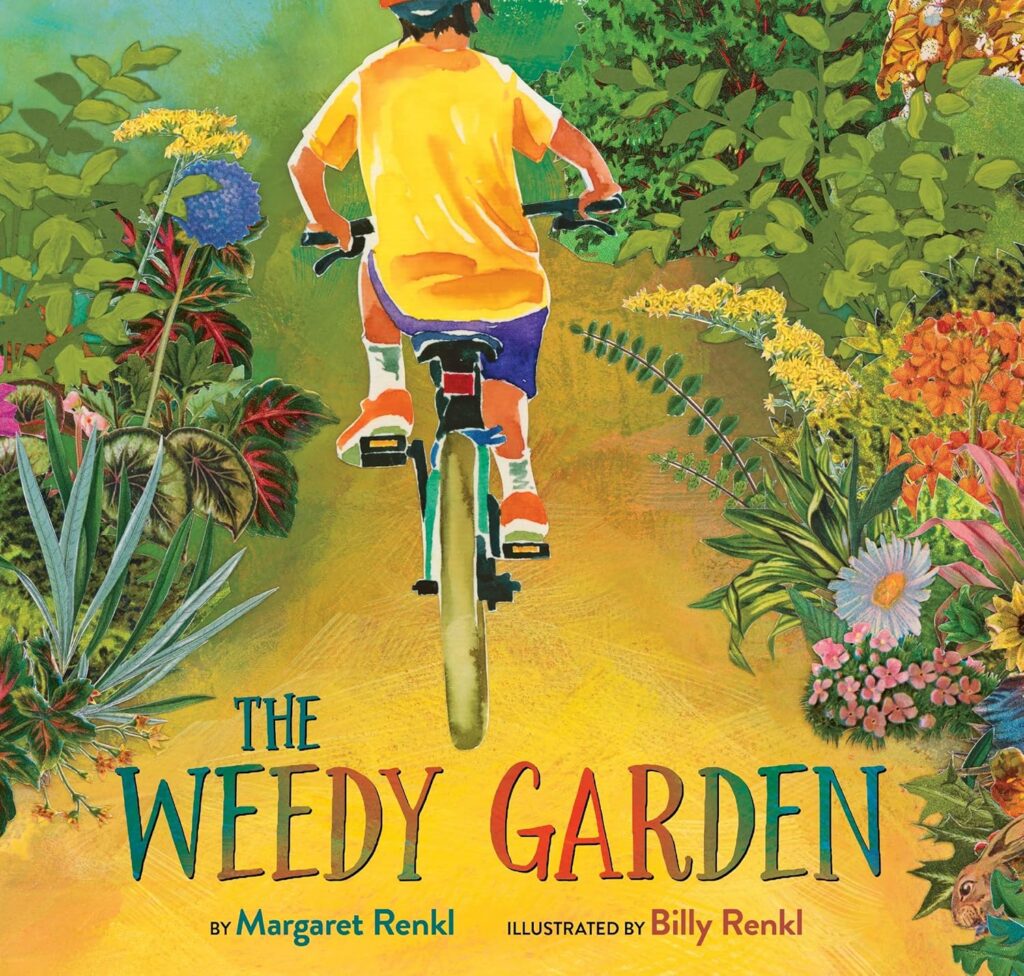
The Weedy Garden: A Happy Habitat for Wild Friends
By Margaret Renkl & Billy Renkl
Greenwillow, 2026
So many things can be found in a garden—especially when it is full of natural plants we call weeds! Readers can explore the pages and see what they can find.
MIDDLE GRADE

By Adiab Jaigirdar & Avani Dwivedi
Quill Tree, 2026
Nadia spends Ramadan in Bangladesh and learns how global warming is negatively affecting the country.
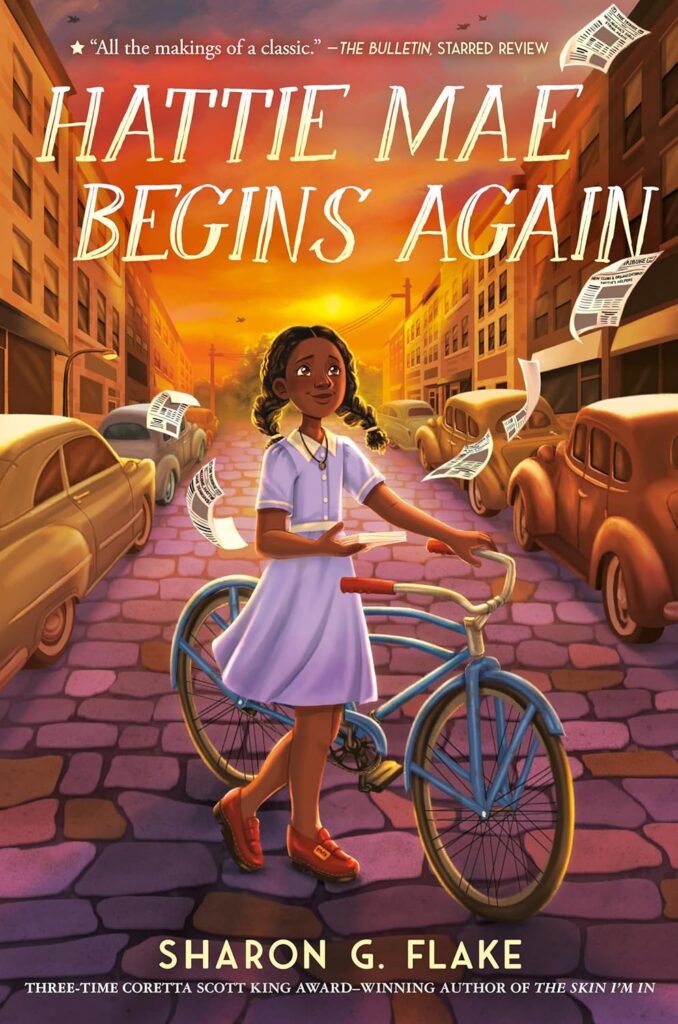
By Sharon G. Flake
Knopf, 2026
Hattie works hard on her family’s farm and also works hard at fitting in at her new school in this historical novel-in-verse.

By Christopher Roubique
Viking, 2026
Kyta gets his chance to save the world and fulfill a prophecy when he must steal back the Egg of the World Turtle on which everything lives.

By Ross Montgomery
Candlewick, 2026
Tick, his brother, and their loyal horse must warn the King when invaders attack their kingdom and threaten their peaceful lives.
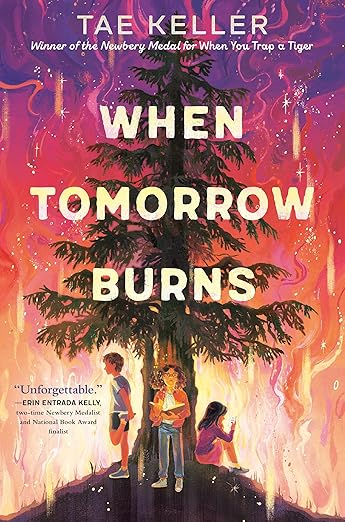
By Tae Keller
Random House, 2026
A prophecy and wildfire test the friendships of three seventh graders—and the entire city of Seattle.
YOUNG ADULT

By Carolina Ixta
Quill Tree, 2026
A heartbroken teen resolves to stop a corporation from building warehouses on her community’s green spaces and reconnect with her ex.

By Suzanne Young
Simon & Schuster, 2026
Years after a fire burns down a luxury hotel in the Everglades, a group of teens find the exposed ruins and try to uncover the deadly truths that are no longer buried.

By David Ferraro
Page Street, 2026
Callum, a witch, must safely deliver Auggie across the sea from London to New York to get a new deal from the Devil to whom he lost his soul.

By Liara Tamani
Greenwillow, 2026
Josie wants to ride her horse, not work in her family’s high-end restaurant. Shawn has been bull riding for years, but is done with his stepdad’s drinking. When the two fall for each other, they try to keep all their dreams alive.
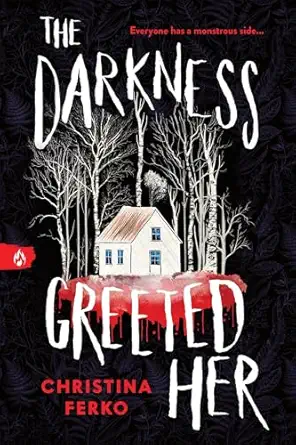
By Christina Ferko
Sourcebooks Fire, 2026
Penny arrives at Camp Whitewood for a summer retreat in the woods with therapy to recover from her father’s death, but when someone dies, it becomes clear that Penny isn’t just seeing things.
This article originally appeared in the Spring 2026 issue of (585) Kids.
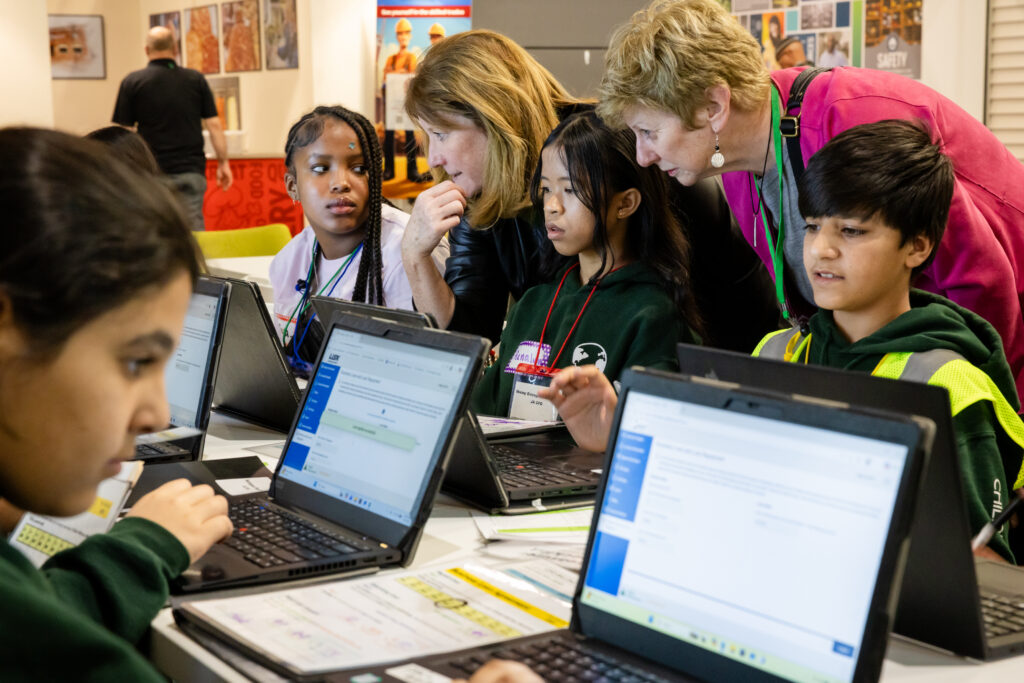
The staff at the Paychex Junior Achievement Discovery Center loves to line up inside their simulated town and watch children’s faces as the doors open. Program coordinator Milla Litzburg prepares sixth graders in the staging area before releasing them into the miniature replica of the city of Rochester, one group at a time. Eyes wide, mouths open, fists pumping in the air—the students have been anticipating this moment for months.
“I love watching the kids walk in,” says program assistant Anna Winters. “It’s like Christmas morning!” When students enter the 18,000 square foot learning lab, located in the Kodak Center, they are met by the iconic Welcome to Rochester sign. From the aqueduct to the Erie Canal and Genesee River, everything here mirrors the landmarks that they have been learning about in school.
Students walk through the town, past Paychex, UR Medicine, LiDestri, and other local businesses, until they find their own company’s storefront and get right to work. Each CFO takes out a loan to pay employees, and teams come up with marketing strategies and advertise their products. Students at LeChase apply for building permits and measure a space for a community basketball court.
Everyone gathers for a town meeting where each CEO gives a speech, and elected mayors are officially sworn in. Then it’s back to work for a quick staff meeting and every CEO signs paychecks. Groups from each business take turns visiting the bank and voting booth.
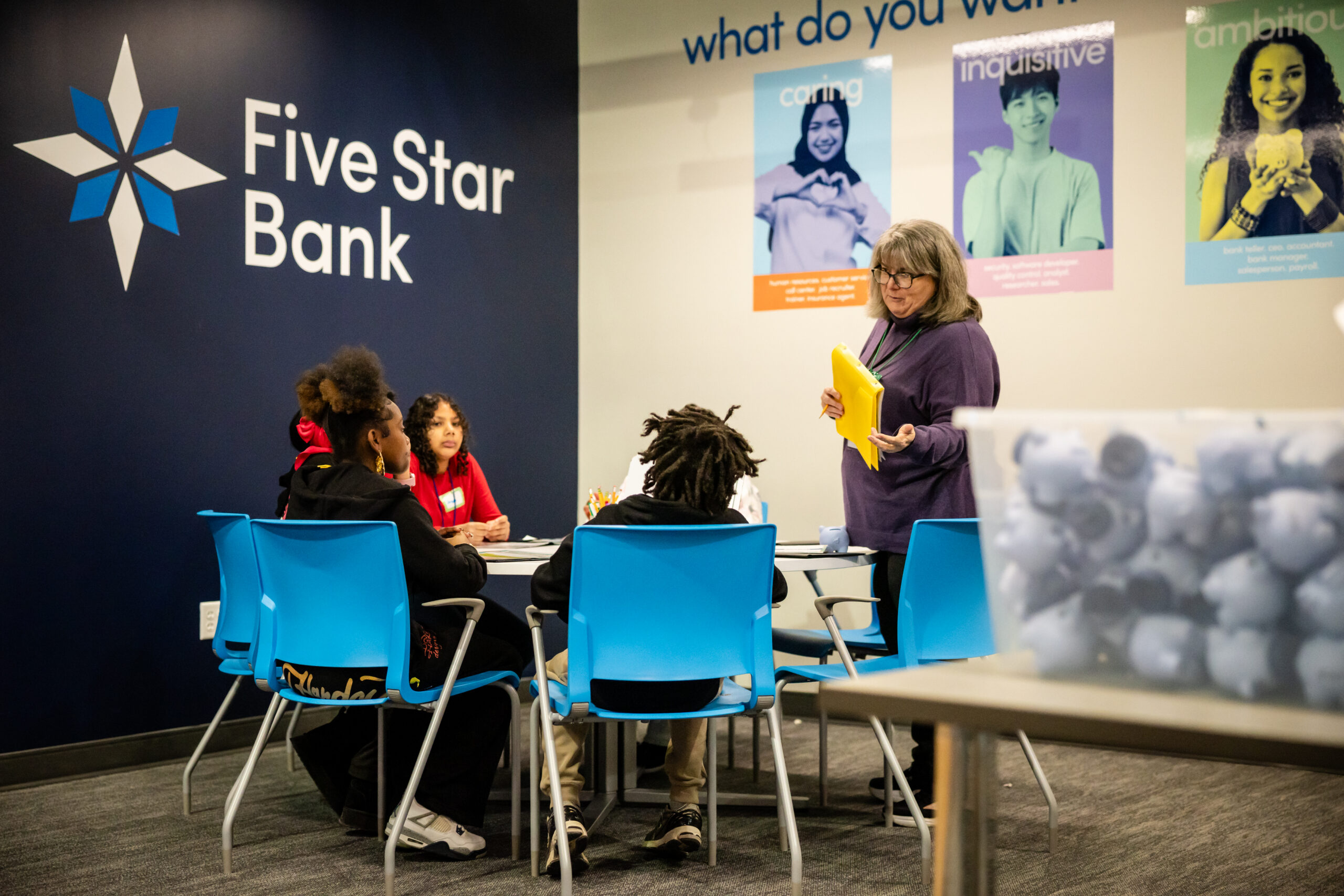
At Five Star Bank, Maggie Elliott, a retired elementary school librarian, leads a discussion, showing students how to deposit paychecks. They will have to be accurate when handing out cash and putting money into savings accounts. As a program assistant, Elliott witnesses the impact on the students. “Even if they don’t get everything, they’re exposed to so many lessons here.”
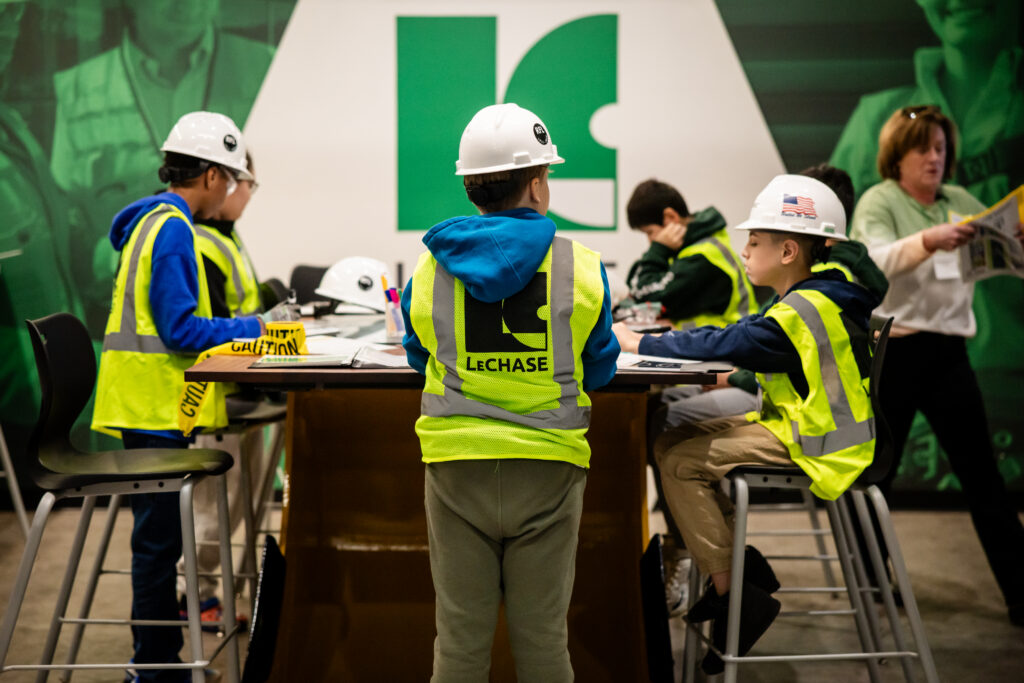
Khloe, one of the tellers, is having a blast checking IDs, depositing money into savings accounts, and handing out Bizbucks, saying, “I knew working at the bank would be fun.” She hands cash to a construction worker from LeChase and says, “Have a nice day!”
It’s time for a lunch break before everyone gets to become consumers in the economy, taking turns visiting businesses and spending their Bizbucks on real goods and services.
Biztown may be new to Rochester, but Junior Achievement was founded in 1919, delivering financial literacy, workforce preparedness and entrepreneurship programs to middle grade classrooms by 1975. With more than 100 chapters across the nation, two of the most popular programs are Biztown and Finance Park. Both are cumulative programs, containing thirteen in-classroom lessons followed by a day-long visit to the Discovery Center.
JA Biztown allows elementary school students to operate banks, manage restaurants, write checks, and vote for mayor. Students are able to connect the dots between what they learn in school and the real world. JA Finance Park is focused on personal financial planning and career exploration. Students develop and commit to a personal budget and make decisions after being given a scenario complete with job, credit score, housing, family, and financial obligations. High school students can return to complete a more advanced version of Finance Park where they select their career and define their future lifestyle and financial goals.
Director Ramona Englebrecht got involved when this space was an empty gymnasium, working with local businesses to create storefronts and 150 job descriptions. “This is an equalizer,” she says. “We are dedicated to making sure all kids get to have this immersive experience.”
The experiential and inquiry based learning aligns with state standards while reaching all types of students. Englebrecht recounts the day she noticed a student completely engrossed with the VR equipment at RG&E. He said, “I love my job.” His teacher was crying; it was the first time she had heard him speak.

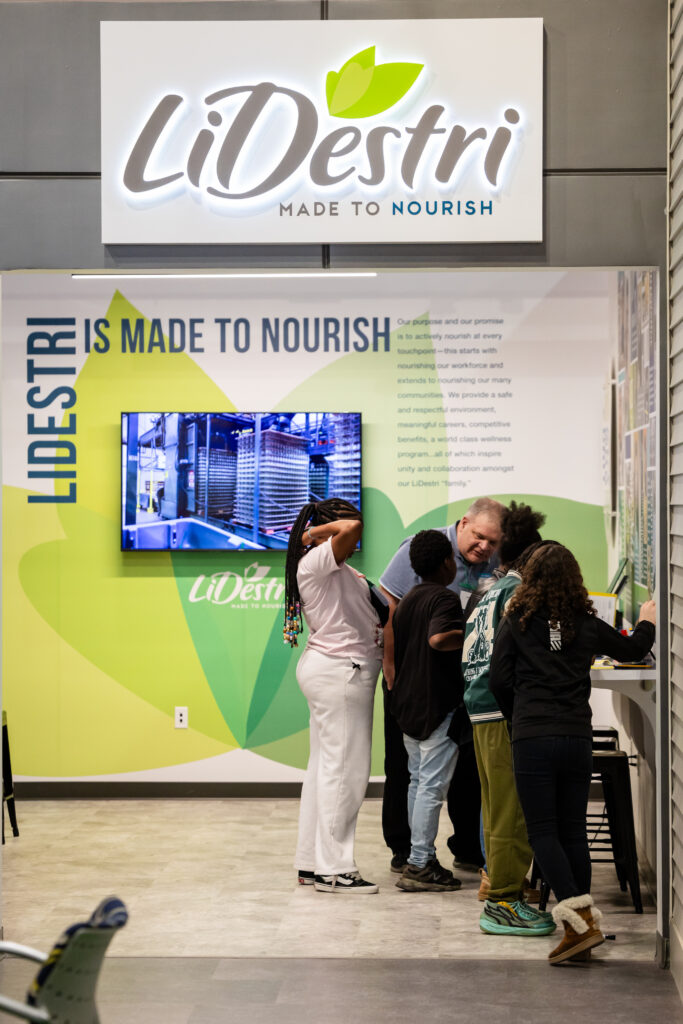
President & CEO Patricia Leva says, “You can’t be what you can’t see.” Leva is constantly evaluating the program, the first of its kind in New York State, to ensure that kids are leaving with the knowledge and confidence to make smart economic choices. Her goal is to inspire them to create their own success.
“Rochester has a high level of generational poverty,” Leva says. “Here, kids get to open a bank account, become an employee. When they get into those roles, they can envision the future.” Every sixth grader from the Rochester City School District will visit Biztown this year and every seventh grader will visit Finance Park. Leva’s goal is to get every child back in for the advanced program once they reach high school to continue to build on that learning.
Biztown feels like fun but is steeped in structured curriculum. Here, students get to live out the answers to questions like: What can my role be? How does a community work together? Leva says her favorite part is seeing the “aha” moments and hearing about the impact from teachers and parents who often report kids coming home and asking to open a bank account.
At the end of the day, students reflect on what they loved and learned during their hands-on experience. Overwhelmingly, kids report that they loved having jobs and responsibilities. They also love working together to build plans, sell products and shop.
Sixth grader Mapendo spent the day as the CEO of Marks Pizzeria. “If I could be here again, I would!” Eternity, her graphic designer, says, “I’m here for the breadsticks.” Whatever the motivation, that day it was clear how much everyone was learning, a culmination of all the lessons they had done in preparation for the visit.
Most kids talked about learning responsibility and teamwork as well as communication and problem solving. Students said they learned how to vote, how to sign a check, and how the roles they held were hard work but now they knew they could do it.
For more information, visit cuny.ja.org.
This article originally appeared in the Spring 2026 issue of (585) Kids.
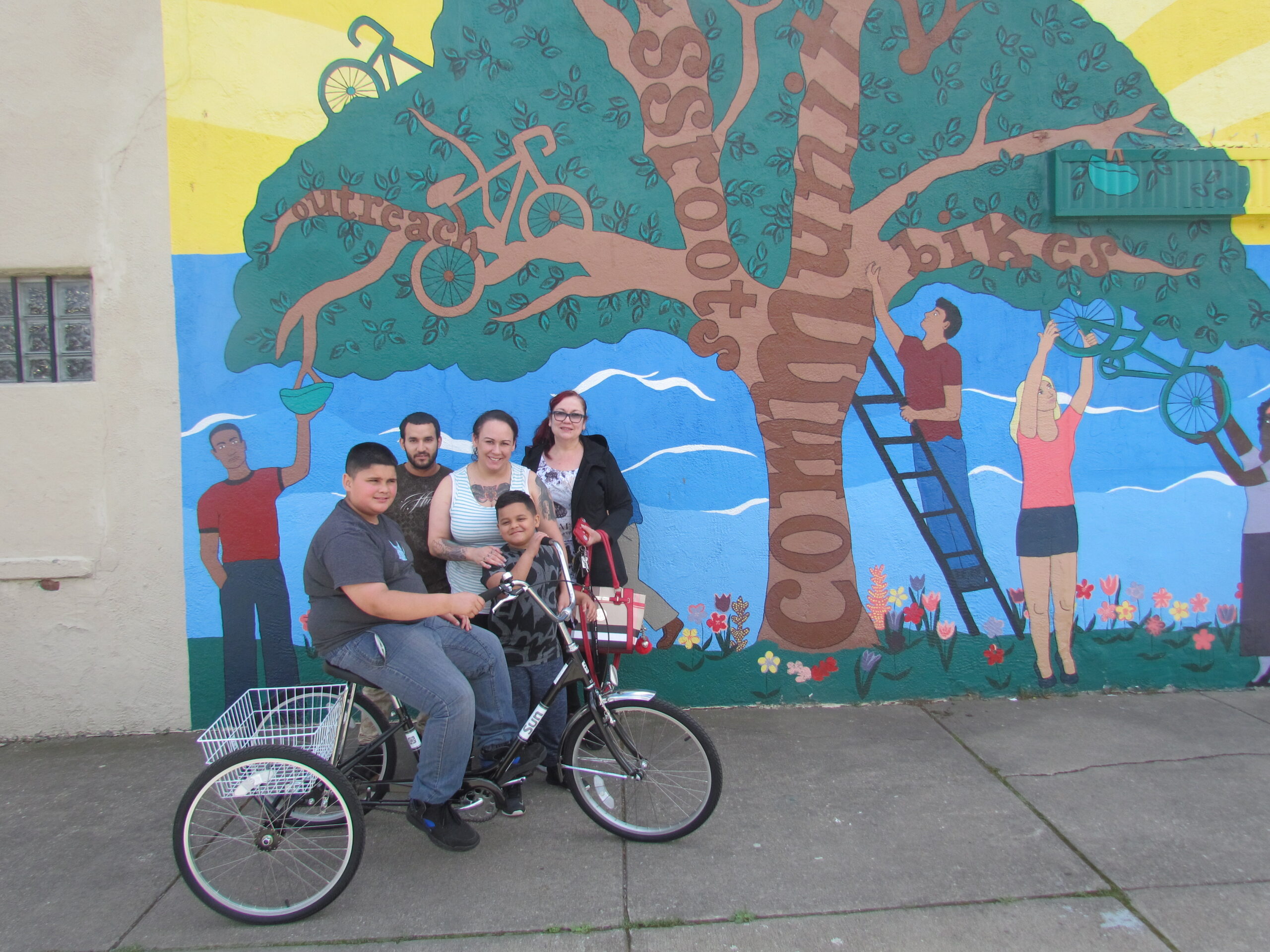
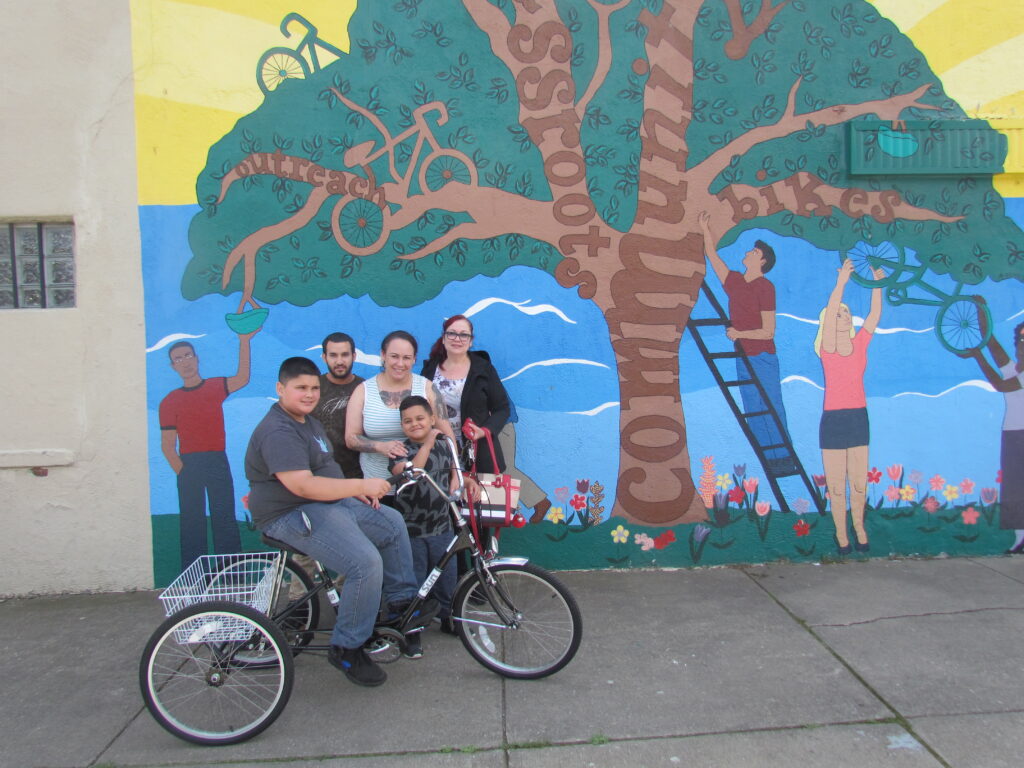
The volunteers at R Community Bikes are on a mission to make sure everyone in the Rochester area has a bicycle that’s safe to ride. This organization collects, repairs, and distributes bikes, free of charge, to any child or adult who needs one, improving lives one bike at a time.
Each year, the RCB gives away more than two thousand bicycles and completes around four thousand repairs for its clients, many of whom rely on a bicycle to get to work and school. The 501(c)3 charitable corporation also offers bike education, free of charge. And when children come in to receive a bike, they are gifted with a brand-new helmet.
Dan Lill has been there since the very beginning, twenty-five years ago. He was serving lunch in a soup kitchen when someone came in to ask if anyone could help fix a flat bike tire. “We fixed it and that’s how the whole thing started,” says Lill.
He recently published a book about how the organization got started and what it has meant to him, titled Cast of Characters: How Grilled Cheese and Tomato Soup Helped Change Lives.
“One of the things I am most proud of is that we have changed lives, not always intentionally nor in the way you might think,” says Lill. “Not only have we helped the recipients of bicycles to better their lives, but we have also given the opportunity to the volunteers to better their lives as well.”
Mario Gomes started volunteering in 2010 as a mechanic and became more involved when Dan Lill retired. Now Gomes runs the volunteer orientations, offering technical training, such as how to fix different parts of the bicycles. He also maintains the website and social media and has enjoyed volunteering with both of his sons.
As a faculty member at the Rochester Institute of Technology in the Kate Gleason College of Engineering, Gomes is mechanically inclined. He loves the challenge of fixing the bikes, but his favorite part is the people. “I have this opportunity to interact with people from all walks of life that I may not otherwise have had the privilege of talking to,” says Gomes. “All kinds of people.”
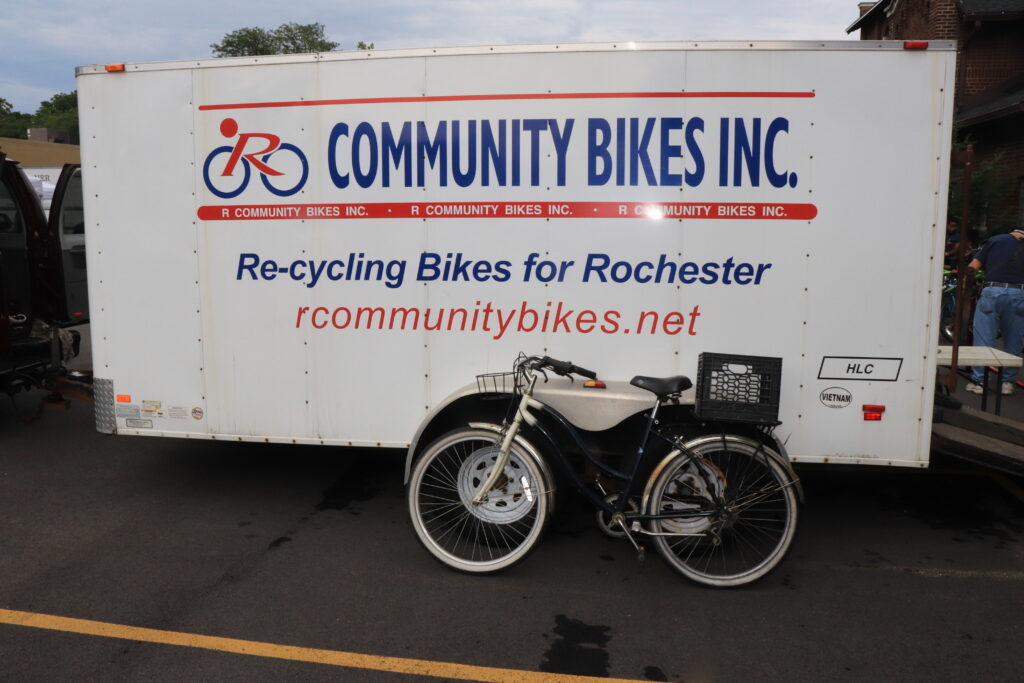
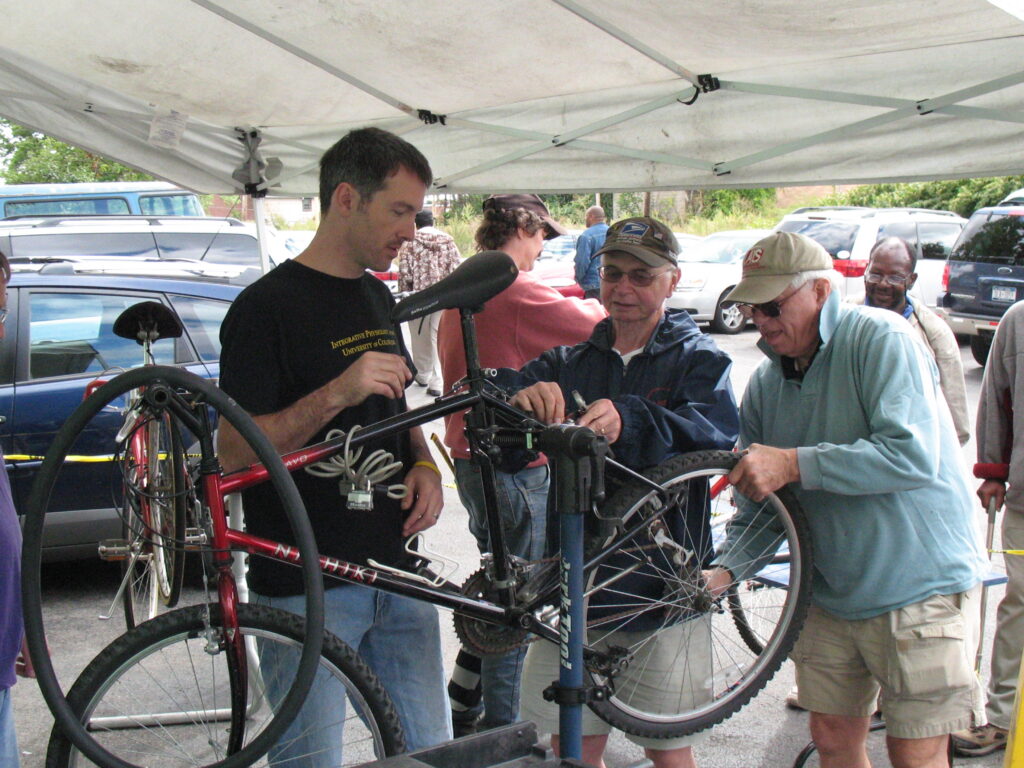
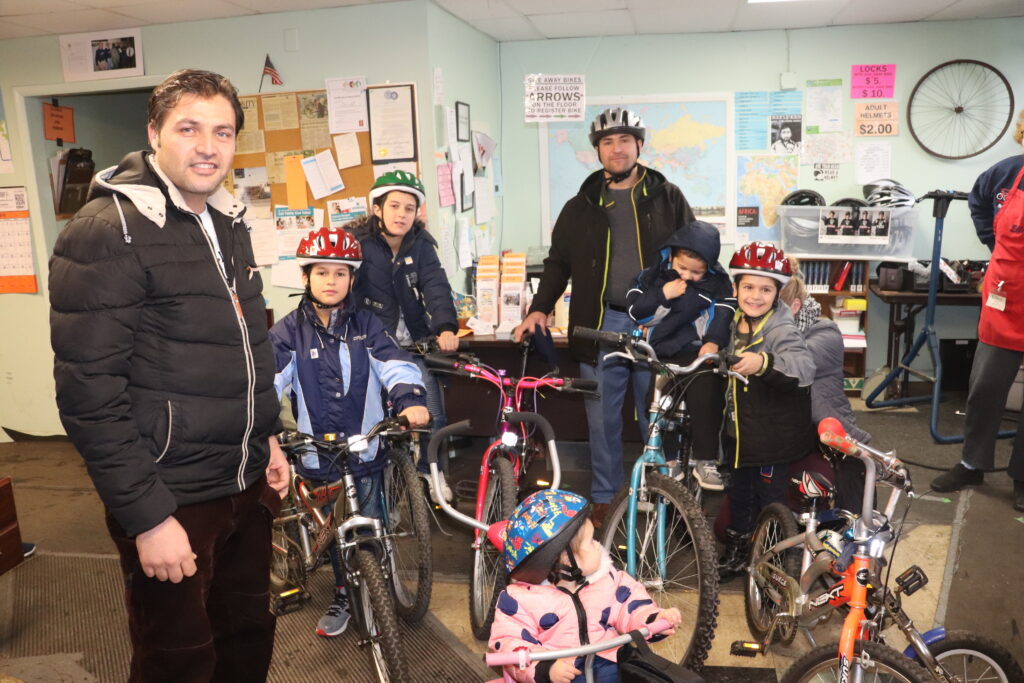
Gomes says the biggest challenge is having enough storage space during the winter to house all the donated bikes that need repairs and finding enough volunteers during the busy summer months. Not all of the volunteers are mechanics, as RCB needs people to help with logistics, sales, graphic design, cleaning, clerical work, and grant writing. Anyone interested can fill out the volunteer form on the website. And with more than 130 active volunteers, RCB appreciates any time commitment, no matter how small.
David Riley volunteers at one of RCB’s seasonal offsite locations in the Beechwood neighborhood, mostly helping with simple fixes like flat tires. “There are a lot of skilled bike mechanics who volunteer with R Community Bikes,” says Riley. “I am not one of them.” He adds that learning from more experienced mechanics has been a big bonus of the experience. “It’s really rewarding to help out and get to know the community a little better through this work.”
No appointment is needed to receive a bicycle. The bikes are given away every Wednesday and Saturday at 9 a.m. at 226 Hudson Avenue in Rochester using a lottery system, and if demand exceeds supply or if a particular style of bicycle is unavailable, clients can come back and try again. RCB allows one bicycle for each individual per year.
The only requirements to receive a free bike are a picture ID and either a working bike lock or five dollars to purchase a new lock. Children must be accompanied by an adult.
The volunteers at RCB spend much of their time refurbishing donated bikes as well as repairing same-day walk-ins from the community. They repair bikes on a first-come, first-serve basis Monday through Saturday from 9 a.m. to noon at the Hudson Avenue location.
When high-end bicycles are donated, they are sold to generate money to cover the costs of the organization such as tools and bike parts. The sales take place at the RCB warehouse at 305 Tremont Street on Tuesday and Saturday mornings. There are also one-day sales events, the next one being April 18 from 10 a.m. to 1 p.m.
R Community Bikes accepts any and all types of bikes regardless of condition as well as bike parts, tools and other bike accessories. It cannot accept helmets due to liability. Donations can be dropped off at the Hudson Avenue location or brought to any of the bicycle drives in the community.
If you have a bike you are looking to donate, consider dropping it off at one of RCB’s upcoming bike drives:
Pittsford: Saturday, May 2, 11 a.m.–3 p.m.: Pittsford Rotary: Pittsford Mendon High School, 472 Mendon Rd., Pittsford
Irondequoit: Saturday May 30, 9 a.m–Noon: Upcycle Irondequoit: I-Square, 400 Bakers Park, Rochester
Perinton: Saturday, September 26, 9 a.m–Noon: Perinton Presbyterian Church, 6511 Pittsford Palmyra Rd., Fairport
Penfield: Saturday October 3, 9 a.m–Noon: Penfield Rotary: Penfield Community Center, 1985 Baird Rd., Rochester
To learn more, visit rcommunitybikes.net.
This article originally appeared in the Spring 2026 issue of (585) Kids.
JANUARY/FEBRUARY While everyone else is making resolutions that may or may not work out, gardeners are busy making lists and plans for spring. PLAN: Dig

BUFFALO REGULAR CLUB MEETINGS African Violet & Gesneriad Society of WNY meets the third Tuesday of the month, September–August, at 7 p.m., Greenfield Health &

2445 Organics 63 Main Street Massena, NY 13662 607-752-0544 ed********@gm***.com 2445organics.com We offer indoor gardening systems that provide year-round availability of fresh food and other

Welcome to our annual directory and almanac. This year we decided to highlight birds of the month. I didn’t even realize that, just like gems

One of my favorite family activities this time of year is to wander local cemeteries. Some people find that a bit odd, but cemeteries are

BUFFALO REGULAR CLUB MEETINGS African Violet & Gesneriad Society of WNY meets the third Tuesday of the month, September–August, at 7 p.m., Greenfield Health & Rehab
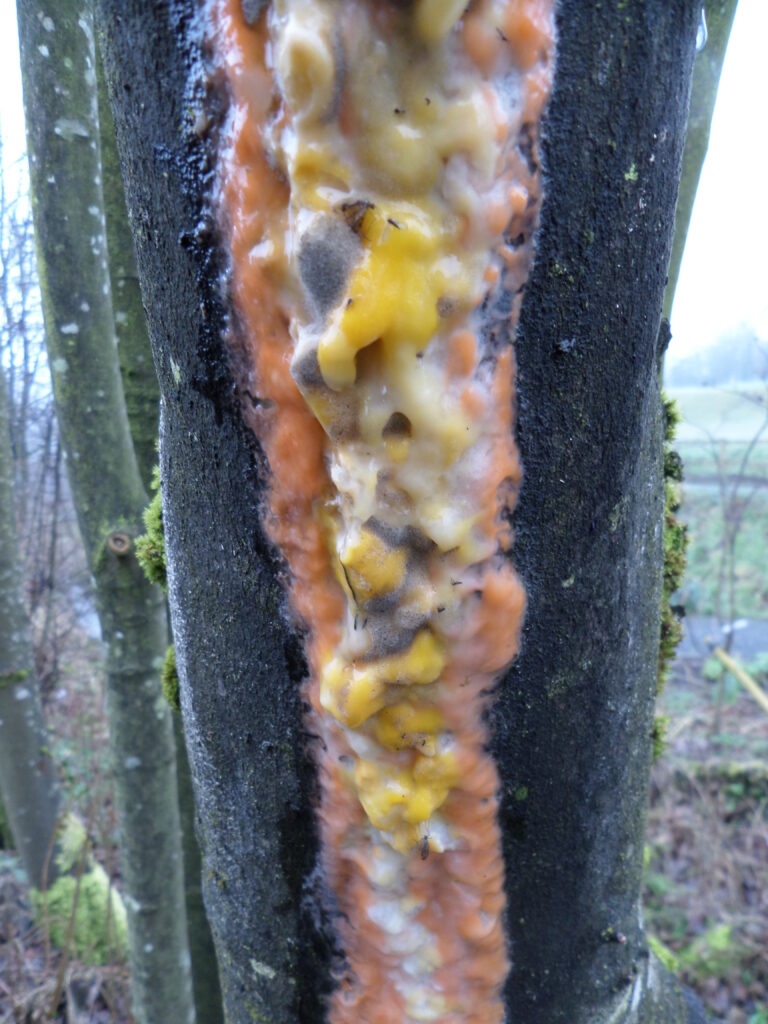
Picture this: you’re admiring your yard on a warm afternoon when you notice dark, wet streaks running down your favorite maple. The bark looks slimy
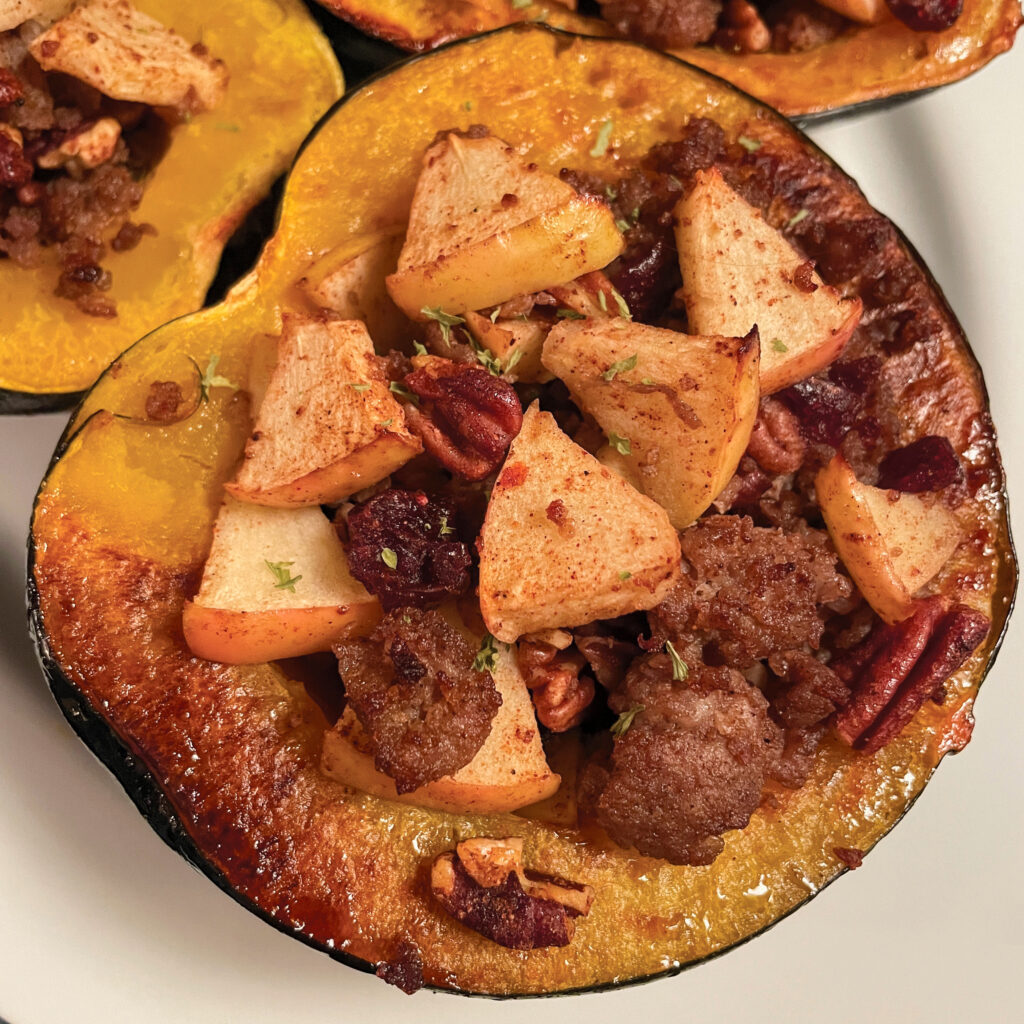
INGREDIENTS: 2 acorn squash, halved and seeded 1–2 tablespoons olive oil 1/2 pound pork sausage, cooked and drained 1 apple, diced 1/2 cup chopped nuts
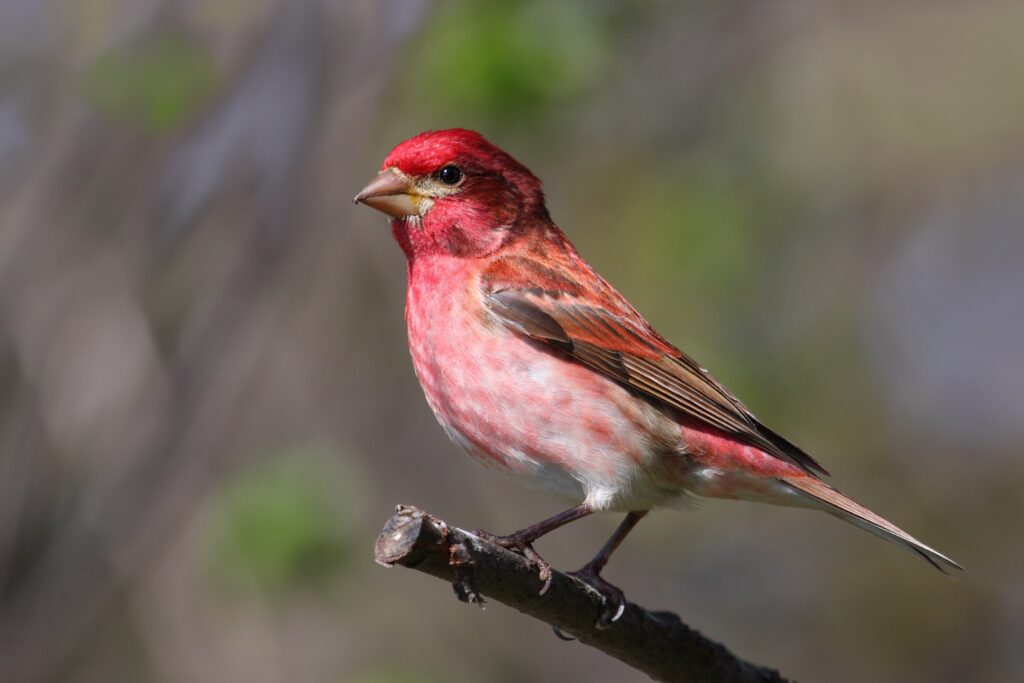
Migration season is always an exciting time in the spring, but there is also a lot of bird movement that happens in the fall and
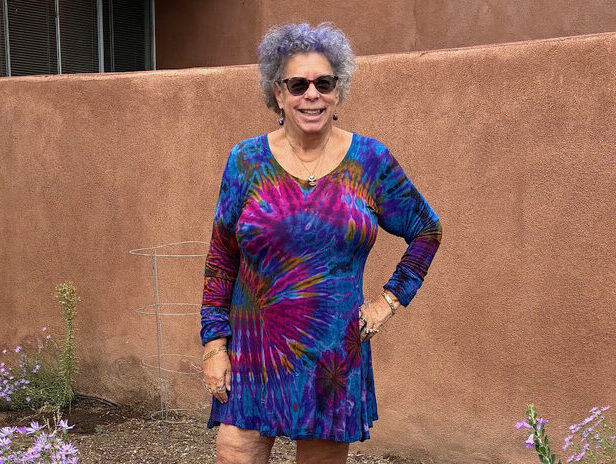
It’s taken me until age seventy-two to learn the joy and fulfillment of having a garden. My mom was an avid and respected gardener in