


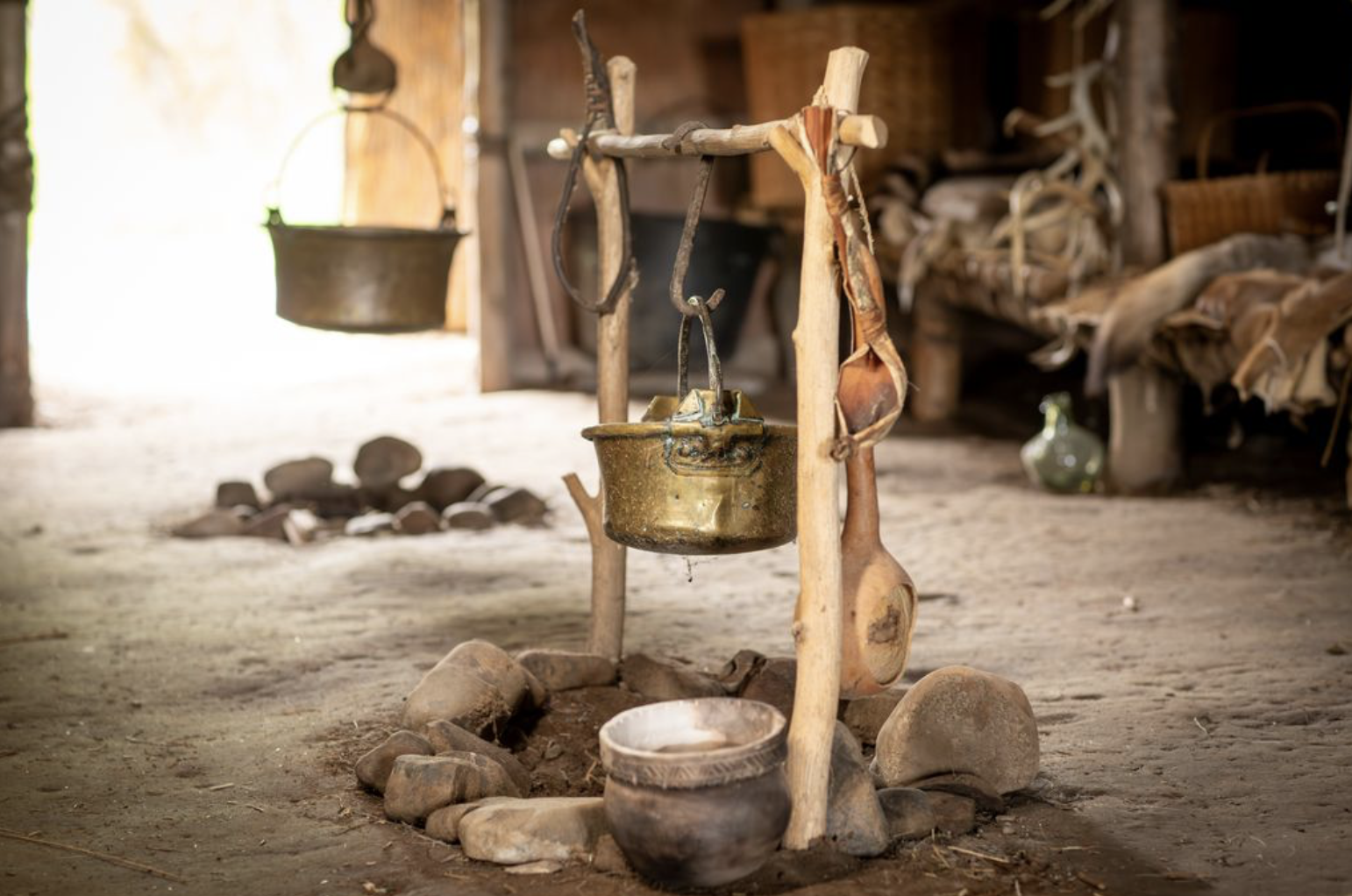
In Western New York in the 1790s, food was not simply what people ate. It is how they survived and how they made meaning in an unstable world.
The familiar image of the colonial table: simple bread, a roast, a pot left to simmer, does not hold for long once you look closely. At living history sites like Genesee Country Village & Museum in Mumford, that myth gives way to something more complicated: a food system shaped by trade, migration, labor, and global exchange.
“People think it was all homegrown and isolated,” says Michele Crew, GCV&M’s manager of foodways and village life. “Like rabbit stew and nothing else.”
Even in the 1790s, Western New York kitchens were already connected to wider networks. Sugar, coffee, spices, and other imported goods moved along waterways and trade routes, reshaping what rural households could access and imagine as local.
Food wasn’t static or simple. It was layered, shifting, and shaped by movement and power. In the same region, the Native American food system existed on entirely different terms.
Settler foodways: migration, scarcity, and market change
In the decades after the American Revolution, Western New York became a corridor of rapid settlement. Families from New England arrived seeking farmland. Pennsylvanians and Marylanders moved in from the south. The Genesee Valley became a place of hope and uncertainty in equal measure.
Early settler diets reflected necessity more than preference. Food was seasonal, perishable, and tied to daily labor. Eggs were used quickly. Milk spoiled without preservation. Gardens dictated the rhythm of meals as much as appetite.
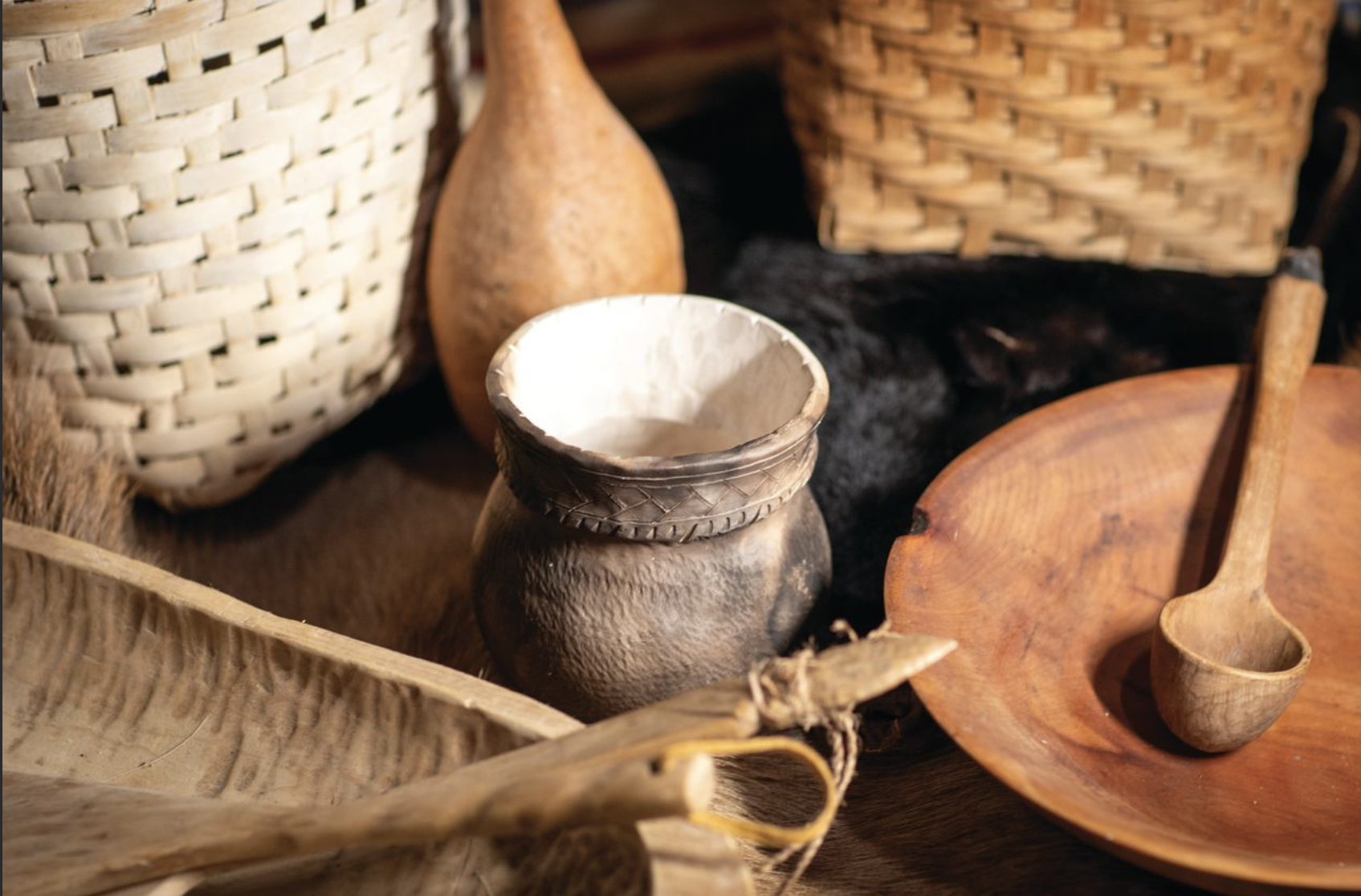
Corn became one of the most adaptable staples, appearing in porridges, cakes, and puddings. Fruit arrived in brief waves—currants, raspberries, early stone fruit—then disappeared. Meat was present but inconsistent, often preserved through salting or smoking. Other foods were also preserved through salting, smoking, and pickling. In settler households, the largest meal was typically eaten at midday, when work paused, and evening meals were lighter.
Near emerging towns and trade routes, diets expanded. German settlers brought sweet-and-sour combinations. Scots introduced oatcakes. New England influences arrived as baked beans and familiar baked goods. But there was still no unified American cuisine.
The first widely circulated American cookbook would not appear until 1796, and even it leaned heavily on British models. Most households cooked from necessity rather than instruction.
“You’re working from memory,” Crew explains. “There’s no system to fall back on.”
As settlement expanded, food became tied to land ownership and market production. Families were not only feeding themselves but also producing surplus crops and wild goods such as timber, firewood, maple syrup, game, fruits, and herbs. Land was cleared quickly, and roads expanded. By the early 1800s, turnpikes began linking rural settlements to wider markets. The region shifted from subsistence farming toward participation in an emerging economy.
But that shift did not make food easier. It made it fragile in new ways. A failed crop was not an inconvenience but a crisis. A delayed supply chain could reshape an entire season.
“Everything takes longer than people expect,” Crew says. “Everything is by hand.”
Food was labor, and labor set the tempo of life.
Indigenous foodways: continuity, care, and shared responsibility
At Ganondagan State Historic Site in Victor, food follows an entirely different logic.
“Daily life surrounded food,” explains Angel Jimerson, a cultural educator and member of the Heron Clan of the Seneca. “That was part of the schedule every day. Making sure there was enough food for everyone.”
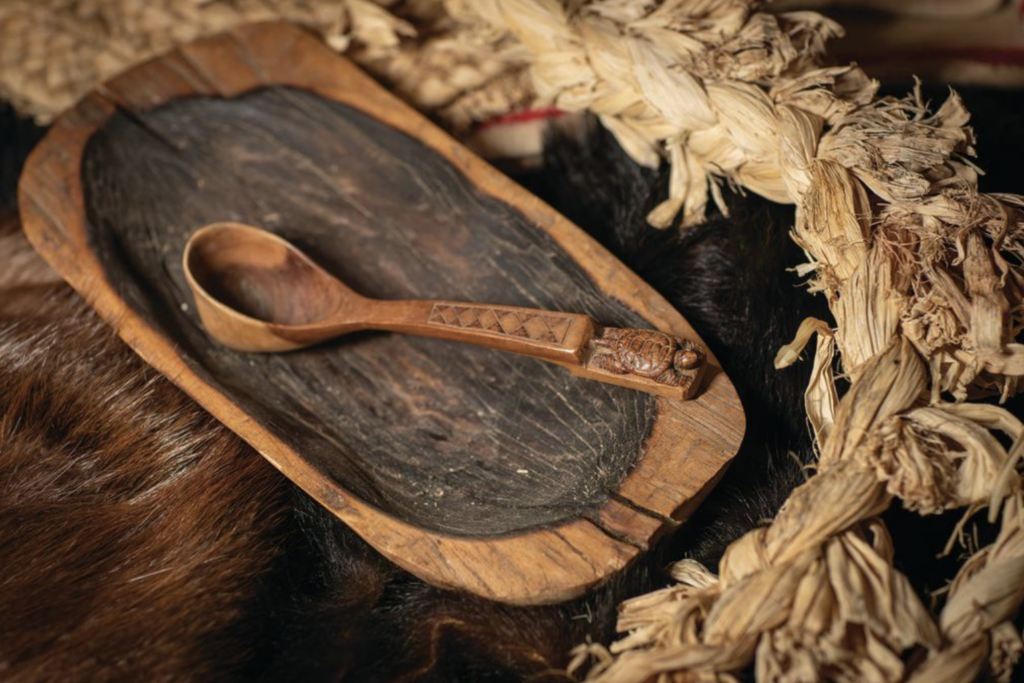
Time was measured through food, not as isolated meals but as continuous practice. In the longhouse, cooking centered on one pot used throughout the day. Food was added as it became available. Soup was the base. Corn, harvested in summer and stored in cribs, anchored the system. It was processed into bread, dumplings, or flour and mixed with water to sustain the pot.
“We were soup-based people,” Jimerson says. “You add water, you add things. Whatever was there went in.” Meals were not events but ongoing maintenance. Someone was always tending the fire. Hunting, fishing, and gathering continued year-round, ensuring continuity rather than surplus.
Even through cultural disruption, food systems remain grounded in continuity. Knowledge is passed through practice and memory. But by the late eighteenth century, that continuity was increasingly under pressure. Land loss, forced displacement, and shifting trade systems altered access to traditional foods. Sovereignty over land and resources weakened. Even seeds became objects of protection and resistance.
White corn, central to Haudenosaunee identity, was and is carefully preserved across generations. “Our seeds are still here,” Jimerson says. “Our songs are still here.”
Two systems, one landscape
By the end of the eighteenth century, Western New York held two food systems in the same geography, shaped by different logics.
Settler foodways were tied to land ownership and market expansion. They moved toward variety but also toward dependence on trade and supply chains. Meals reflected adaptation and constant adjustment. Haudenosaunee foodways were grounded in continuity, shared responsibility, and long-term planning. Food was not separate from life; it is how life was sustained collectively over time.
They existed side by side but not equally. One expanded through settlement and infrastructure. The other persisted under pressure and resilience. Yet both required extraordinary labor. Both depended on knowledge and systems of care that modern food culture often obscures. What connects them is not similarity of diet but the intensity of effort required to eat at all in the same place.
A settler household and a Haudenosaunee longhouse might both have access to ingredients like corn, fish, or fruit. But what those foods meant, and how they functioned, differed profoundly.
“We don’t think about flavor the same way,” Jimerson says. “It’s not the point.”
The real story of food in 1790s Western New York is not simply what people ate. It is what it took to eat at all: the labor, the knowledge, and the systems of survival embedded in every meal.
This article originally appeared in the July/August 2026 issue of (585).
Views: 0