

The Great American International Wine and Cider Competition has a rich history that started its evolution in 1999. Peter Parts, a member of the Camp Good Days & Special Times board of directors, was inspired by a charity wine auction in the Napa Valley and set out to bring a similar concept to upstate New York. In 2001, the Finger Lakes International Wine Competition was born, with proceeds benefiting Camp Good Days.
In 2016, that competition’s executive team went on to establish the Raise a Glass Foundation to expand its charitable mission. Today, the foundation hosts its two signature competitions, attracting entries from producers around the world to be evaluated by accomplished professionals through blind tastings. Once the judging concludes and medals are awarded, thousands of unopened bottles find a second home as donations to more than twenty Rochester-based nonprofit organizations to auction at galas, auctions, and other fundraising events.
Great American International Wine Competition: Wine
By Adena Miller and Jeffery Sharra Miller:
On an early Saturday morning in May, Jeff and I walk into the Great American International Wine Competition at the RIT Inn & Conference Center. We catch up with Ron Dougherty, the executive director of the Raise a Glass Foundation who explains how the competition works and gives us the background on why we are ultimately here—for charity.
Dougherty: Many of the entries come from small producers who do their own distribution through mailing lists, club memberships, or from people who visit their tasting rooms. Wine competitions offer an opportunity to earn a medal from the foundation, often putting these small producers on the map.
This year, more than 1,000 wineries entered the competition, and all are required to ship four bottles to be eligible for participation. Two of those bottles reach the judges, and two head to charities.
Over the years, experts from more than thirty different countries have served as judges who hold diplomas with the Master Court of Sommeliers and the WSET (World and Spirits Education Trust), as well as wine makers and winery owners, consultants, educators, and respected journalists from multiple industry publications.
Miller: We learned that fourteen wine judges made up this year’s competition, all with impressive credentials and many who have judged wine competitions for more than a decade. They travel at their own expense and volunteer their time and expertise with a common goal in mind—to bring beautiful and fun wines to the consumer. Although some wines won’t make the cut, others will earn a bronze, silver, gold, platinum, or best of show medal.
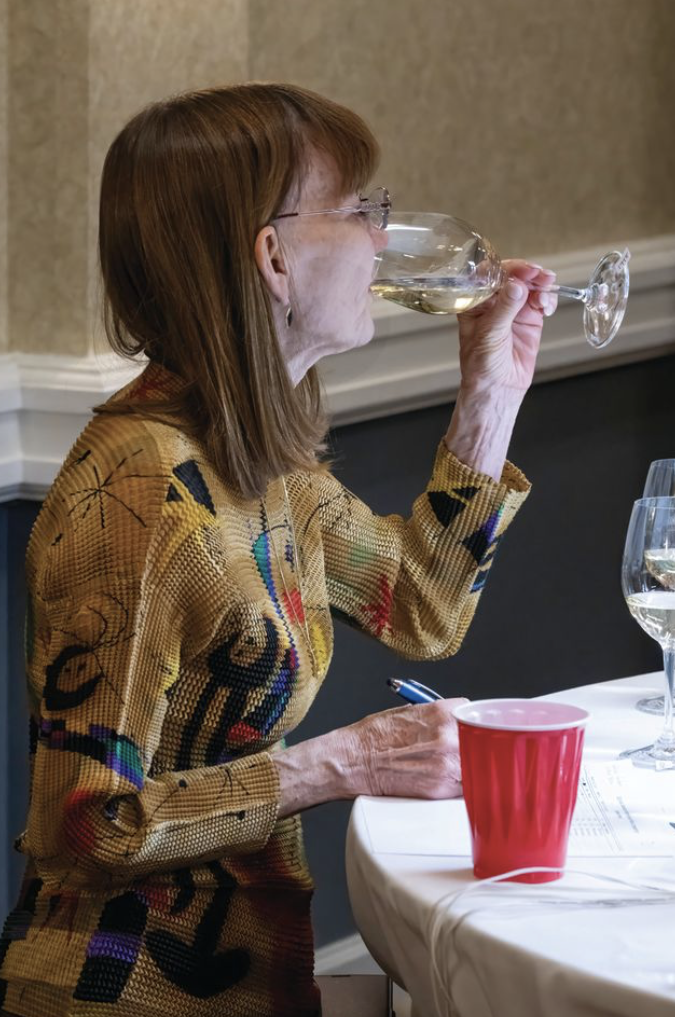
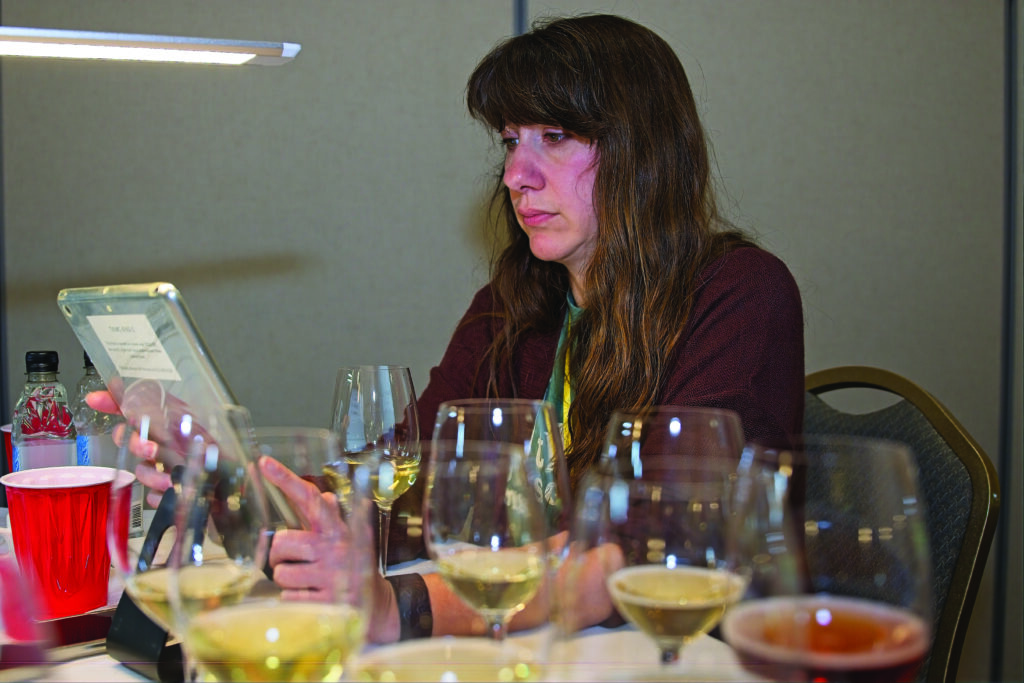
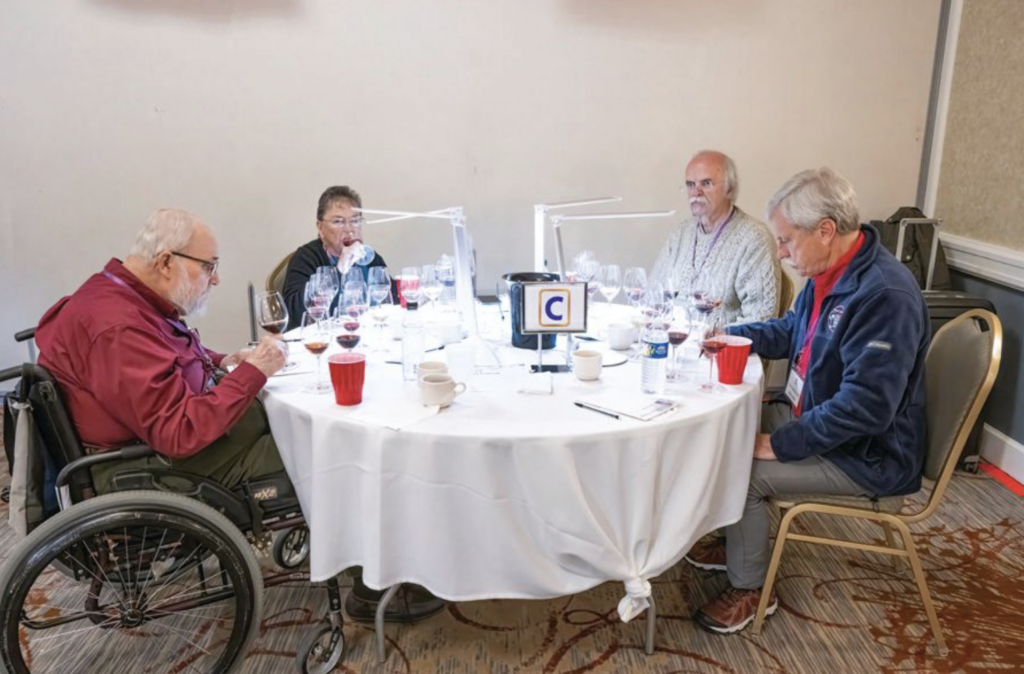
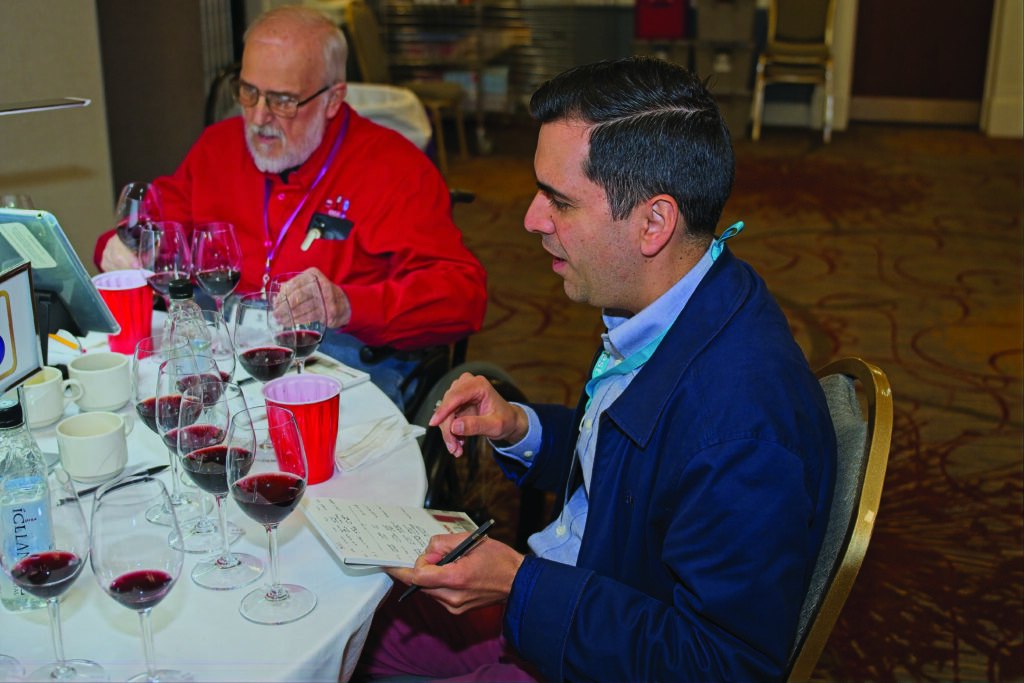
Sharra: To fully understand the inner workings of the competition, we happily accept the opportunity to participate as guest judges (don’t worry, our scores won’t actually count!). The judging room reveals official wine business already in the works. Judges are seated at round tables, and volunteers carefully maneuver around the room, arranging numbered wine glasses at each panel. The numbering system ensures each judge is tasting the correct wines within the flight. Dougherty invites us to take our seats at two different tables.
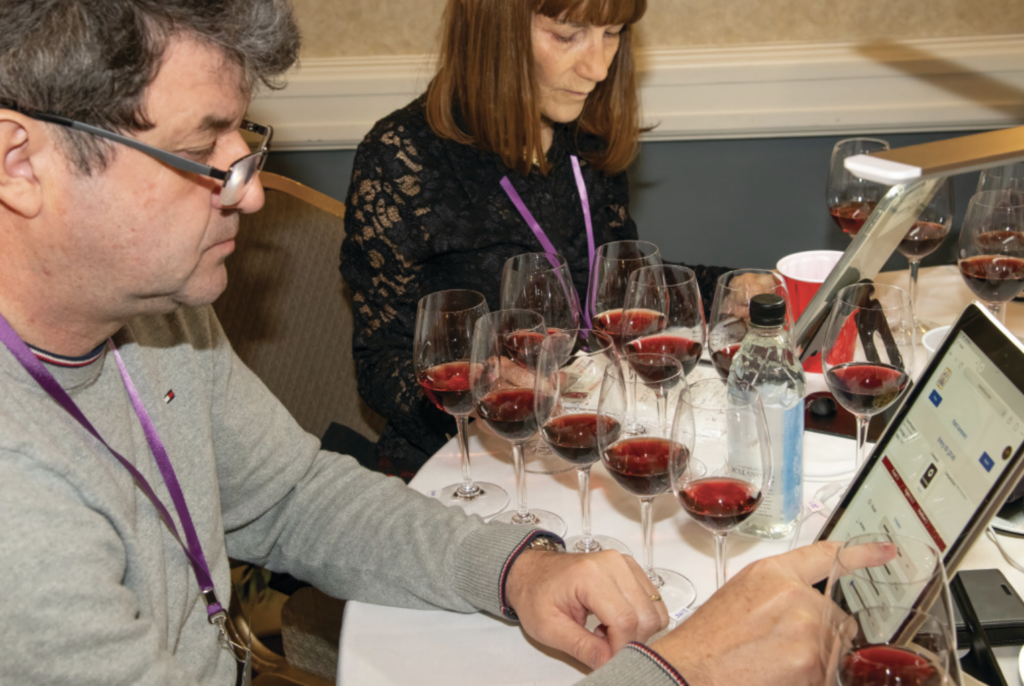
Miller: As I settle into my assigned table, I begin asking questions about what is sitting in front of me. My fellow judges explain that as each flight is presented, their tablets allow them to score each wine based on visuals, aromatics, flavors, and finish and then the overall quality. Only the varietal and the vintage is listed to each corresponding numbered glass, and in this flight, we would be tasting Sauvignon Blanc.
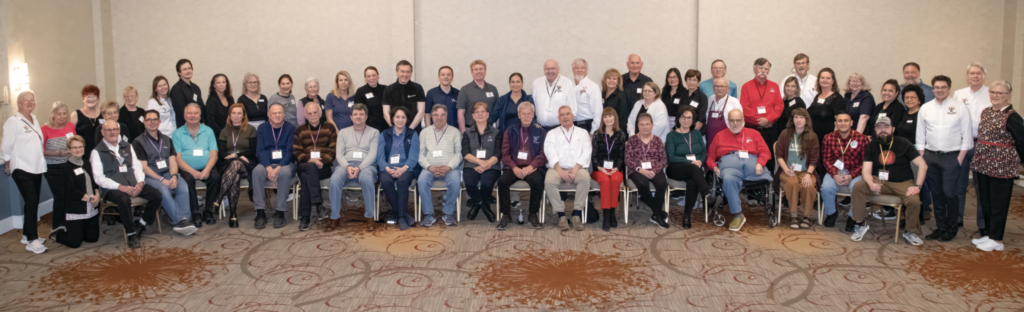
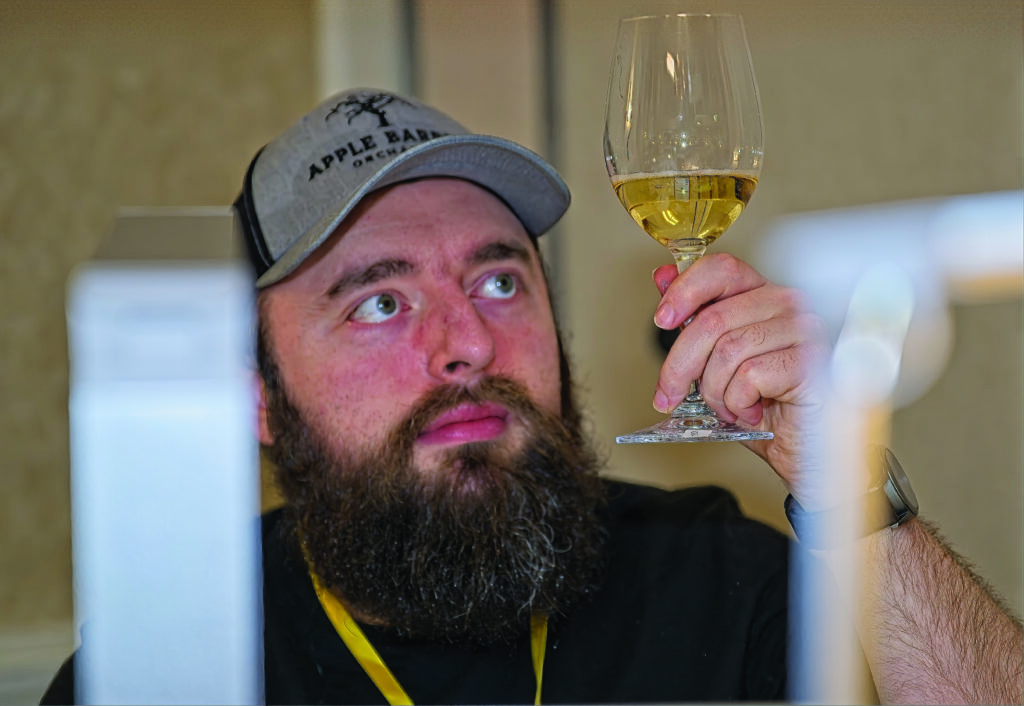
I’m fascinated to discover that to my left is a judge who traveled all the way from Slovenia, while to my right is a fellow local, while the others at my table are based in Virginia and New Jersey. The official time starts, and the room quiets as each judge begins to taste and evaluate the wines. I watch as they inquisitively breathe in the wines, tasting, swirling, and tasting again before engaging their touchscreens to evaluate each wine. I follow suit and record my own notes, circling my favorite numbers. When everyone has completed their scoring, the table captain tabulates the points and then the group openly discusses one wine at a time. I love hearing how the judges described the wine—floral, bitter, effervescent, pithy. At the end of the round, the captain reveals which numbers receive a medal. I’m pleasantly surprised to learn that two of my favorites were also deemed exceptional by the judging panel!
Sharra: As I meet my panel of judges, I spend more time learning about each of their backgrounds as opposed to asking questions about the format of the tasting. One is a writer from Wine Enthusiast Magazine, another, the founder of a well-respected winery in Texas. There’s a longtime wine competition judge who in a former life served on a US Navy submarine, and our table captain is a wine educator. Our conversation quickly ends as the judging of our current tasting begins.
As I move through the flight of wines, I immediately go into the analytical mode that sommeliers are trained to use when sitting down for a blind tasting. I can recognize similarities between the wines—mostly aromatic with notes of citrus, bell pepper, gooseberry, and some with slight bubbles. I’m looking at the wine’s structure, acidity, and balance and wondering if these wines will go well with food. If I had asked more questions upfront, I would have spent a lot less time trying to identify the wines as Sauvignon Blanc, only to discover that the judges already knew the grape varietal at the start of each round. I realize I was going about tasting the wines the wrong way. As the judges begin talking through each wine and awarding medals to several, this competition begins to make more sense to me. I need to remove my sommelier hat and put on my judging robes!
Miller: For the next round, we swap tables for a new experience with a different panel of judges, and the next flight is rosé. With judges evaluating more than 1,000 wines within a two-day event, the transition between flights moves very quickly, and timing is of the essence. Volunteers whisk into the room with empty carts to remove all the spent glassware and dump buckets while, simultaneously, the new flights are carted into the room and quickly displayed in correct number order for each of the judges. With minimal break time between each flight, I wonder aloud how these judges can taste so many wines in such a short amount of time. Dougherty explains that most competitions don’t protect the judges’ palates, but with so many wines presented each year, they have come up with a formula that allows these judges to taste hundreds of wines in a swift manner without palate fatigue. When pressed as to what that formula is, he joked that information would remain confidential.
Sharra: Turns out, confidentiality doesn’t end at the tasting table, it also extends to the “wine vault.” We are taken behind the scenes to a room that is strictly off-limits to the judges. Here, volunteers work in crews to assemble each flight of wines. Each person has a specific role—from pulling corks and tagging glasses to pouring wines and operating carts—and together they move with the precision of a chaotic ballet. With more than eighty entry classes spanning the full spectrum of wines—from white, red, rosé, and orange to sparkling, dessert, fruit, and specialty wines—the volunteers work tirelessly to keep the competition running at a steady pace.
As our time comes to an end at the Great American International Wine competition, we are reminded of the famous 1976 Judgement of Paris, the wine competition that pitted California wines against the great wines of France. The outcome of that competition showed that you don’t need to be an iconic wine producer to be invited to have a seat at the table. What you need is the passion to make a wine with purpose; it’s truly a love affair. In an industry that is seeing a downturn in consumption, these wineries and winemakers need every bit of help they can get, and that’s what the wine competition has to offer, all while supporting charities through the Raise a Glass Foundation.
To date, the foundation has contributed more than $2.5 million to charitable organizations, proving that a bottle’s story doesn’t end when the judging is over.
Great American International Wine Competition: Cider
By Jayme Seiple:
After years of successful wine competitions, the team behind the Raise a Glass Foundation started to notice the increasing need to add a separate category for cider. “We started to get ciders entered into the wine competition, and they just aren’t the same,” laughs Dougherty.
The increasing need to highlight cider with a separate competition mirrored the extensive growth New York’s hard cider industry has seen over the last ten to fifteen years. With New York State being the largest producer of hard cider in the country, it seemed only natural to include it in the competition, and the cider category was added in 2019.
Following a two-year hiatus, the board decided to bring back the cider portion of the Great American International Wine Competition under the leadership of Frank Russell, board member and volunteer. “It was one of those things. It was said we needed to find a volunteer, so anyone who wants to volunteer step forward, and they all stepped back but me,” teases Russell.
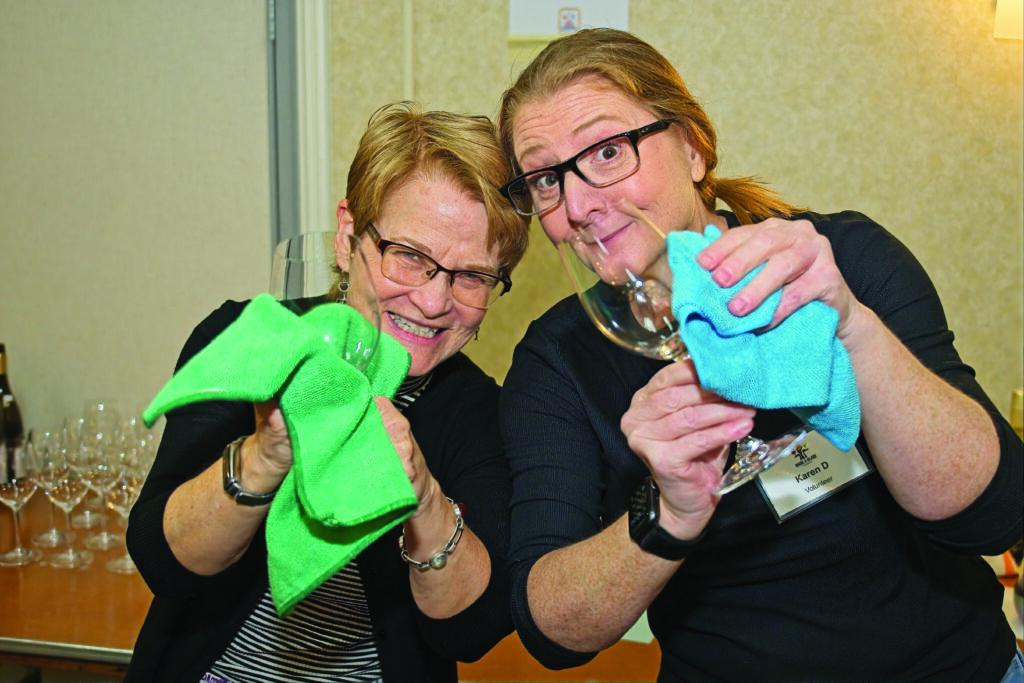
All jokes aside, Russell is confident he couldn’t have done it without the help of all the volunteers. “I had a very nice committee; they worked very hard on it,” he continues as we watch dozens of volunteers meticulously polish every glass. “We’ve got thousands, thousands of glasses [that] will be used for this. We want everything to present very professional. We want the judges to have a really good experience because they are great judges and we want them to come back.”
The first judge for the 2026 Great American International Cider competition is Damin Sawyer, a social media cider influencer and upstate sales manager and product rep for Original Sin Cider. He is a return judge to this competition and has been featured as a judge for several other cider competitions, including the Great Lakes International Cider and Perry Competition and the PA Farm Expo Competition.
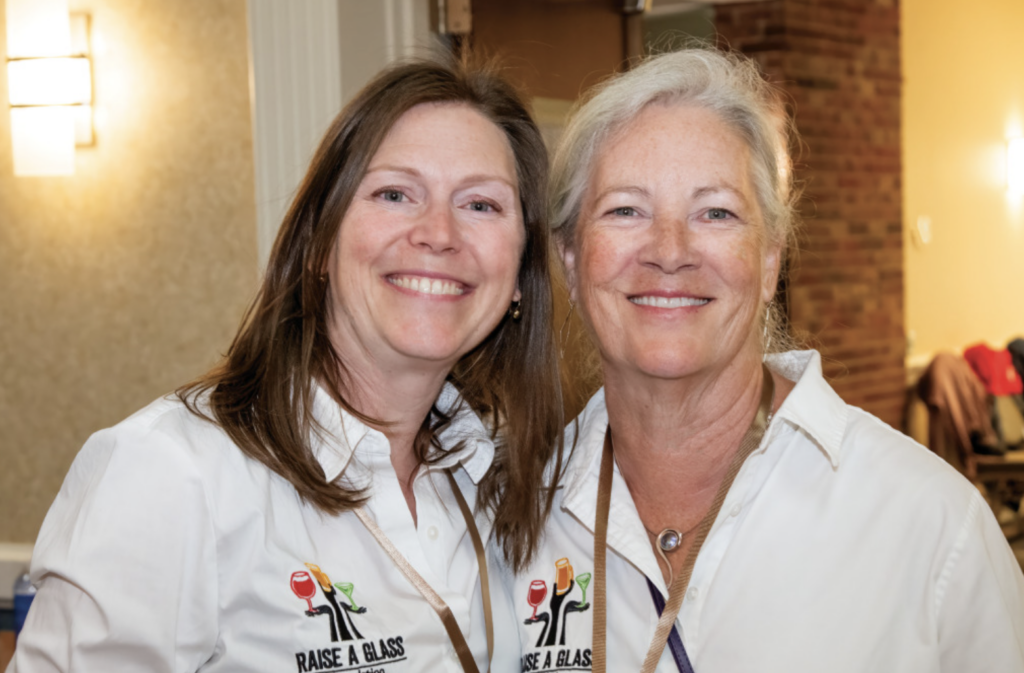
Adrian Luna-Verduga is a certified pommelier and well-known member of the hard cider community. He currently serves as the membership and communications coordinator and licensed educator for the New York Cider Association.
Ann Bliss, also known online and locally as Sister Cider, is a certified pommelier and cider enthusiast. She is the special events coordinator for the New York Cider Association and is the head bartender at Mullers Cider House in Rochester.
Judging the ciders depends on the characteristics of the category being judged. Judge Ann Bliss explains the “full sensory” process:
“You do an aroma analysis on it and see what you can smell. If it is a botanical or fruit cider, you should get notes of whatever the fruits are or whatever the botanicals are. Heirloom apples have different aroma characteristics than culinary apples used in a more modern dry cider. You want to know your category, and you think, okay does this make sense for the category that I’m judging?”
When tasting the ciders, the judges are looking for things like sweetness level, acidity, and flavor profile. “You want to think about sweetness level, or how high is the acid? How high is the tannin? How intense are the flavors? What kind of flavor profiles are you getting? What are the characteristics of this? What is the integrity of it? Does this make sense for the category it’s in and is it a good cider within that category,” explains Bliss.
The Great American International Cider Competition is a testament to the close-knit hard cider community and the comradery they have created.
“We have great rapport, and it’s a lot of fun when you are with judges that you are also friends with,” says Bliss. It is that sense of community that helped Bliss into cider, both inside the competitions and outside in the orchards.
“In New York there are so many small orchards who are making cider and it’s very family-oriented, and I think I gravitated toward that kind of community because I grew up on a really, really small cherry orchard. I have these memories of my family doing things in the orchard and having our little cherry stand. Being around families that are doing the same things, on an oftentimes much larger scale, makes me feel connected to my family and the people I don’t have anymore, and it just feels nice.”
To see the full list of winners from the 2026 Great American Wine and Cider competition as well as the charities it supports visit raiseaglassfoundation.com
Raise a Glass Foundation’s many styles of cider
The competition’s different entry classes highlight the rich variety cider has to offer:
Heritage Cider: Made from heirloom, crab, and wild apple varieties, heritage cider reflects the unique characteristics of its orchard and growing region (terroir). Typically dry to semidry, it has a wine-like structure with firm tannins, bright acidity, and earthy, floral, fruity, and rustic flavors.
Traditional English Cider: Made from tannin-rich bittersweet and sharp apples, this style ranges from dry to medium-sweet. It is known for its full body, pronounced tannins, and rich, lingering finish.
Traditional French Cider: Crafted from tannin-rich cider apples, French cider is naturally sparkling and terroir-driven. Delicate bubbles, a smooth, full-bodied mouthfeel, fruity aromas, and occasional creamy notes from malolactic fermentation define the style.
Traditional Spanish Cider: Naturally fermented, bone-dry, and high in acidity, Spanish cider is typically unfiltered, cloudy, and nearly still. It is distinguished by tart, slightly vinegary, earthy, spicy, and funky flavors.
Modern Cider: Made from culinary (“table”) apples, modern cider is bright, crisp, and fruit forward. Higher acidity and lower tannins create a light-bodied, refreshing cider that highlights fresh apple flavor and aroma.
Traditional Perry: Made from specialized perry pears and often fermented with wild yeast, traditional perry offers delicate pear aromas, gentle tannins, and a complex finish ranging from dry to semisweet.
Modern Perry: Made from culinary (“table”) pears, modern perry is fruit forward, sweeter, and lower in tannins than traditional perry. Its light body and smooth mouthfeel highlight fresh pear flavor and natural sweetness.
Specialty Styles
Fruit: Traditional or modern ciders and perries enhanced with additional fruits. Whether blended after fermentation or fermented together, they range from crisp and refreshing to rich and dessert-like, showcasing flavors from berries and cherries to tropical fruits and citrus.
Sour: Specialty sour ciders are high in acidity and low in residual sugar, delivering tart and refreshing flavors. Wild fermentation, barrel aging, and tart fruits contribute to a rustic, earthy complexity.
Hopped: Combines traditional cider or perry base with hops, adding floral, citrus, or herbal aromas while complementing the natural fruit character.
Cyser/Honey: Made by fermenting apple juice or cider with honey, combining fresh apple flavors with the floral richness of honey to create a smooth, wine-like beverage.
Rosé: Made entirely from red-fleshed or red-skinned apples, producing a naturally pink cider with bright fruit flavors and a crisp, refreshing finish.
Wood-aged: Matured in wooden barrels or with oak, developing additional layers of vanilla, spice, toast, caramel, or tannin while enhancing the cider’s complexity.
Spiced/Botanical: Enhanced with herbs, spices, flowers, or other botanicals, creating unique flavors that range from warming and aromatic to earthy, floral, or savory.
Dessert styles
Fortified: sweet and full-bodied, made by blending apple juice or lightly fermented cider with apple brandy or other spirits.
Ice: Naturally sweet, made from frozen apples or concentrated apple juice. The freezing process intensifies the apple flavors while preserving bright acidity, creating a rich, balanced cider.
This article originally appeared in the September/October 2026 issue of (585).
Views: 3