

On a recent work trip to Napa, I had the opportunity to meet several winemakers who all had a similar story to share about this historic wine region. Their words hung in the air like those of a poet when they talked about the pride that goes into perfecting their craft. Our group was given a tour at Continuum with Chiara Mondavi. She spoke passionately about her family’s life work and the challenges that go into farming a land that wants to fight you tooth and nail. But through perseverance, you can win that fight. That resonated with me in a profound way. That is heart and soul.
What does it mean to have a soul? Not a soul like in the human aspect of living, but in an inanimate sort of way. And how do you know you’re in the presence of it? As a sommelier, I love to tell the stories that are shared with me, by the people who touch the grapes which become the wine that I pour into your glass. There is this thought that keeps going through my mind . . . does wine have a soul? It comes to life on the grapevine, growing into a little bulb of water and sugar surrounded by this delicate skin that gets crushed just when it develops its identity. It ferments, and it breathes. It gets punched a number of times, and then it undergoes a radical transformation. It gets the opportunity to take a nap in a barrel or bottle (or both), and it matures. It can age for many years, sometimes making it exponentially better. It is celebrated and its life is meant to impact yours with joy. Then, just like that, it comes to an end, in the bottom of an empty glass.
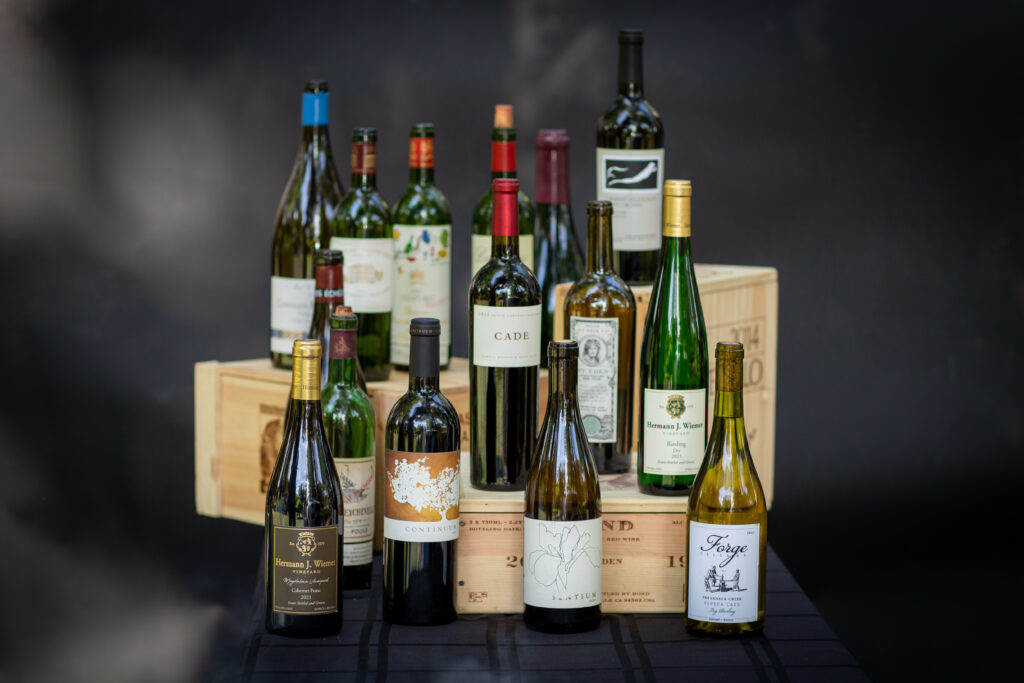
Coming home, I was inspired to look for similarities in my own back yard, the Finger Lakes. I want to see if we also possess the same philosophy that from the land, the region, the sense of place, the wine can have a soul. I reached out to a couple of friends who have helped to define what the FLX is today. Oskar Bynke, co-owner at Herman J. Wiemer Vineyard, was happy to oblige and when asked if wine could have a soul, he jumps right in.
“The driving force for us is to enjoy wine. In the Finger Lakes, there’s a unique aspect to wine. It is a journey that takes time. The history of this region has old vines that year after year become deeper rooted, allowing them to find themselves and their true identity. In the Finger Lakes, old vines are easily forty-plus years old, which is not the case in most of California. In the 1970s Herman (J. Wiemer) first saw where Riesling and Cabernet Franc could be grown and how it could be established. Over the course of the early 2000s, we started to discover just how special the Magdalena Vineyard microclimate was, producing wines completely different than those from the main HJW Estate which is only ten miles away. The Magdalena grapes have this language to them. And we are seeing how this land allows us to present those grapes in their best way. There’s a certain individuality to that which also grabs onto the site and gradually develops a persona or a soul. I think that’s what we enjoy in the cultural aspect as wine drinkers. You can only consume that place, the geography and the geology through the strength, and the soul of the wine. It’s a character that is built up over time.”
Rick Rainey, managing partner at Forge Cellars, speaks to this idea in a metaphysical sense, noting, “We define soul as more of a kind of energy and joy.
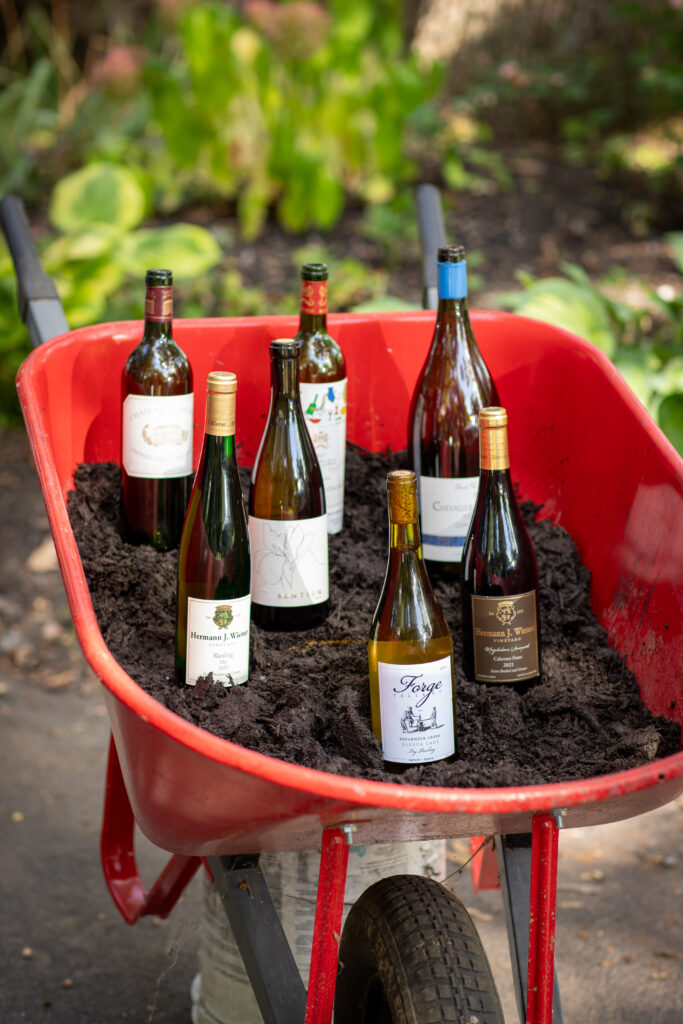
“When you look at two wines, one made in a more industrial manner versus those made with a handcrafted philosophy, the nose, the taste, the chemical composition of the two can be similar enough to a point, but the wine that was crafted by somebody was a direct reflection of the place they work. The impact on wine is more related to the place and knowing how to cultivate with respect the voice of that place and the land. Big production wine being made in an industrial manner is not wrong, it’s just impossible for them to relate to the place. I believe the great wines of the world all have this soul, this energy and joy, and the one thing in common with them all is they tend to be smaller produced, handcrafted, farmed by people, and made by people.”
Rainey goes on to note a tasting with a Burgundy producer and being so taken with the wines, his feedback to the winemaker was that the wines had an immense vibration to them. “I know that’s not really a tasting note, but they vibrate.” The winemaker just looked at him and smiled assuredly, probably receiving the nicest compliment someone could give to his life’s work.
When I asked Rainey his thoughts on the current state of the wine industry:
“There have been thirty years of growth globally, and that’s changing now. The bigger brands that drove the market have brought a lot of people into the fold, which is good, but now I think maybe small producers are getting ready to have their moment. I’m seeing that smaller restaurants and retailers are much more interested in talking about wine made by real people. I’m optimistic that people are going to start to pay more attention to the soul of wine, the joy that a hand-crafted wine brings versus a wine that is industrial by nature.”
There is something very personal that I have learned in my career as a sommelier. Wine is a symbol of joy and abundance, which leads to this fusion of the spiritual and physical. These deeper meanings contribute to the wine’s soul and its own vibration of life, possessing the winemaker’s intention, passion, and artistry evident in their final product.
I’ll leave you with this passage from the French poet Charles Baudelaire’s “L’âme du vin,” that reads, “One eve in the bottle sang the soul of wine: Man, unto thee, dear disinherited, I sing a song of love and light divine.”
This article originally appeared in the November/December 2025 issue of (585).
Views: 36