


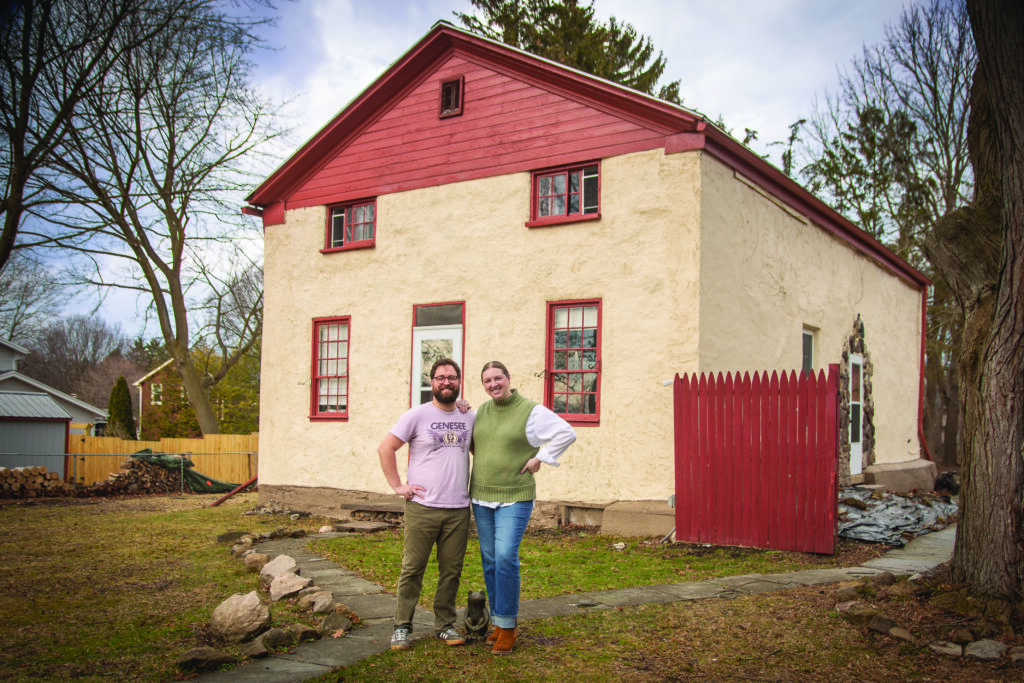
Its name sounds like it was lifted from a fairy tale, and catching sight of the structure along Whalen Road in Penfield, it looks the part, too. The Mud House, built in 1835, is one of a handful of surviving rammed-earth structures left in New York State built from (you guessed it!) mud.
Built by William Gors, the house took about a year to construct. Many have wondered why he chose mud as his building material, with most speculating it was simply an affordable option sourced from a nearby creek bed. The construction itself was labor-intensive: Gors built a large pen to mix mud, straw, and manure, and then used his team of oxen to blend the mixture by circling a post before pouring the mixture into a temporary wooden form atop a stone foundation. Each eight-to-ten-inch layer was left to dry in the sun for weeks before the form was raised and the next ring of mud added.
Although similar in structure to adobe houses in the Southwest, the harsh weather of Western New York meant the mud required constant repair and ultimately led to the demolition of most of these homes. Because the Mud House requires constant and careful repair, it takes a special kind of old-house steward to take on the role of homeowner, and the property has passed through many hands throughout its 190-year history. To help ensure the property is preserved, the house was added to the National Register of Historic Places in 1978, protecting it from alterations such as replacing the mud walls with modern materials like vinyl siding.
Sydney and Nick Byron-Crast are the house’s current owners, having purchased the property in 2023. “After we toured the house, we went home, sat on the couch, and started googling mud houses. The more we read, the more we thought, ‘we can do this,’” says Sydney, an occupational therapist with Holy Childhood in Rochester. “We put in an offer but never thought we’d actually get the house.”
“When we first walked into the house, it just felt inviting,” says Nick, a software engineer with Peacock streaming service. “We spent that entire December painting and scrubbing, preparing to move in.”
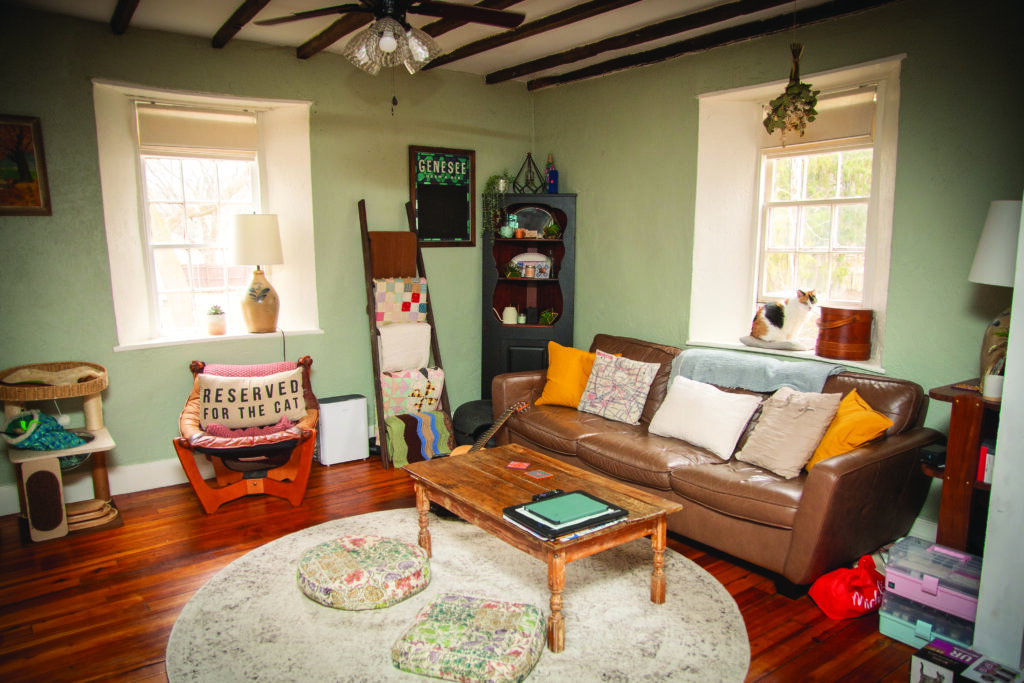
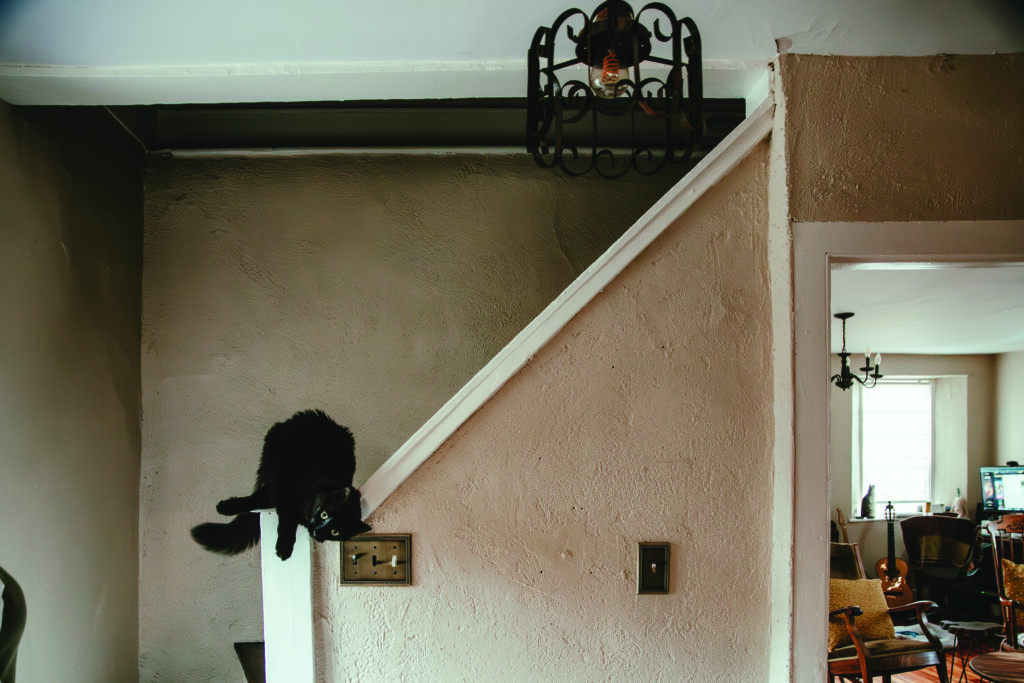
Despite nearly two centuries of repairs, repainting, and well-intentioned interventions by previous owners, much of the house’s original character remains intact. Wide-plank floors bear the marks of nineteenth-century life. Hand-hewn beams stretch across the ceilings of what is now the living room. And upstairs, a shallow warming “fireplace,” never meant for flames, once held hot embers carried up from downstairs to heat the upper level on cold winter nights.
Visitors are often surprised to learn that the inside looks nothing like what the name “Mud House” might suggest. “People come in expecting to see actual mud walls,” says Nick. “They think it’ll feel primitive or dirty. But it’s incredibly cozy.”
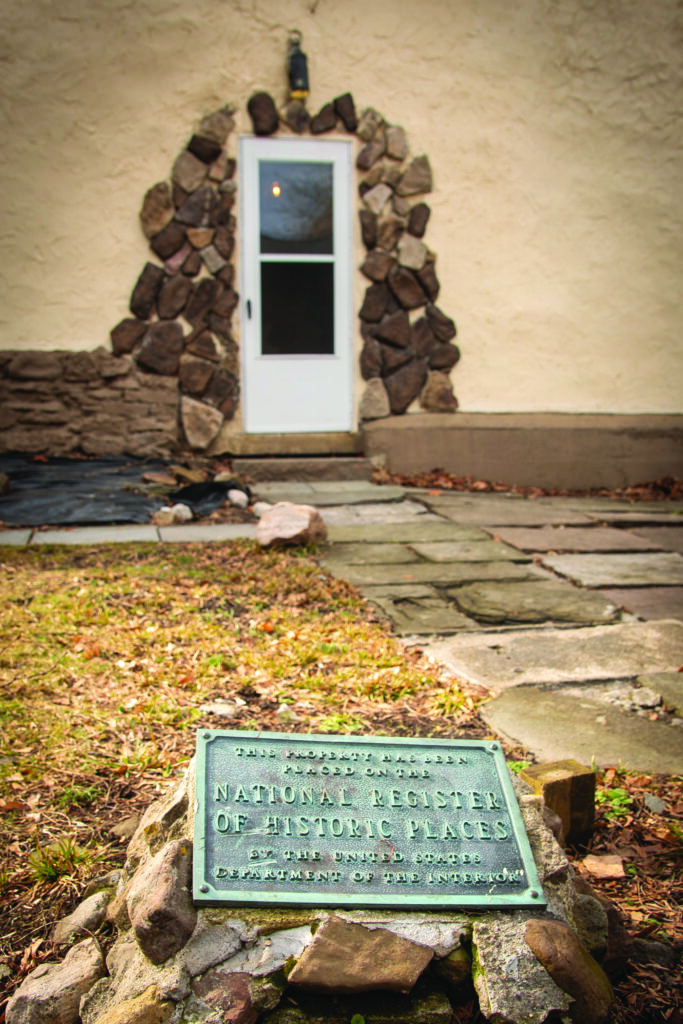
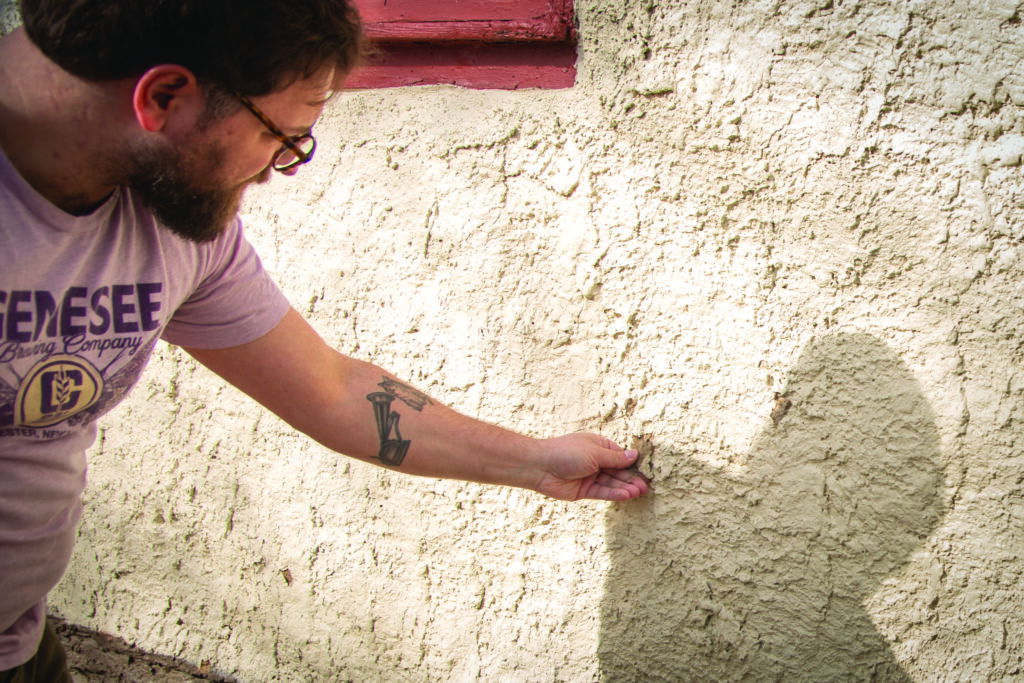
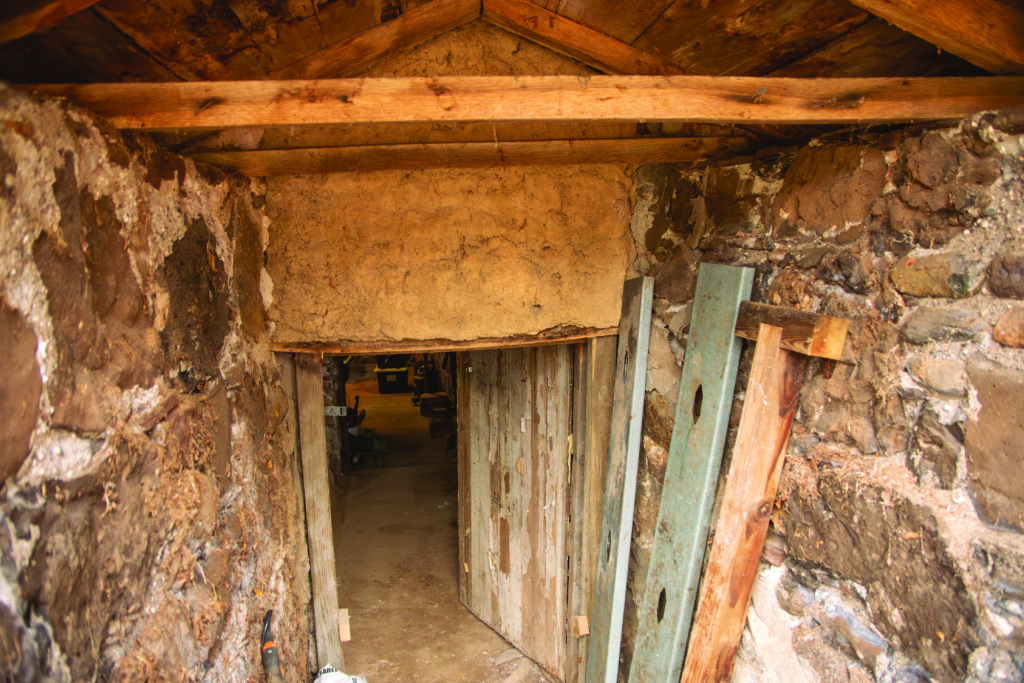
For all its charm, the house demands an unusual kind of stewardship. The exterior walls are a patchwork of history: two sides coated in concrete stucco from a midcentury repair attempt, two sides painted by a more recent owner in hopes of reducing maintenance. Ironically, the paint has only delayed that maintenance, not prevented it. The couple now must wait for the paint to naturally flake off before they can begin true mud repair, which requires bare earth to adhere properly.
“We’re probably going to have a very blotchy-looking house for a while,” Sydney says. But for them, the imperfections are part of the process. Their ultimate goal is to restore all four sides to their original chocolate-brown mud. “It’s called the Mud House for a reason,” Nick adds. “It should look like one.”
Their most valuable resource came not from a hardware store or a YouTube tutorial, but from former owner Gary Mundy. When the couple reached out to him shortly after moving in, he handed over decades of handwritten journals he kept while repairing the house in the 1980s—meticulous notes on everything from mixing ratios for new bricks to how he lowered the basement floor by six inches using little more than determination and a shovel. Nick digitized every page. “It’s like having a personal instruction manual from the person who saved the house,” he says.
Those journals aren’t the only connection to the past. The couple has unexpectedly found themselves at the center of a small but passionate community of people who have lived in, worked on, or simply admired the Mud House for generations. The Instagram page the owners created to share the house’s history has drawn comments from former residents—one woman even recognized herself as a child in a decades-old photograph they posted—along with history buffs, neighbors, and local historians. “We’ve met so many people because of this house,” Sydney says. “It feels like we’re part of something bigger.”
For now, the couple is focusing on practical projects: repainting, making small repairs, and undoing some of the more questionable choices of previous owners. Long-term, they hope to restore the kitchen into an unfitted, furniture-based space appropriate to the home’s age and to replace the modern storm doors with hand-built wooden ones. Outdoors, they dream of planting a fully native pollinator garden to echo the agricultural landscape that once surrounded the property.
“We see ourselves as caretakers more than owners,” Sydney says. “This house has survived almost 200 years of weather, repairs, and changing hands. We just want to do right by it.”
For more information on the Mud House, visit its Instagram page: @themudhouseroc.
This article originally appeared in the May/June 2026 issue of (585).
Views: 30