

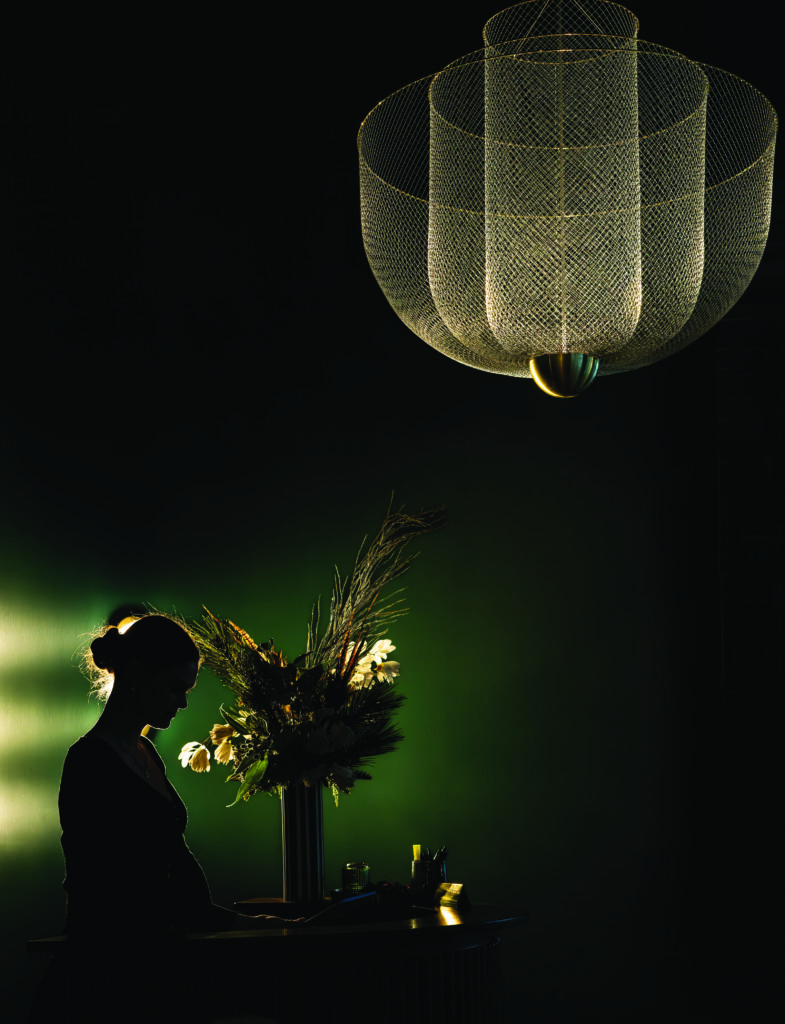
Chelsea Felton and Lauryn McCabe have become the reluctant keepers of Patron Saint’s signature green.
So far, about twenty-five people have asked for the exact hue to paint their homes with it. The other day, McCabe finally broke.
“I’m not happy about it,” she says. She treats the custom emerald paint color as classified information.
Another patron liked the whole room so much—the bar, the lamps, the warmth—that she went home and built it in her basement.
People aren’t just admiring the design. They’re trying to bring it home.
Felton and McCabe are the designers behind Patron Saint. Felton, vice president of SCN Hospitality (the group behind Velvet Belly, Bitter Honey, Branca Midtown, and others), conceives interiors and design for many of its restaurant concepts. McCabe runs LGM Studios Inc., the design brain behind Strange Bird and Black and Blue. But at Patron Saint, they pushed each other further.
Together, they conceived of the restaurant’s vision—including the bold move to drape nearly every inch of the space in green.
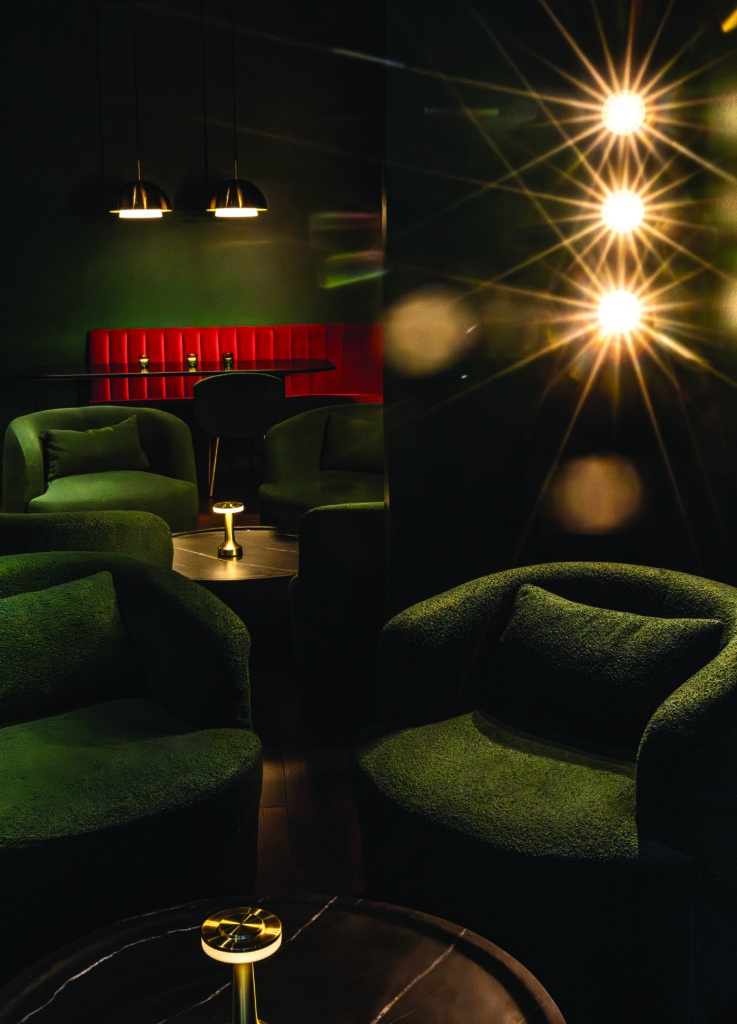
“Everything has to be green,” McCabe laughs. “Just trust.” And that full-throttle commitment makes the space somehow feel sexy rather than claustrophobic.
This design makes one thing clear: You don’t build atmosphere by playing it safe.
So what can Patron Saint teach us about elevating our own spaces? Not how to paint your walls all green, though you could. But how to stop decorating by committee. How to pick something bold and trust it enough to go all in. How to layer a room so that it feels like somewhere you want to stay awhile.
Felton and McCabe explain that the rules are the same whether you’re designing a bar or a bedroom.
Rather than picking paint colors first, McCabe recommends selecting your big-ticket item, like a great velvet sofa or walnut dining room table, then layering from there.
“When you start with the paint on the walls and try to work back, you’re not going to match the colors like you’re hoping,” she says. Always bring fabric samples home to see how they render in your light and pull your paint and accent colors directly from those foundational textures.
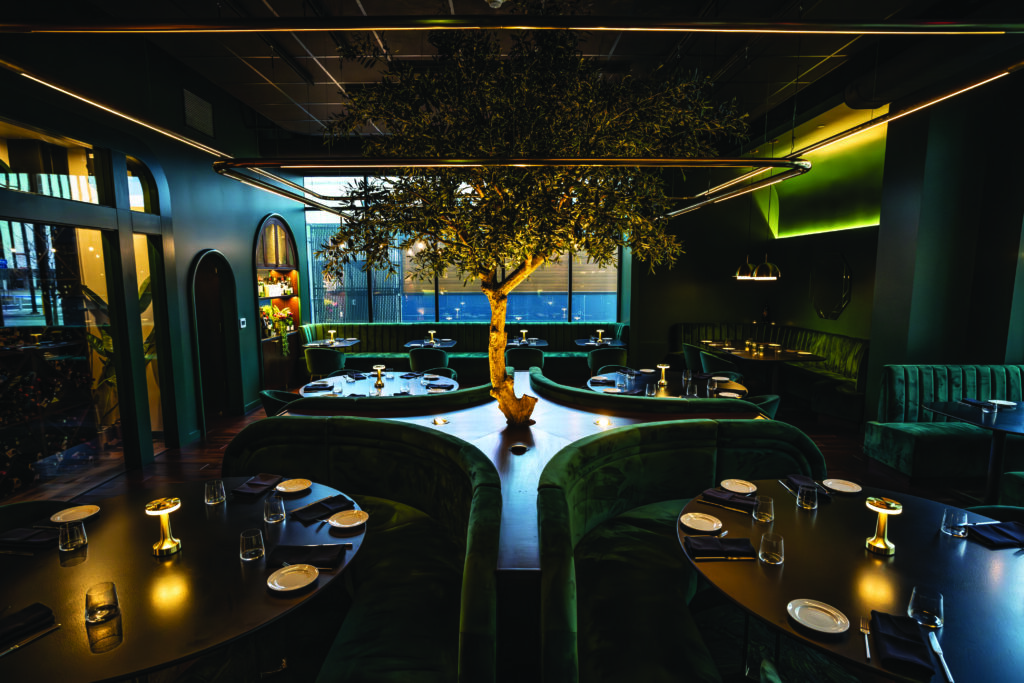
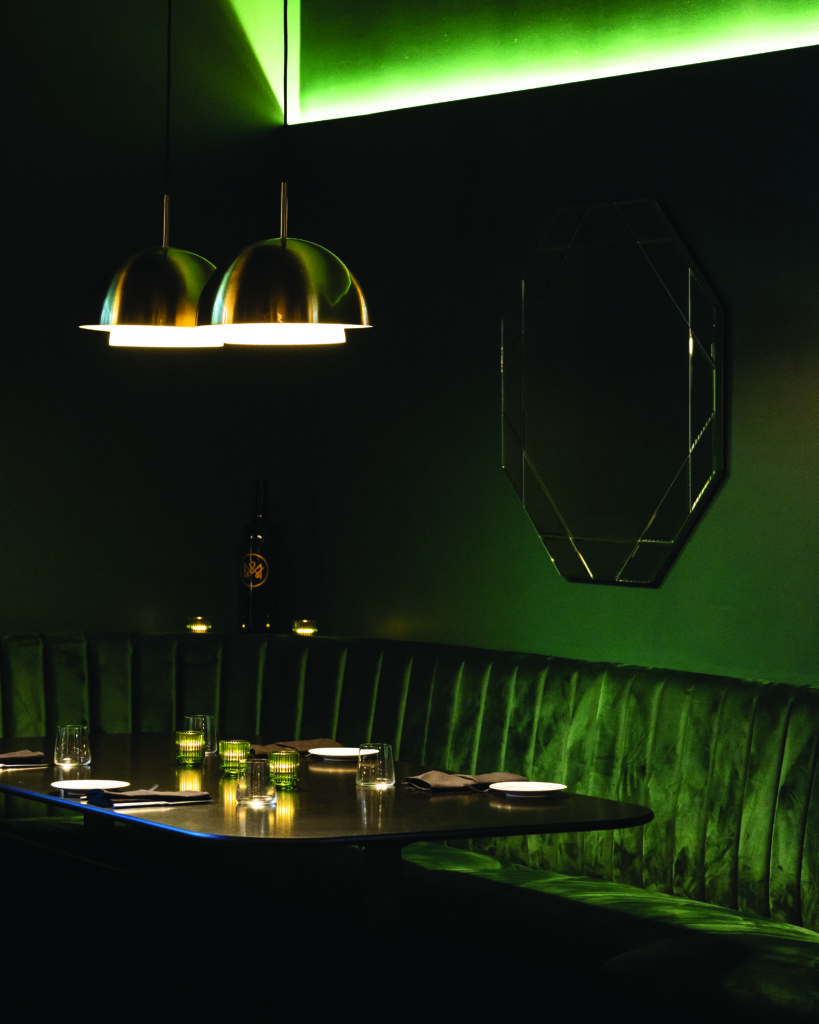
Felton says they used the velvet green booth fabric as the foundation for the rest of the restaurant’s elements, building out to the custom chairs, the restaurant’s signature paint color, and carpet tile.
From there, the designers conceived Patron Saint’s moody vision as the direct antithesis to its airy sister restaurant Branca. Having a unique vision for the space helped them commit to a highly saturated, monochromatic aesthetic centered around a rich, luxurious color of green.
However, homes function differently from commercial restaurant spaces. McCabe explains that when she evaluates a residential project, she first considers the existing architecture and constraints to determine what style will actually work within the space.
“It’s not like ‘I saw this in a magazine, and we’re going to replicate it,’” she says. “It would be a huge eyesore because it doesn’t go with the rest of the house.”
In other words, trying to replicate a bold design—like the moody Patron Saint aesthetic—without considering how it fits within the rest of the home can make the space feel out of place rather than intentional.
Instead, McCabe suggests identifying the elements you’re drawn to, such as soft indirect lighting, custom millwork, or darker finishes, and adapting those ideas in ways that complement your home’s existing architecture rather than compete with it.
Determine a clear, cohesive vision that aligns with the home’s natural character and fully commit to that chosen aesthetic without watering it down. Once you identify what style your house naturally “speaks to,” pick a unified vibe and trust the process enough to go all in.
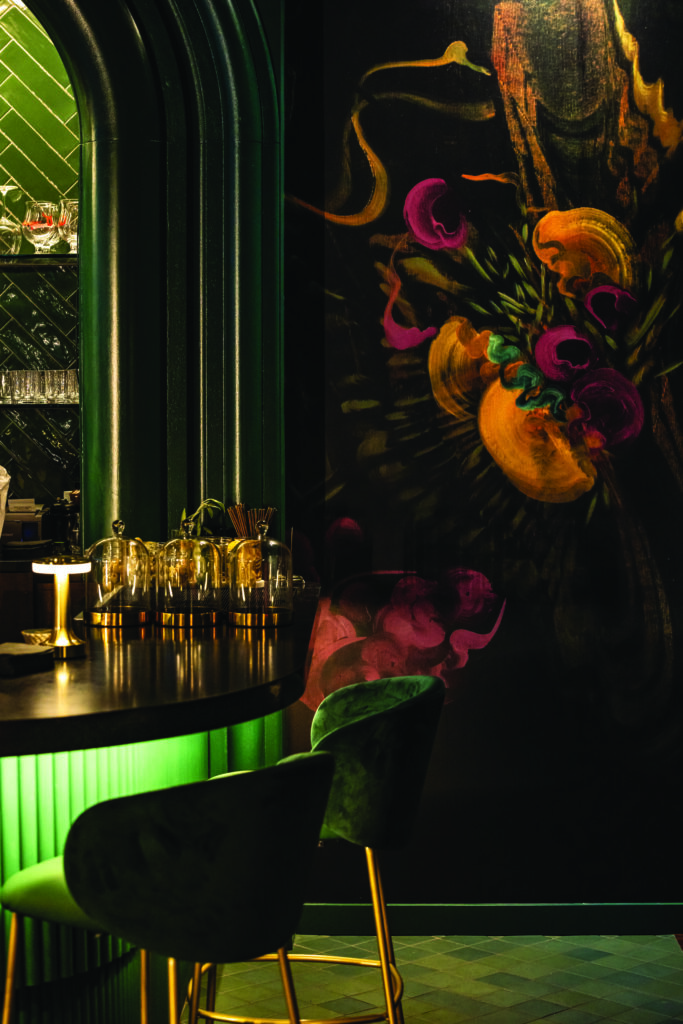
McCabe says one way to make that commitment feel intentional, even when working with bold or contrasting colors, is to introduce a unifying element that visually ties everything together. Pieces like an oriental rug or bold wallpaper that incorporate multiple hues can help bridge different tones, making the space feel layered rather than disconnected.
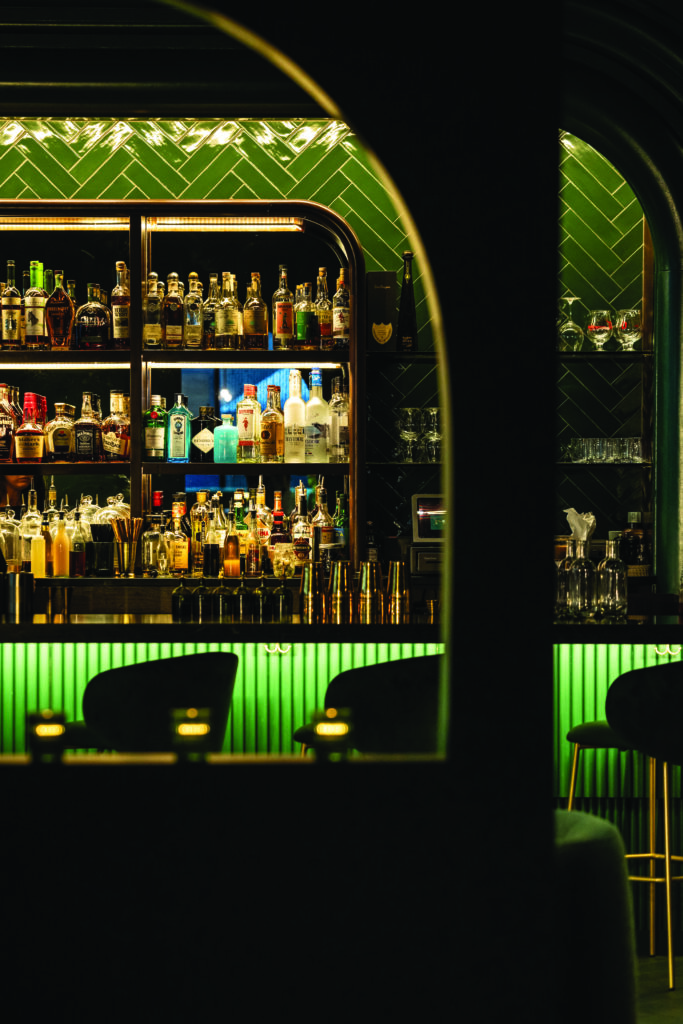
At Patron Saint, for example, the floral wall covering near the bar brings together green and pink accents, preventing the palette from feeling chaotic and helping those brighter pops of color feel cohesive with the room’s overall base.
To create structure in the design, McCabe says, every room needs something to organize around. A central point. Anchor it with a natural element that tells a story, and the rest of the design falls into place.
The tree in Patron Saint’s dining room carries that weight. It was created in tribute to local entrepreneurs and philanthropists Jane and Larry Glazer as a memory of their vision for Rochester. Revered as the “Patron Saint” of the city (which inspired the restaurant’s name), Larry had a personal passion for botany.
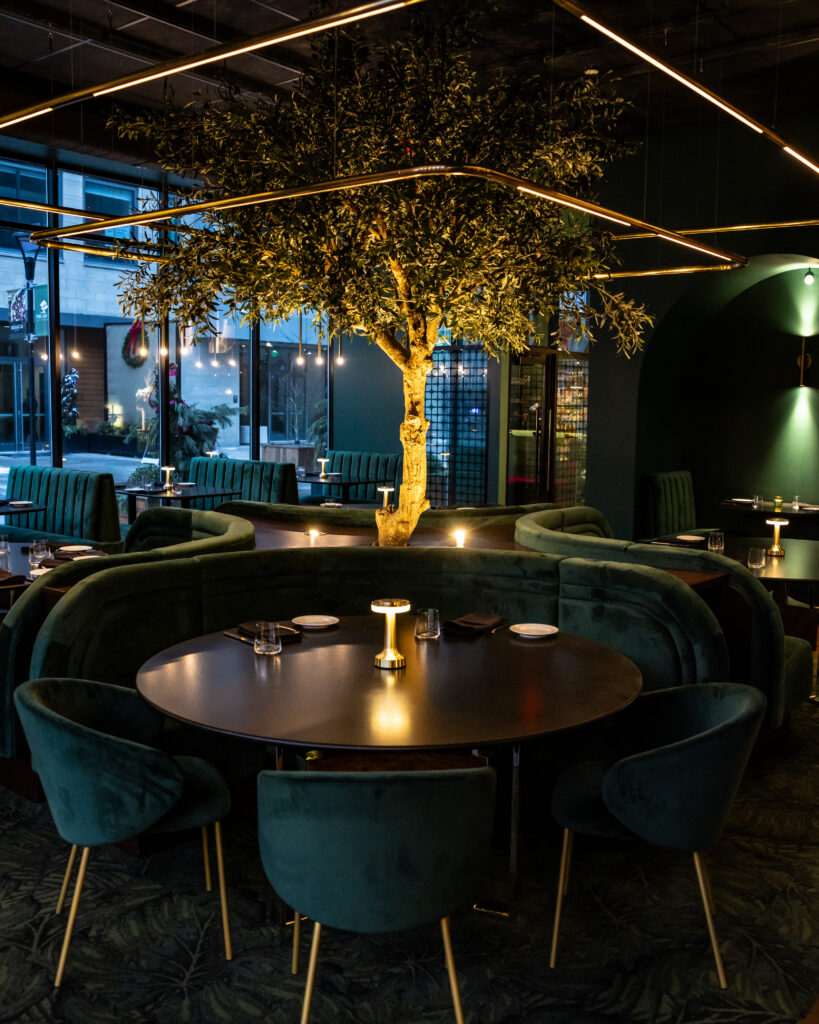
“With the tree being the focal point, that was a no-brainer,” Felton says. “That was the center of our design. So we obviously budgeted for that and then designed everything around that.”
A single commanding plant—whether it’s a dramatically lit specimen or something quieter in your own room—carries the weight of drama you’d otherwise chase through furniture or paint.
Most treat greenery as an afterthought. Felton and McCabe didn’t think of it that way. In places where there isn’t enough natural light or maintaining a live plant is impractical, McCabe recommends high-quality fakes. West Elm at the Armory, Wisteria on Culver Road, and Target’s Magnolia collection all have strong selections. Feel them first—silk reads truer than plastic.
Another overlooked element is lighting.
McCabe’s first rule of dramatic lighting is that you never see the source. Opt for soft diffused lighting. Millwork becomes your tool here—toe kicks, shelving undersides, cabinet tops. Tuck your fixtures into these architectural elements, and the light does the work while remaining invisible.
“It’s everything from floor to ceiling,” McCabe explains. “That’s why millwork is so important, because you can put lighting in the toe kick, you can put it under certain shelving. You can do a lot of indirect ambient lighting.”
It creates the feeling that the room is glowing from within.
The second rule is temperature. Daylight bulbs (5000K) are too jarring for spaces where you actually want to linger. McCabe’s default is 2700K, which is warm enough to feel genuinely cozy, but not so warm that it shifts how things actually look.
Layer your lighting by combining that indirect glow with dimmable fixtures, table lamps, and integrated accent light. This is what transforms a room from lit into a place you want to linger.
Many of the light fixtures were fabricated for the restaurant, which McCabe recognizes isn’t realistic for most homeowners. However, you can be intentional about scale and finish. A fixture that’s too small disappears into the space. Too large and it overwhelms, stops being functional.
The sweet spot is something that fits the proportions of your room.
The truth about Patron Saint is that it works because Felton and McCabe refused to hedge. They didn’t soften the green or play it safe. They picked a vision and went all the way with it.
Your space deserves the same certainty. The sofa that stops you when you walk past it in a showroom. The color that makes you feel something. The light that makes you want to stay.
Pick it. Commit to it. Everything else follows.
“It’s like a 3D Pinterest,” McCabe says of the restaurant. “You get to experience it in person and feel it. It’s not just the lighting or the decor. It’s how it all works together. You see it works, so now you can translate it at home.”
This article originally appeared in the May/June 2026 issue of (585).
Views: 92