


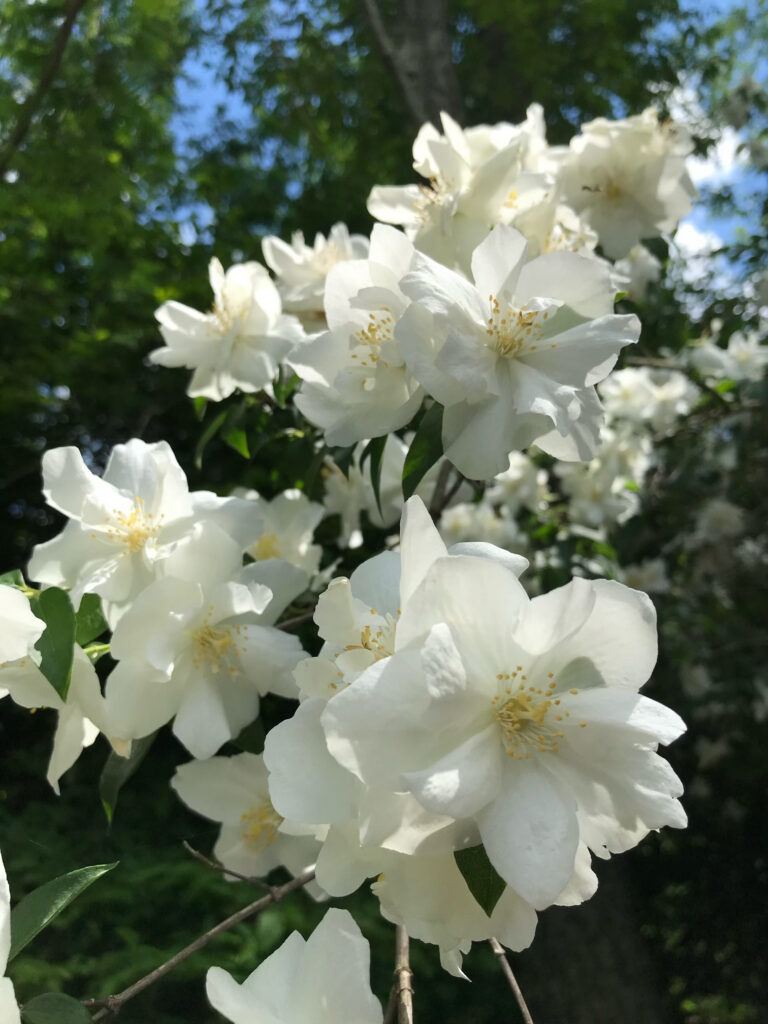
When it comes to pruning your woody plants, timing can be intimidating. Am I cutting the right branch at the right time? Did I take too much, not enough? Did I kill it? We can talk pruning dos and don’ts and there’s scores of literature out there to read. For me, gardening is about relieving stress, not causing more. I am a less-is-more type of pruner. When it comes to a plant that can thrive without me, I do my best to adapt to my plant’s style, rather than shove them into a box—or a meatball shape.
TECHNIQUES
I don’t like to say what I recommend is the way you must do it. As plantsmen wiser than I have taught, there’s no single best way, but more a series of best practices for targeted goals. First things first. You don’t have to prune a shrub. Don’t gasp; it’s true. Now, if you’d like to maintain a certain shape, size, train for aesthetics, or maximize plant health and overall blooming, pruning is a valuable maintenance skill and one worth honing with classes, research, and reference guides. I’d like to take some mystery out of pruning during the spring and early summer. I am a firm believer that anyone with common sense can do it.
I realize that I said I don’t like to finger-wag when talking techniques, but I’m going to give two rules I follow for every pruning job.
One: I don’t prune a plant I haven’t positively identified. Know your plant before you start hacking at it randomly. If you aren’t sure, take a picture or a live sample to a plant nursery or your local Cooperative Extension for identification. Green industry folks love a good ID challenge. I don’t trust plant apps; I’m over forty so I have to be a dinosaur about something, and I’ve seen apps misidentify too many times.
Two: I never take more than one-third of the plant mass off during one session. Trust me on this—one-third is a lot less than it looks. When it comes to cutting, less is more. Take a before picture to reference as you go, sometimes it’s hard to recall how much you’ve cut once you’re all up in the shrub’s business. Pruning, while beneficial, is still removing life from a plant and will cause a certain amount of stress as well as stimulating the plant to put out more growth. Less stress is best. Take breaks, walk away, and take a new look after hydrating to evaluate your work. It’s ok to do a pruning job in stages.
Every shrub has its natural shape, or habit; it’s good to familiarize yourself with what your shrub’s ultimate shape and potential dimensions would be with no human intervention. If you’ve always pruned a shrub into a specific shape or height, you might be surprised at its natural characteristics. A great place to do this is during a walk through an arboretum. It is an arboretum’s general practice to allow their specimens to grow with minimal intervention, showcasing their natural shapes and growth.

LET’S TALK TIMING
There is one type of pruning you should do as soon as possible and regardless of season: removing broken branches. Broken branches can invite disease and pests, as breaks are rarely clean, often involving tearing, and can take much longer to heal than a correctly angled, clean cut.
Corrective pruning is all I do to help a woody plant towards healing a broken branch; placing tar, paint, or a fabric will hinder the plant’s natural healing abilities and is not recommended. In these situations, I prune the broken or damaged branch back to the next outwardly facing bud before the breakage.
Next, are there branches rubbing together or starting to compete for the same space? Again, we look to the buds for where to cut. To help visualize this future direction of growth I locate the bud I think I’m going to prune back to and line my finger up with its direction. Then I visualize the direction the future branch will grow. Every time you prune a branch, you are changing the trajectory of its growth based on the bud furthest out on the branch. A woody plant doesn’t grow from a branch tip; it grows from the bud on the branch tip. This is why if a branch is pruned between buds the results are often a leafless, lifeless stump. You see these most often in hedges, where the objective is a solid wall of plants. This precision sacrifices a natural growth habit but can work for a thick living fence or wall. Again, it’s all about your objectives.
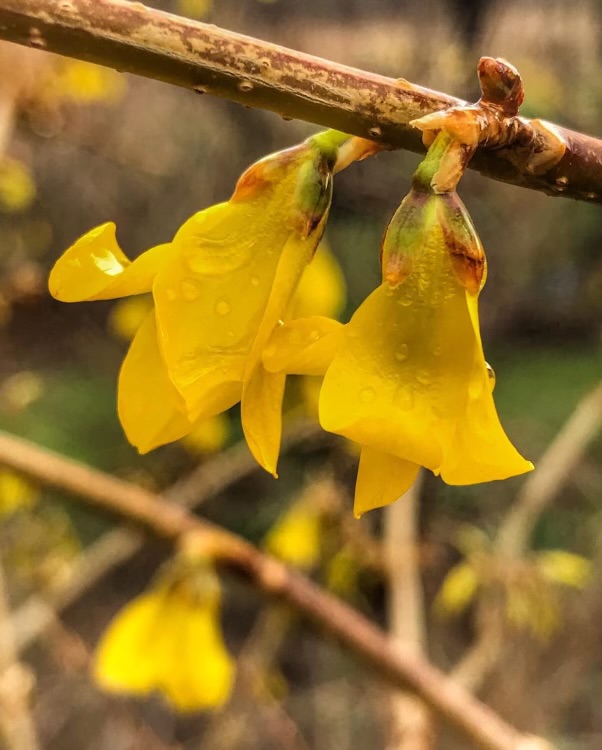
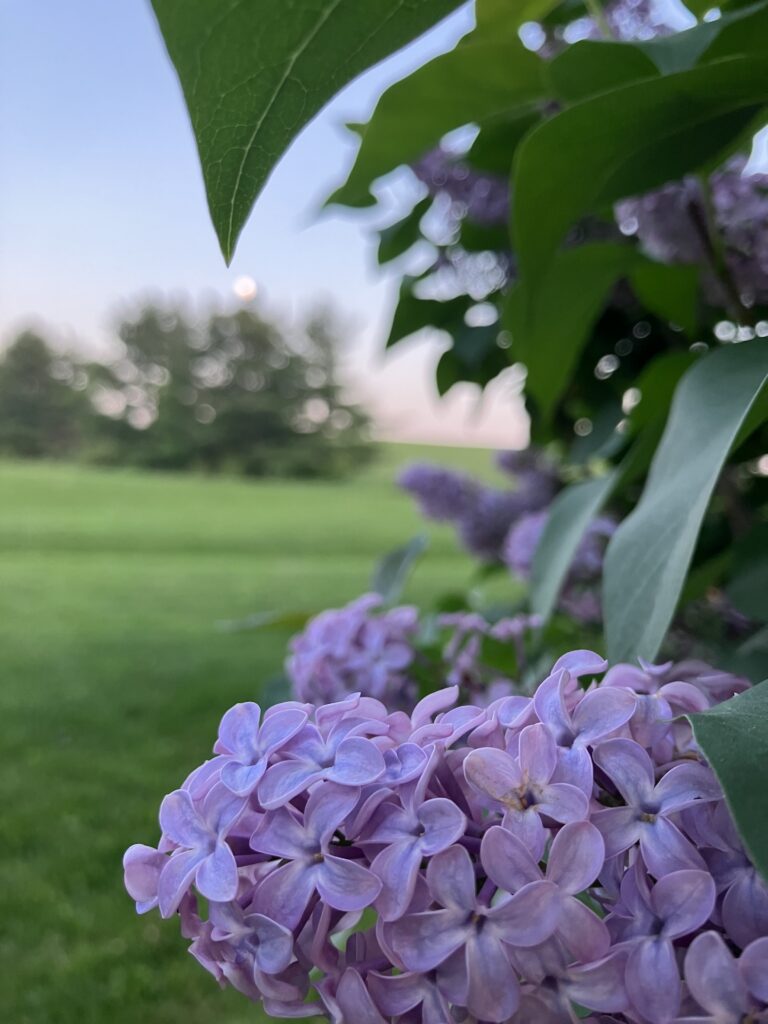
Late spring to early summer is an active growing period, so it may not seem like the ideal time for pruning, however there are some shrubs that respond best if pruned in this window. Shrubs that have one blooming period in springtime, such as lilac, forsythia, and fothergilla, will begin setting next year’s flower buds a few weeks after this year’s flowers fade. This is what’s meant by blooming on “old wood.” Those flower buds are formed and persist through winter dormancy to burst open next spring. Pruning these types of shrubs is best done soon after the flowers fade to avoid removing next year’s flowers.
Big-leaf hydrangea (Hydrangea macrophylla) is another shrub that blooms on old wood and is one of the last shrubs to “wake up” in the spring. In our Western New York climate, extremely cold winters can result in significant stem dieback. Many an eager gardener, desiring to remove all the dead-looking sticks from their otherwise greened up landscape, have unknowingly removed sleepy hydrangea branches and thereby lost their blooms for the season. I prefer to wait until the leaves have begun to unfurl from the buds before deciding what to remove as dead wood. This can mean waiting until early June some years. I find looking at hydrangea sticks an extra month in spring worth the wait for maximum blooms later that summer.
HOW MUCH TO REMOVE
Do I prune branches to the ground or remove part of the branch? Look at the base of your shrub. Is there one main trunk or many growth points from the ground? Cane shrubs, such as red-twig dogwood (Cornus sericea), forsythia, and pussy willow (Salix discolor) can have a portion (again, no more than one-third) of the oldest canes, or stems, removed completely or pruned to the ground. Sometimes a cane shrub has been highly trained. I’ve seen single trunk lilacs, for instance, so here’s an example of why you positively identify your shrub by more than its apparent habit. Lilac shrubs can be very sentimental for some people, and cutting big, old trunks can seem painful, but I assure you, those young shoots you keep nipping in favor of the old trunk are fast-growing, and essential for replacing the older parts of the shrub which will eventually stop producing blooms and ultimately die off.
If you are working with a severely overgrown tangle of shoots and old growth, and you don’t want to make drastic changes to the shrub’s overall appearance; make it a multi-year pruning project. Often starting by removing dead, damaged, and rubbing branches can drastically improve a shrubs appearance and health, with little need for additional pruning. In summary, don’t be intimidated by pruning. While it can seem complicated, it’s a skill that grows with practice. If you’re looking for more hands-on training, look through the calendar in this magazine at the different events held throughout the region. There’s often a pruning class hosted by a local garden club, green industry professional, or Cooperative Extension near you. Most importantly, enjoy the process, and, when in doubt, don’t stress, just cut a little less!
Bonnie Warriner is a horticulturalist and budding flower farmer with a love for capturing beauty in pictures and words. You can find her among the wildflowers and goats on her family’s 150 acre farm in Jasper, New York.
This article originally appeared in the May/June 2026 issue of Upstate Gardeners’ Journal.
Views: 42