

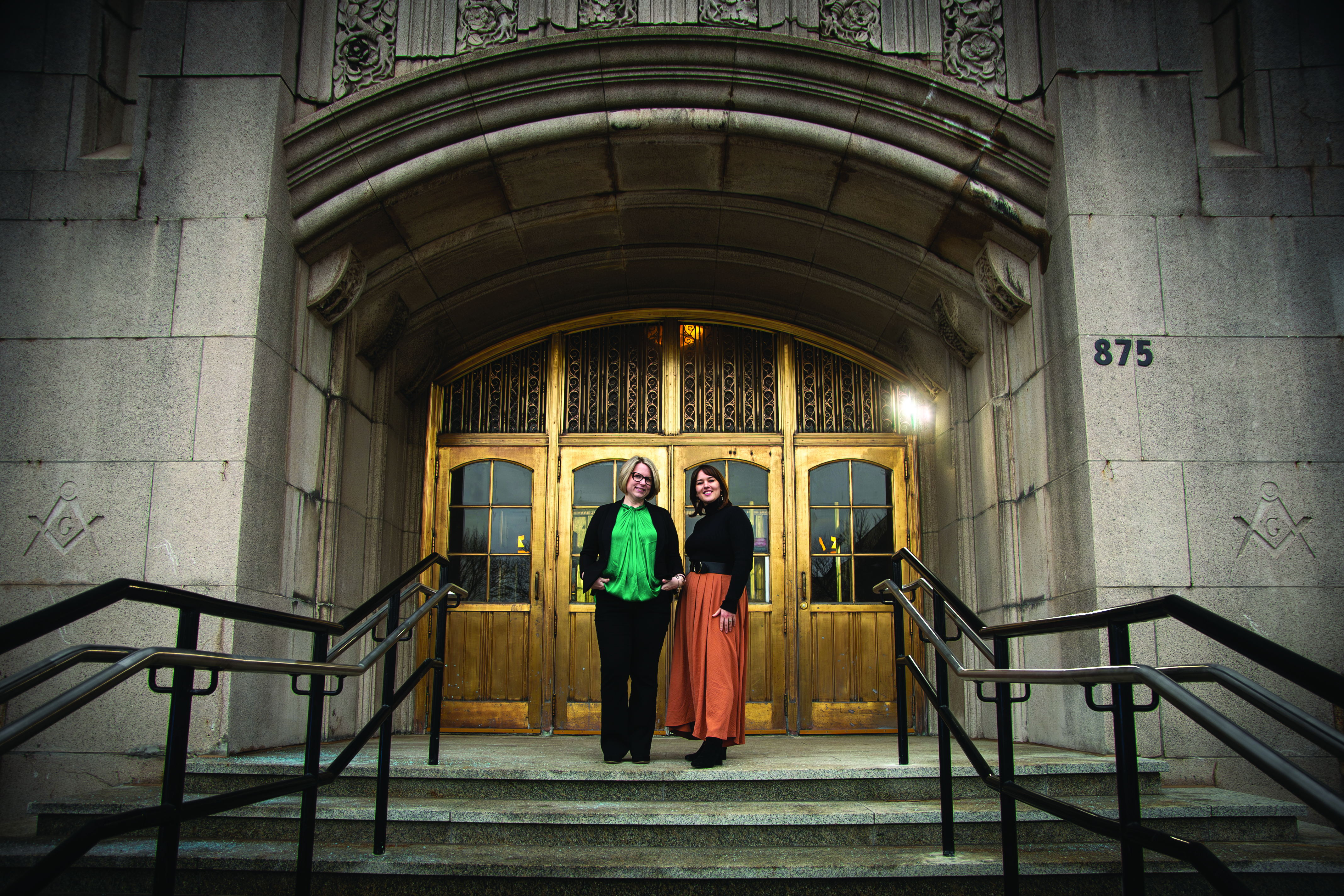
When the Rochester Broadway Theatre League (RBTL) embarked on a multi-year revitalization of the West Herr Performing Arts Center, the goal was never a simple face-lift. Known as Project Restouration, the effort seeks to preserve one of Rochester’s most architecturally significant buildings while also reimagining how it serves performers, patrons, and the city’s arts community today. At the heart of the design work are Emily Steinbacher, architect and project manager at LaBella Associates, and Stephanie Steinman, interior designer at the firm. In close collaboration with Pike Construction and RBTL, they approach Project Restouration as both stewards and problem-solvers—protecting the building’s legacy while reshaping it to meet present-day needs as the project unfolds. Their work requires constant coordination, flexibility, and thoughtfulness, often responding in real time as the site reveals both its challenges and its hidden character.
Building around the curtain call
Project Restouration unfolds in strategically sequenced phases, dictated as much by performance schedules and funding as by design intent. Early work focused on critical infrastructure and access: replacing original elevators, opening connections between the auditorium and Masonic sides of the complex, and creating a family restroom. These changes addressed accessibility issues and laid the groundwork for public-facing areas.
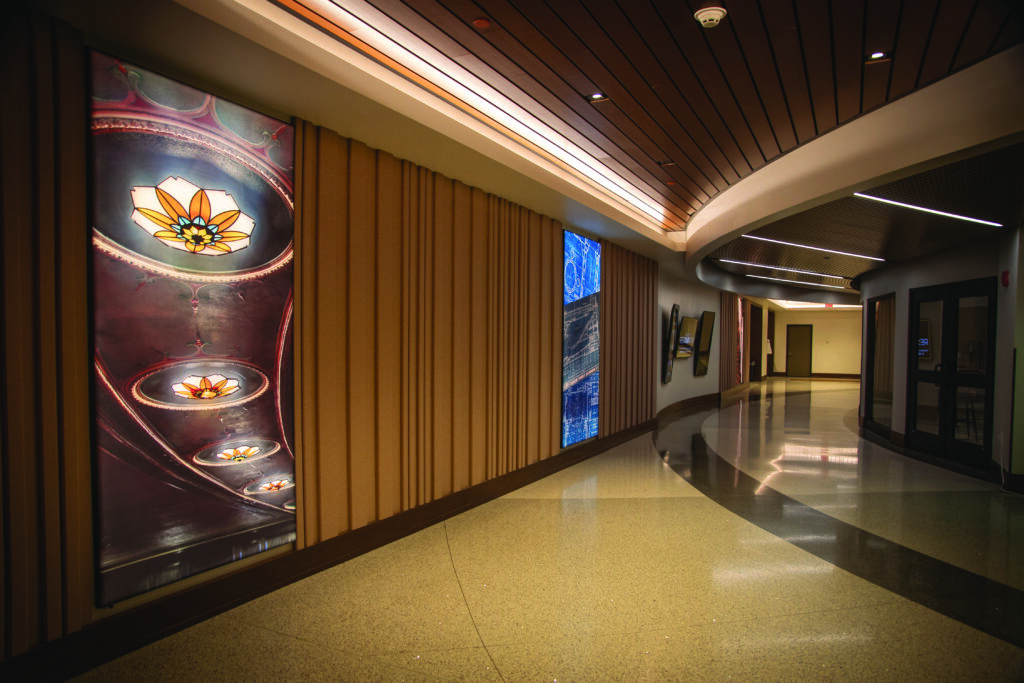
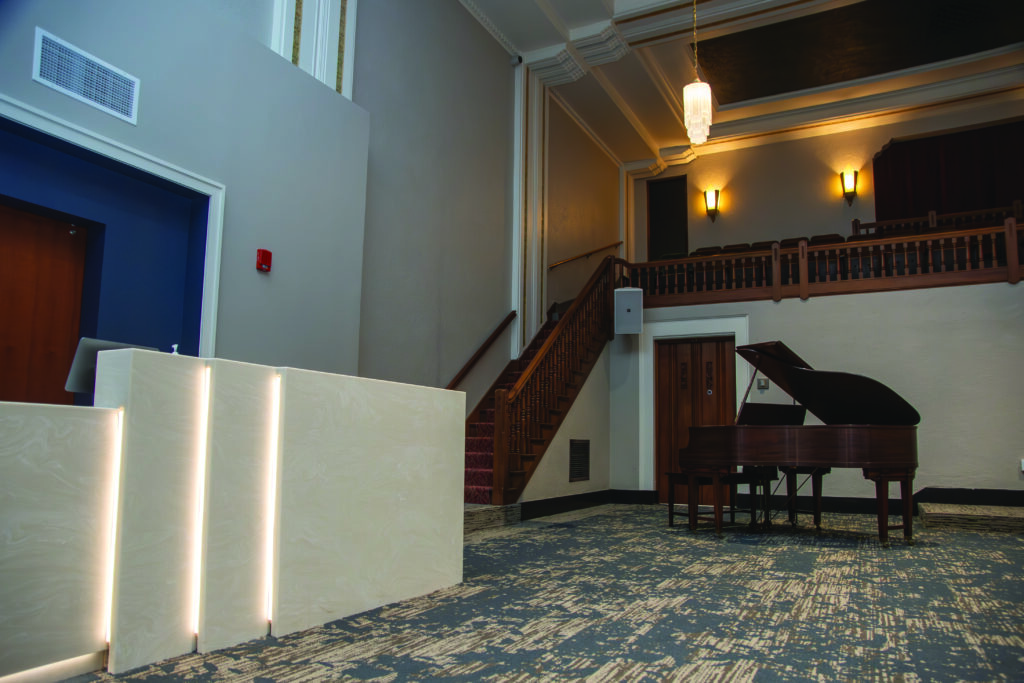
Subsequent phases included the second-floor lounge and its restrooms, the vestibule and corridor at the west entrance, and the transformation of the Floreano Room, now more welcoming for gatherings and events. Current work at the front of the building includes new stairs and railings and a repositioned retaining wall along East Main Street.
Not every phase has unfolded exactly as planned, in part because construction must work around a full performance schedule. Much of the work is intentionally scheduled for summer months, when fewer shows are running and access is easier. “We’ve been doing a lot of construction during the summer months because that’s not usually when RBTL shows are. From late spring to early fall—that’s our very short window to try and push things through,” says Steinman.
Linda Glosser, chief revenue officer at RBTL, emphasizes the need for precise scheduling and flexibility to ensure performances and renovations coexist seamlessly. “We cannot pause operations while the restoration goes on. Every section is actively used for rehearsals, performances, or patron services, so finding the right time to take a room offline requires careful planning between many stakeholders.”
What an old building teaches you
The undertaking of such a storied landmark provides lessons no blueprint can anticipate. In this case, that truth is literal. As project manager Emily Steinbacher explains, “We didn’t have existing drawings—or if we did—very limited existing drawings showing the construction of the building.” Without a complete roadmap, the team relied on investigation, teamwork, and constant adjustment as conditions revealed themselves. “There’s only so much prep work we can do,” Steinbacher says. “We come across unforeseen unknowns, and then we figure out the next steps together.”
That adaptability extends beyond construction logistics into the regulatory process. For Steinman, Project Restouration marked her first time presenting work to a historic preservation board. “You have to really understand what they care about, how to advocate for your design, and where latitude is allowed,” she says. Preparing for those meetings required a deeper level of clarity and restraint—demonstrating how proposed changes would improve functionality while preserving the property’s character and integrity. “That was an eye-opening experience for me.”
Much of the most intricate work, however, remains invisible to patrons. Steinbacher notes, “These are often parts that nobody sees, like the mechanical, electrical, and plumbing.” Integrating modern systems into a historic structure is both delicate and imperative. “Upgrades are crucial not just for comfort and safety,” she adds, “but for the evolution of this space.”

A dialogue between old and new
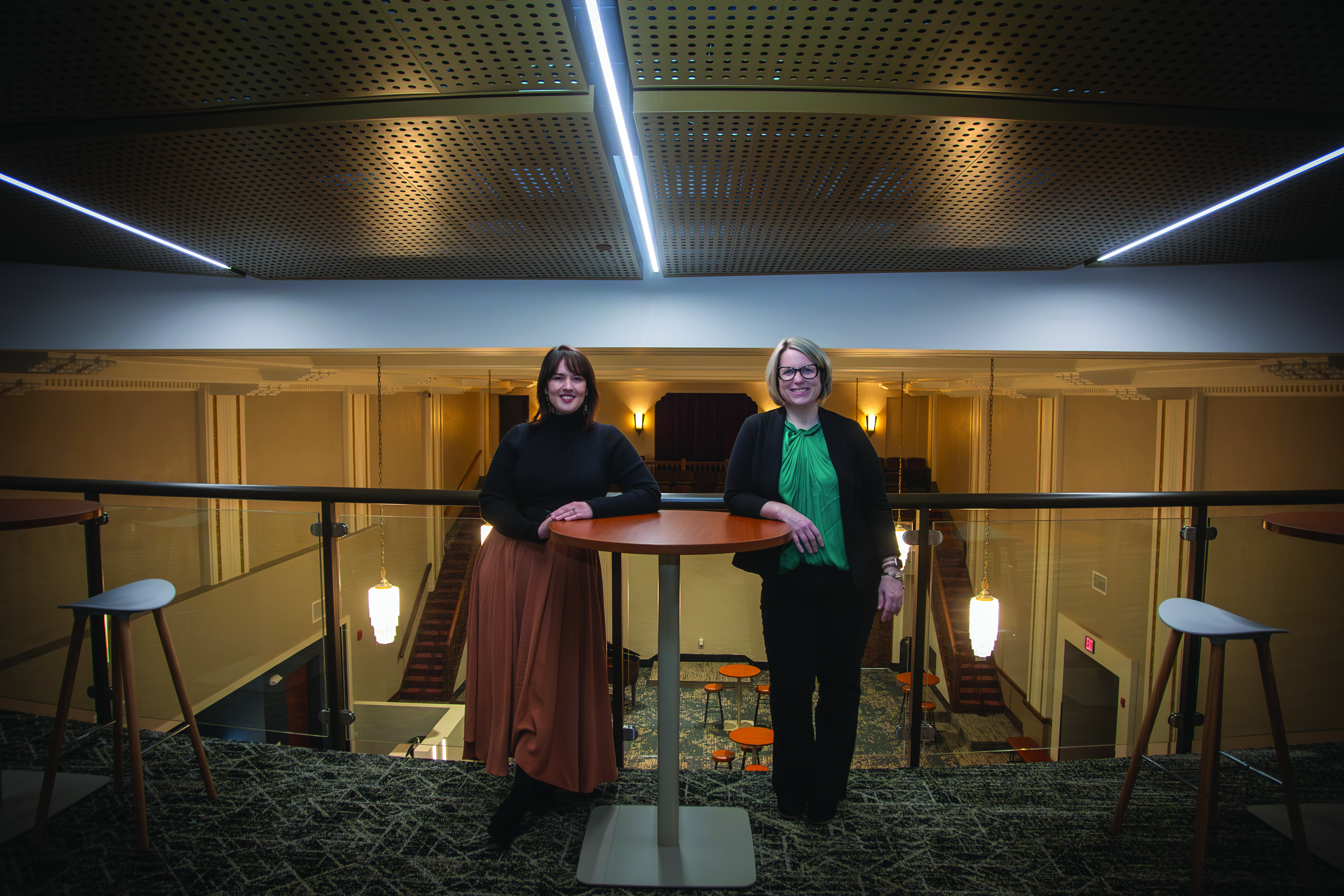
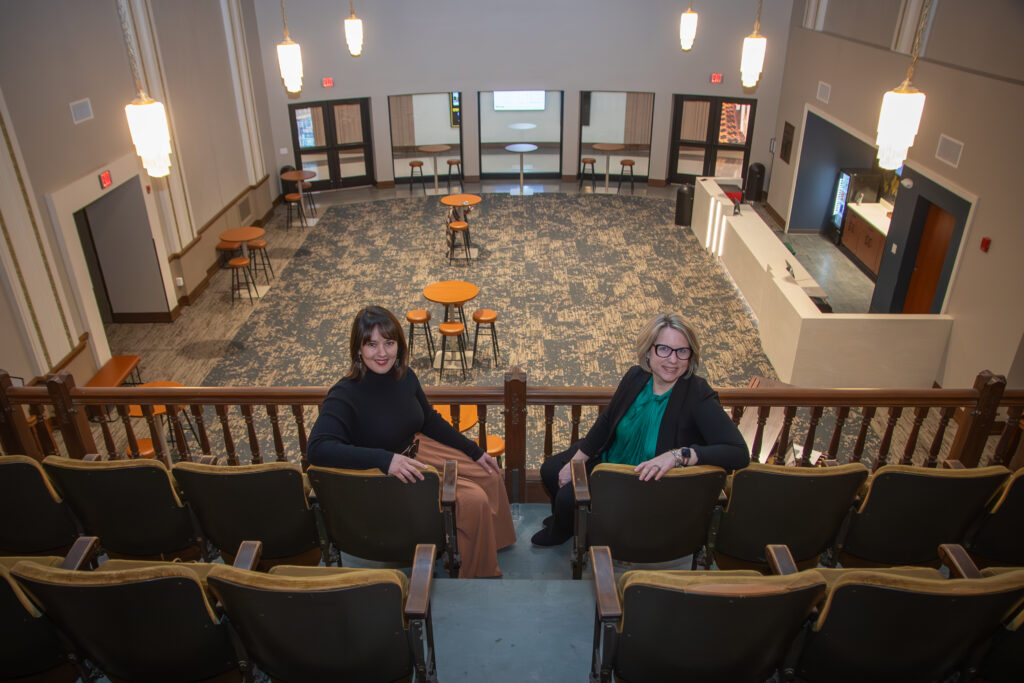
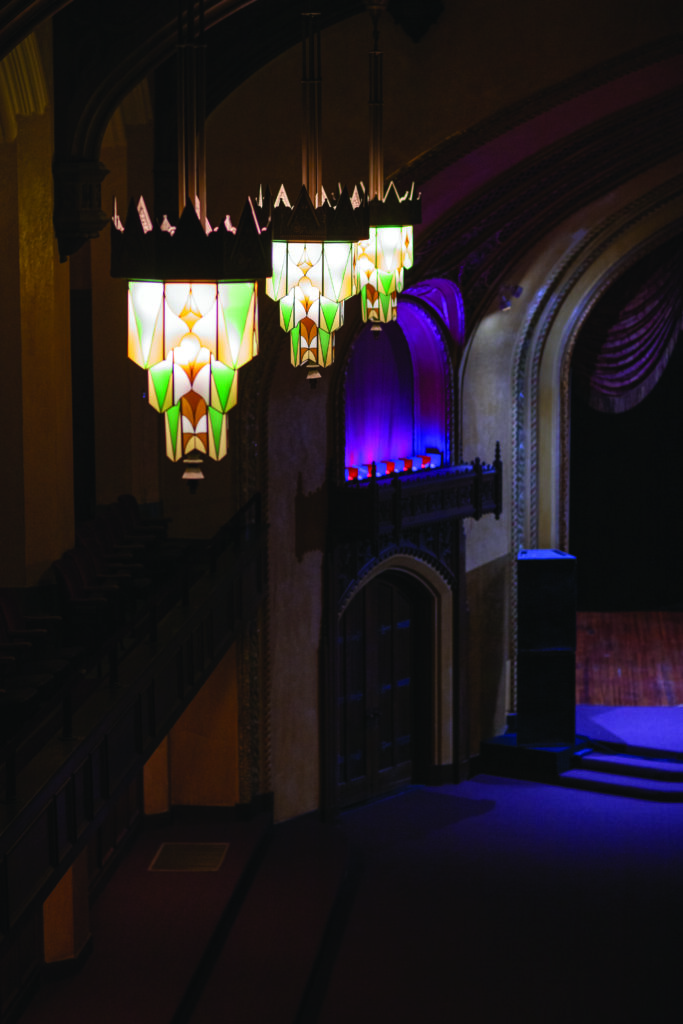
Blending authentic features with modern elements calls for mindful consideration. In the Floreano Room, original leaf reliefs and glazing were left intact. Steinman explains, “When we dictated how they were going to repaint this room, we had them leave the original glazing because there was no way we could replicate that now.” Lighting, flooring, and other design choices were reinterpreted rather than copied, blending Art Deco inspired motifs with contemporary style.
Even elements once considered expendable were salvaged creatively. Original copper elevator doors with leaf detailing now flank the second-floor bar, while wood wainscoting in the Ethan Allen Lounge is being repurposed to enhance the bar area. On the second floor, century-old original flooring was uncovered. “We found this beautiful maple wood floor underneath the carpet,” Steinbacher recalls. “We incorporated it into our design plan, refinishing it, and returned it to its former glory.”
Designed for the people who use it
Every decision in Project Restouration is guided by how the building is actually used—by performers, staff, and patrons alike. The team observed how cast members moved backstage and how those spaces functioned, identifying opportunities to make them more supportive and comfortable. “Watching how performers and crews navigated and utilized those areas really highlighted where we could expand wig rooms, laundry facilities, and costume storage so future shows can operate smoothly and efficiently,” Steinbacher says.
Public areas were shaped with similar care, keeping visitors’ experience and safety in mind. New stairs and a repositioned retaining wall were designed to prevent crowds from gathering right at the curb before performances. “The retaining wall will help manage large groups outside,” Steinbacher explains. “It keeps people safe and gives them room to comfortably wait before a show.”
Transparency and communication have been equally important. Laura Polisseni, communications coordinator for RBTL, says, “We aim to be as forth-coming as we can about the work being done around the building,” often sharing close-up photos and videos to show progress, especially when changes aren’t immediately obvious. Glosser adds, “Even with shifting entrances and parking, audiences have adapted remarkably well. Keeping people informed has been key to making that happen.”

The next act
With multiple phases still ahead, Project Restouration remains intentionally flexible. The Masonic side of the building, Polisseni notes, has six floors with “endless possibilities” for classes, event spaces, and creative programs.
Steinman shares her hopes for the space: “I’d love to see it become a hub for creatives. Where everyone that walks through the door can get their creative juices flowing.”
The vision extends beyond the building itself. Steinbacher notes that visitors can enjoy a full night out—attending a show, trying a new spot for dinner, and experiencing everything the Neighborhood of the Arts has to offer. “We hope the transformation will encourage more small businesses, restaurants, and cultural experiences to grow around the center,” she says, highlighting the potential ripple effect on Rochester’s arts community.
Project Restouration is more than a renovation—it’s the culmination of Steinbacher and Steinman’s deliberate vision, a space where audiences, performers, and the community can gather, connect, and be inspired for years to come.
This article originally appeared in the March/April 2026 issue of (585).
Views: 170