


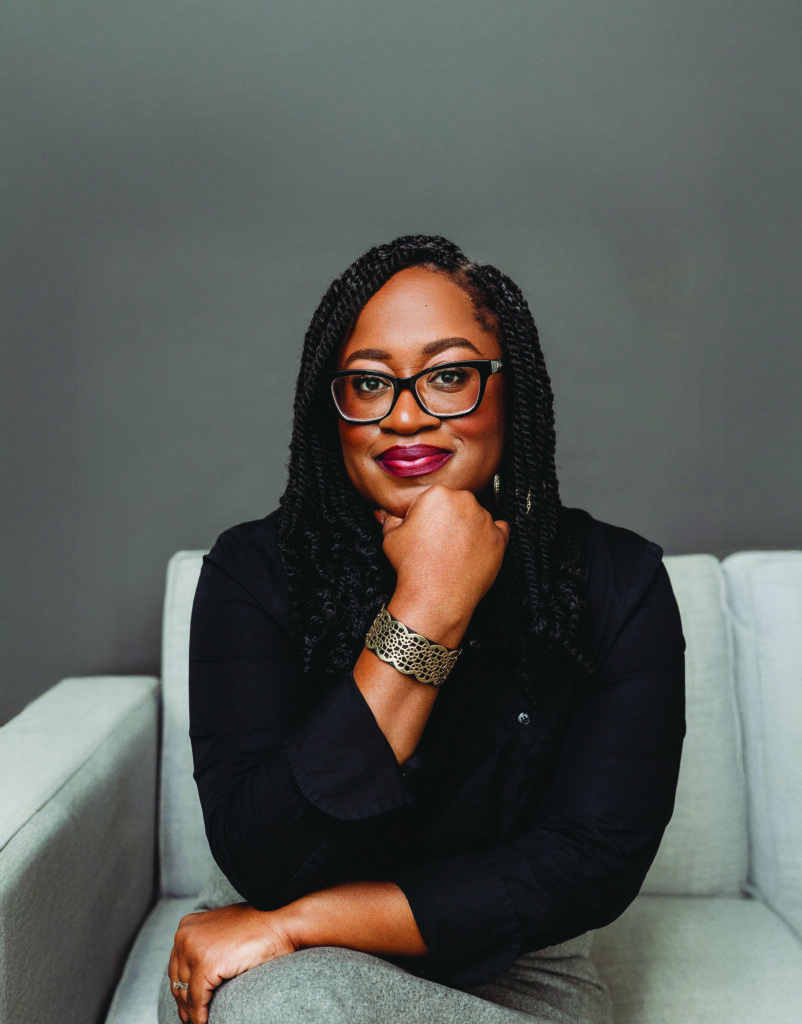
Dr. Keisha N. Blain is an acclaimed historian, Brown University professor, and best-selling author. Her new book, Without Fear: Black Women and the Making of Human Rights, tells the stories of Black women who were at the forefront of movements for social change, including several whose place in history is being unveiled for the very first time. Fannie Barrier Williams, the first Black graduate of SUNY Brockport, is featured among these incredible women.
Blain grew up in Brooklyn and moved upstate to attend Binghamton University with the dream of becoming an attorney. Her plan dramatically shifted when she found herself captivated with the material in a class on U.S. immigration history. “I fell in love with it,” she says. “Understanding history helped me get a better sense of who I was as a Black woman.”
Global Black history was her most difficult class. “I sat in a lecture finding out about all of these remarkable Black people for the very first time,” Blain remembers. “I was in tears. It was a feeling of shame that I had taken so long to learn this.” She tried to reconcile the fact that despite attending an excellent high school and working hard in her studies, she hadn’t been aware of this history. “But I didn’t have opportunities to take classes about people who look like me, and so the more I reflected on my own experience, it showed me how these histories are marginalized, if not completely erased in many contexts.”
Blain made a vow to herself that she would work at making others aware of this history, and it set her on the path to research and write for all audiences. “It’s human to feel shame when you encounter information so late in life, but don’t stay there,” she says. “Take the next step to feel a sense of empowerment. Now you know, tell someone else, like an ambassador of sorts.”
In Without Fear, Blain offers a new narrative about the accomplishments of Black women who understood that the fight for civil rights and human rights were inseparable. From public advocacy in the global Black press to their work for the United Nations, these remarkable women are finally being recognized for their courage and action.
During the process of writing Until I Am Free, a biography about activist Fannie Lou Hamer, Blain found herself gathering stories and sources that were interesting but not relevant to what she was writing. Blain read about how Hamer declared she was no longer fighting for civil rights, but human rights. Wondering how other Black women felt, Blain decided it was the obvious direction for the next book.
Blain went to the archives with a long list of hundreds of women. She weaved in as many as she could, making sure to leave room for the perspectives of the impoverished and working class, pulling information from an array of articles written by Black women, spending weeks going through census records trying to find those who wrote letters to the editor.
Blain had her eye on the future. “I wanted to leave breadcrumbs that others would be able to follow, “she says. “And that feels very urgent right now to tell these women’s stories and reveal as much as I can so that someone else could pick up the pieces later.”
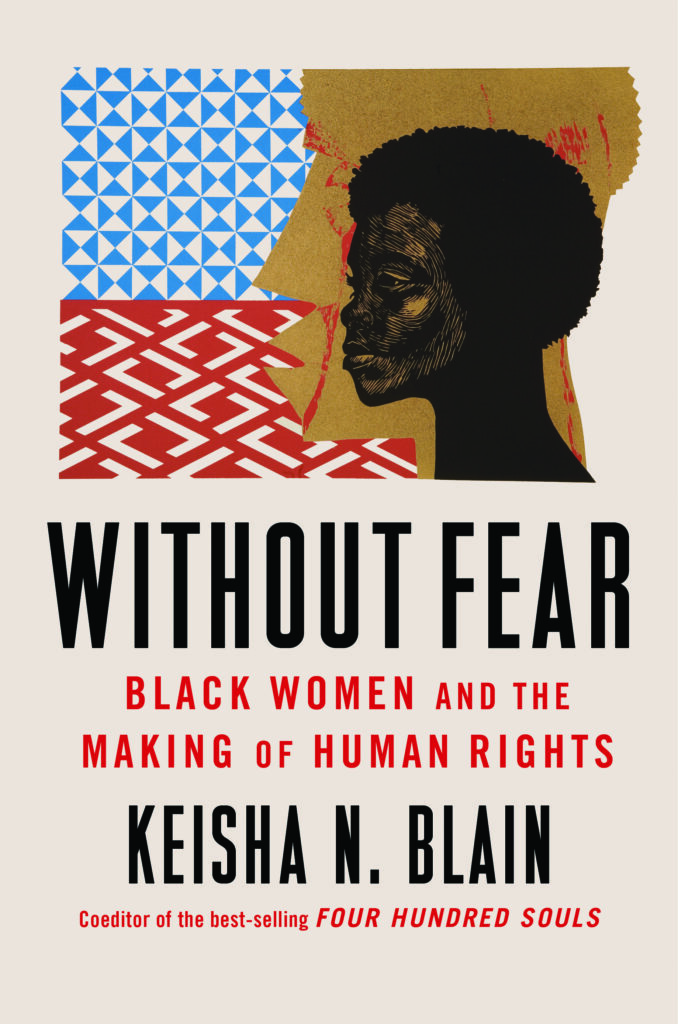
“Without Fear” comes from a speech given by Mary McLeod Bethune to a group of Black women at a workshop in 1944 where Bethune implores them to do this important work without fear or hesitancy. “The title not only speaks to these women’s lives,” says Blain, “but also speaks to the moment in which we’re living. And so it becomes a rallying cry and a word of direction at a moment where many of us feel powerless.”
Readers may recognize many of the names in this book, but Blain shows their work in an international light. Ida B. Wells was an early civil rights leader, but she also traveled abroad to gain support from Britain to sanction the United States, labeling lynchings as crimes against humanity. Lena Horne was famous for her vocals, but she also wrote a weekly column denouncing the mistreatment of Black people in the U.S. and marginalized groups across the globe.
Blain is the first scholar to tell the world about several of these women, including Pearl Sherod, a working-poor human rights activist from Detroit who is completely absent from the traditional archives. Blain discovered Sherrod in her research for Set the World on Fire, a book that examines early-twentieth-century Black nationalist women like Mittie Maude Lena Gordon. Sherrod wrote a letter to Gordon in the 1930s that ended up in an FBI collection, which led Blain to uncover more.
Readers will come away with an indelible image of Sherrod traveling all the way to Vancouver to attend a conference. Despite the fact that no Black women were invited, Sherrod found her way inside and all the way up to the stage, where she stepped behind the podium and spoke to the crowd. The organizers were so stunned that they didn’t stop her as she condemned racism and global white supremacy.
“It helps us to see the way that working-poor Black women were also at the forefront of this movement for human rights advocacy,” Blain explains, “even when they didn’t have many resources. This is just a person who finds herself on the margins of the margins because of her radical politics, because of her class positioning. And yet we can still see her as an important voice alongside all these other women.”
Blain thinks there is something wrong with the fact that the only time you can talk about the civil rights movement is to talk about Martin Luther King Jr. And if we talk about women, it’s usually Rosa Parks. But that framing means that we don’t know about someone like Joanne Robinson, who, as it turns out, is the key figure behind the Montgomery bus boycott. “The history is rich, and there are many actors involved,” Blain says. “That’s part of what I’m saying with this book. Black women deserve to be included in this discussion.”
This article originally appeared in the January/February 2026 issue of (585).
Views: 62