


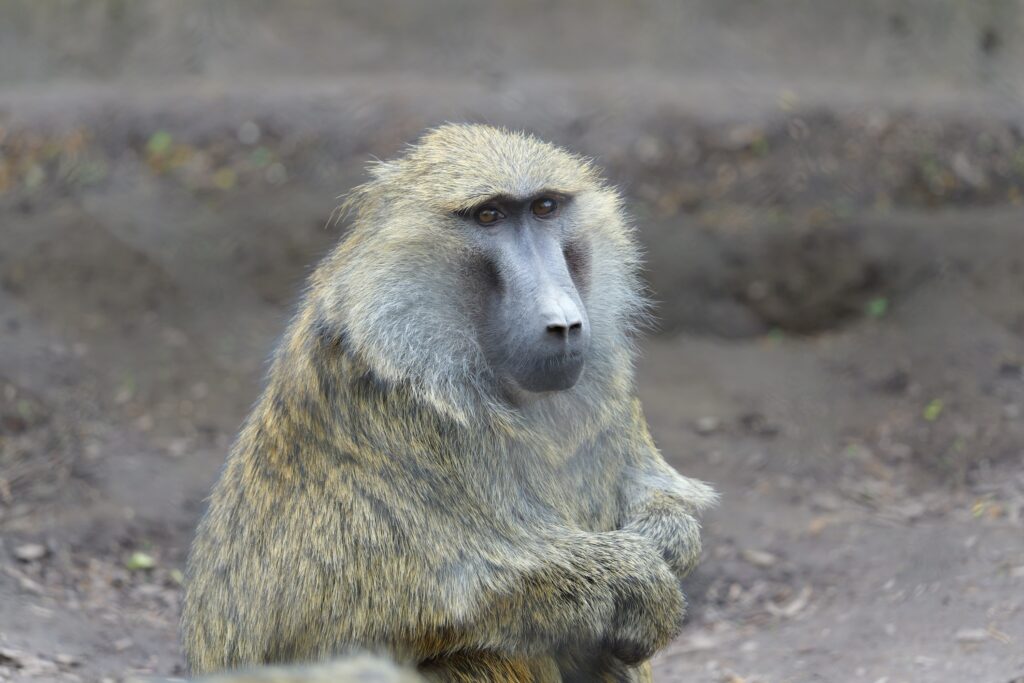
They run, chase, swing, and climb. Who is it getting into all this monkey business? Why the olive baboons, of course!
Originally from equatorial Africa, these animals form groups of fifteen to 150 baboons (called troops) in nature. Seneca Park Zoo’s (SPZ) alpha, or dominant, baboons are Olive Oil, an eighteen-year-old female, and Mansino, a twenty-two-year-old male, who keep the rest of the troop in line.
The other eight baboons living at SPZ include two fourteen-year-olds who were born at the zoo: female Olivella (Olive Oil is her mother) and male Pico-de-Limon. The rest of the troop are Kalamata, Jefferson Jr., Peperella, and Sabina, all age eighteen. There is also Pearl (age twenty-five), and Pimento (age thirty-two), who is the oldest olive baboon living in an Association of Zoos & Aquariams–accredited zoo!
All baboons organize their troops into hierarchies (think of a pyramid with the alpha/dominant baboon at the top), led by a dominant male and female, like Mansino and Olive Oil. The others fall into place based on their mother’s status (for females) or by winning a fi ght (for males). They can also rise up the ranks by performing positive tasks for the higher-ranking baboons, like grooming.
Grooming is a behavior that visitors to the zoo can witness for themselves. One baboon will look through the fur of another and remove ticks and their eggs. Not only does it keep the baboons healthy but also shows their care for each other.
Speaking of fur, these curious primates get their name from their grey-green olive color. Visitors may also notice the baboons’ hairless rumps, which are made up of thick layers of skin. Their padded bottoms help make the monkeys comfortable while they are sitting in trees.
Olive baboons belong to the category of animals called Old World Monkeys, which are from Africa and Asia. New World Monkeys are from Central and South America. Characteristics of Old World Monkeys include medium-sized bodies (olive baboons are about thirty-three to fifty-three pounds), long, down-turned noses, and tails that cannot grasp.
Still, these acrobats get up, down, and all around. In their natural range, they spend days on the ground foraging for food but spend nights in the safety of the trees. That’s why SPZ has installed high perches for them to climb and rest on.
Olive baboons are omnivores, which means they eat plants, nuts, seeds, and meat. Despite their pointy canine teeth, they aren’t big hunters and usually only go after easy-to-catch small mammals and birds. The baboons at SPZ are fed fruits, vegetables, and a special food called “primate chow.” These “biscuits” are packed with vitamins and nutrients that keep the baboons healthy and strong.
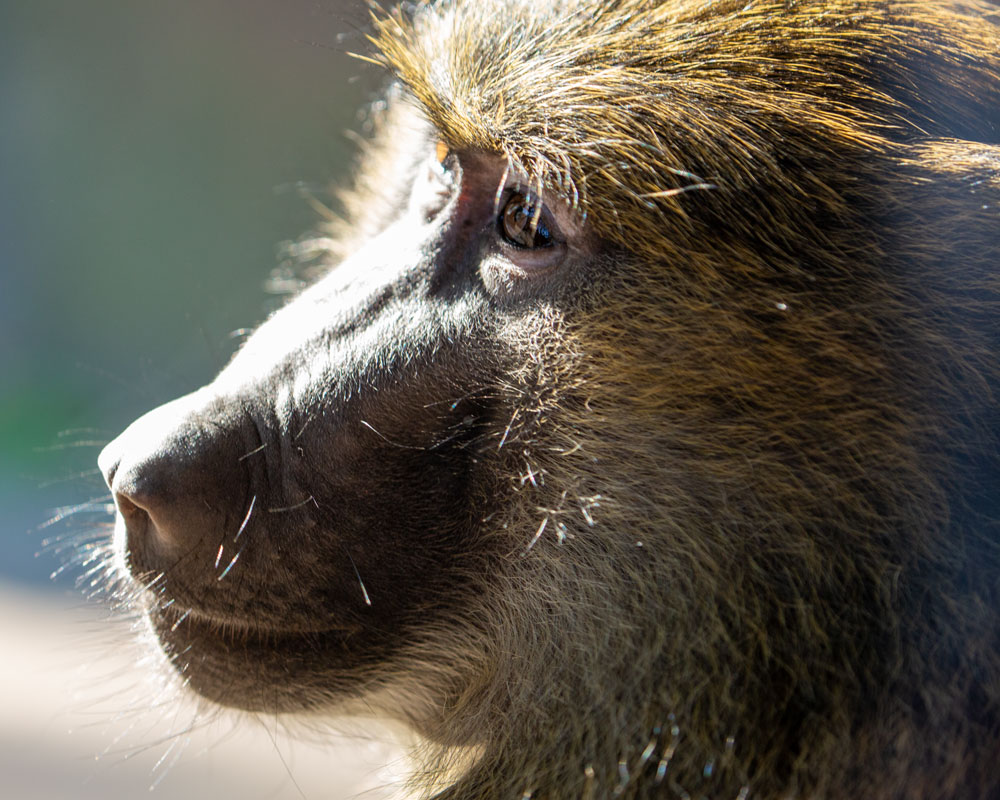
Another important part of the baboons’ health is enrichment.
“Enrichment is anything that is given to the baboons that engages their mind, bodies, and social bonds. Primates have large brains that require lots of stimulation!” says zookeeper Clare Belden. “By giving them enrichment that engages their brains, we are not only providing opportunities for stimulation but also mimicking the problem-solving skills that olive baboons would be using in nature for survival.”
An example is foraging for food, an important activity that takes up much of a baboon’s life in their natural range. At the zoo, they don’t need to engage in this behavior. However, since it is part of their natural instincts, the zookeepers make sure the baboons have an opportunity to do a similar activity. One way is by giving the baboons toys with food hidden inside that they must figure out how to open to reach the treats.
“We call this cognitive enrichment because it engages their minds,” says Belden.
Other ways the zookeepers keep the olive baboons engaged are by giving them blankets or cardboard boxes to tear apart or play with; stuffi ng food inside tubes that they try to get out; and offering them foods they don’t usually receive like lentils, oats, rice, pasta, and seeds.
While olive baboons are thriving in the African savanna, SPZ is always focused on animal conservation. Your visits to the zoo help SPZ support that mission. Check out their online calendar for events for special times to go. KinderZoo runs for ages eighteen months- to five years, where kids will learn about a certain type of animal and see one close-up, and Book & Beast is a story time for all ages that ends with a visit from a small Ambassador Animal.
As a bonus, February is “Free Youth February” at SPZ. That means for each adult ticket you buy, you can bring up to five kids for free. Swing on over to the baboon habitat with your own troop and meet the ten boisterous baboons!
This article originally appeared in the Winter 2026 issue of (585) Kids.
Views: 19