

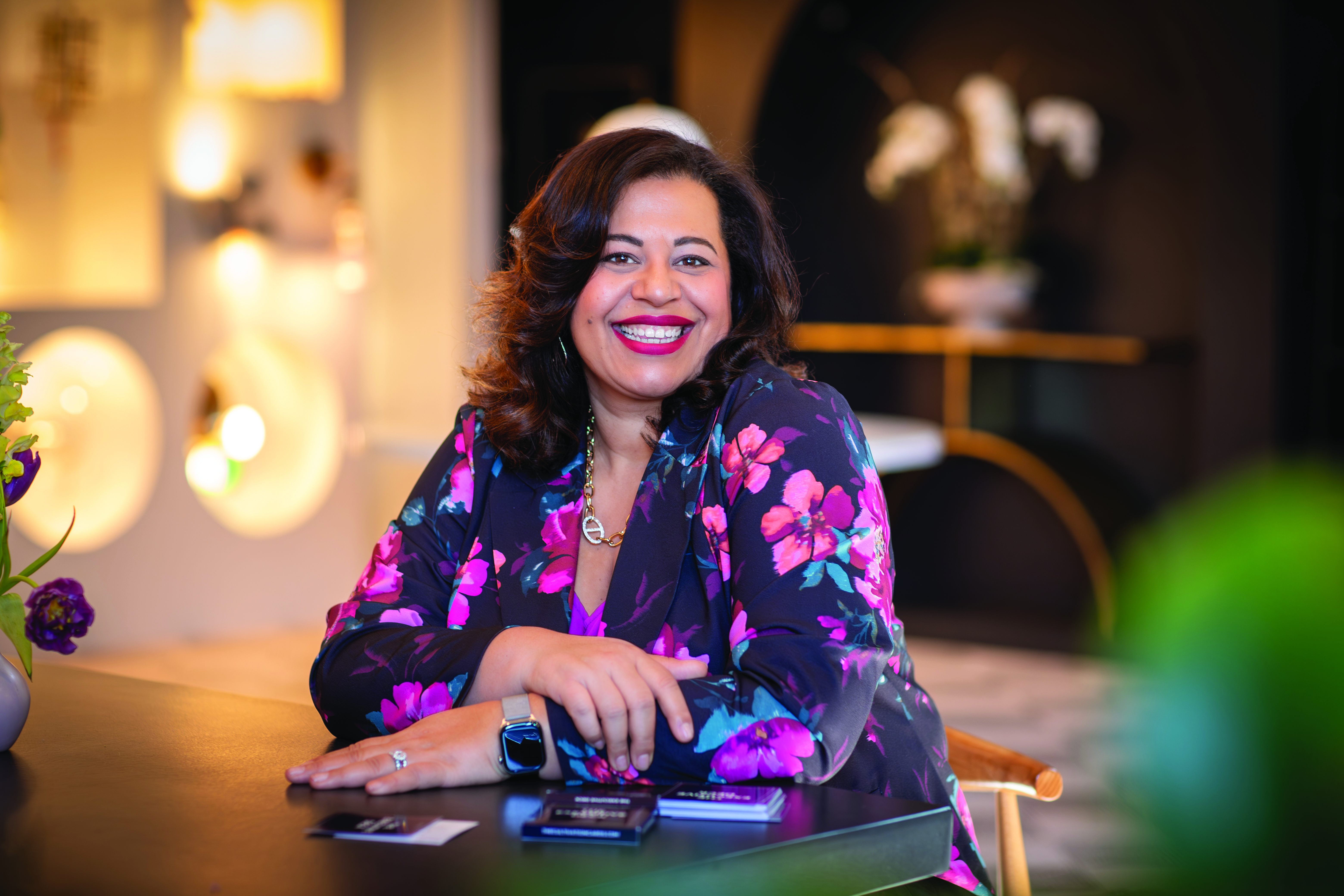
Less than two minutes into my interview with Andrea Holland, founder of Andrea Holland Coaching, I could already tell this was a person I could learn from. Holland, a self-proclaimed troublemaker, takes pride in her loquacious personality and direct communication style, traits that have served her well throughout her robust professional career.
“I’m a mouthy broad who comes in and says the thing,” notes Holland. “I’m okay with that, because, if making myself or someone else uncomfortable wakes them up to a greater gain for themselves, that’s a win.”
Following college, Holland began working at the American Red Cross four weeks post-9/11 before transitioning to a position as an on-air radio DJ. From there, she dabbled, holding various roles in communications and public relations (and even applying to culinary school) before assuming her current post as an executive coach.
Holland’s career shift from media to leadership transpired unexpectedly. After leaving her position in video production for Skillsoft, an educational technology platform, Holland was browsing social media when a post from an acquaintance caught her attention.
“I wasn’t sure what my next move was going to be,” says Holland, “when someone I had just met said she had a radio interview scheduled and wasn’t sure how to prepare for it, so she was looking for tips. I connected with her over coffee and she brought the CEO from her organization.”
“You’re really good,” the CEO said to Holland. “What’s the name of your company?”
“Um … Talent Communications!” she replied, inventing a personal brand on the spot. Shortly thereafter, Andrea Holland Coaching was born. Holland credits her successful transition between industries to her comfort with risk-taking: “I just kept saying yes.”
Despite Holland’s innate enthusiasm, executive coaching was a difficult field to break into in 2012, especially for women. “When I first began coaching [fifteen years ago], people thought I was a life coach. [At the time,] there weren’t a lot of coaches. In fact, I remember people saying, ‘What are you doing? Just get a job in public relations again,’” says Holland. “[Coaching, as a profession,] was a new concept unless you were in a C-suite at a large corporation, positions that were traditionally held by white male executives.”
However, recent developments within the field have been positive. “It makes me happy to see how hiring practices have evolved,” Holland says. “Now, there are more women [coaches], more women of color, you name it. I am a very diverse person, and I think we need to be investing in all kinds of people.”
Throughout the past fifteen years, Holland has relied on her firsthand experience to identify and combat the myriad challenges facing corporate America. While organizational struggles ebb and flow, a few key themes stand out.
“Burnout and decision fatigue are always hard for businesses,” says Holland. “I’m also seeing emerging fears about new technology—like AI—as companies work to stay relevant.” Common workplace stressors, like the possibility of job elimination due to automation, segue into organizational conflict and the disintegration of company culture and morale.
“We start [partnering with clients by] determining how decisions are made at their organization, defining roles, and finding gaps in communication,” says Holland. “Then, we triangulate that data into [actionable] results.”
While organizations are guided by shared values, employees define values differently, which can lead to misunderstanding. For instance, accountability may make one individual feel like the company cares about their success, while another person may interpret the same concept as micromanagement.
“And then you’ve got to decide,” says Holland. “Is this what I want? The hardest conversation and the most joyful one I have with people is … you have choices. Exercise them.”
At times, employees may feel uncomfortable having frank conversations about workplace values, but Holland does not shy away from hard-hitting topics. Frequently, she asks her clients, “What is important to you? What are your boundaries? And what don’t you want us to ask you about?”
Holland shares a memorable coaching experience: “I was working with a leader who was new to her executive role, and she had to speak at an event. Everybody told her, ‘We really want you to share your personal story,’ and she really struggled with vulnerability as a leader.
“I found a simple formula for storytelling, and the most important piece is ‘Never give away that vulnerable piece of yourself without directing the audience on how to use that data,’” says Holland. “In doing that, [the speaker] was able to build her confidence and communication skills.”
When Holland isn’t engaging in one-on-one or group coaching sessions, she is partnering with her cofacilitator—another coach for Andrea Holland Coaching—on interactive workshops and executive happy hours or promoting a retail product she created, the Executive Deck.
“In 2025, a disproportionately large number of women exited the workforce, primarily women of color. [The Executive Deck] was designed specifically because I recognized a gap in the marketplace. Companies invest a lot of money in their C-suite leaders, but [less in everyone else],” says Holland.
The Executive Deck contains thirty cards, all related to the five key areas of leadership Holland focuses on in coaching sessions (communication, resilience, resistance, relationships, and self- awareness). Holland removes a card from the deck and sets it in front of me. “This one is about self-talk,” she says. “You scan it and it’ll take you to a mini course with audio and video, allowing you to take a deeper dive [into the topic].”
“The Executive Deck Happy Hour is our newest offering,” says Holland. “We bring in [the Executive Deck], and the [group] shuffles and plays with the cards. We play ‘musical deck’ with actual music and chairs.”
“We also offer workshops on several different topics, including conflict management, public speaking, and media training,” Holland adds. “We also do a lot of team development workshops, and then we have the big fish, which is cultural development.”
While Holland’s work is often challenging, the rewards are abundant. “At the end of the day, you have entire systems trying to exist and move things forward, and that’s a beautiful thing,” she says. “I love what I do. It’s good work. It’s important work.”
This article originally appeared in the May/June 2026 issue of (585).
Views: 26