


Birds of prey are a sign of a healthy ecosystem. They are characterized by their strong, hooked beaks and sharp talons and can be found in a variety of habitats, including backyards and cities. Some species are common, while others have more specific habitat requirements and might require a bit of searching to find, but there is usually a bird of prey nearby.
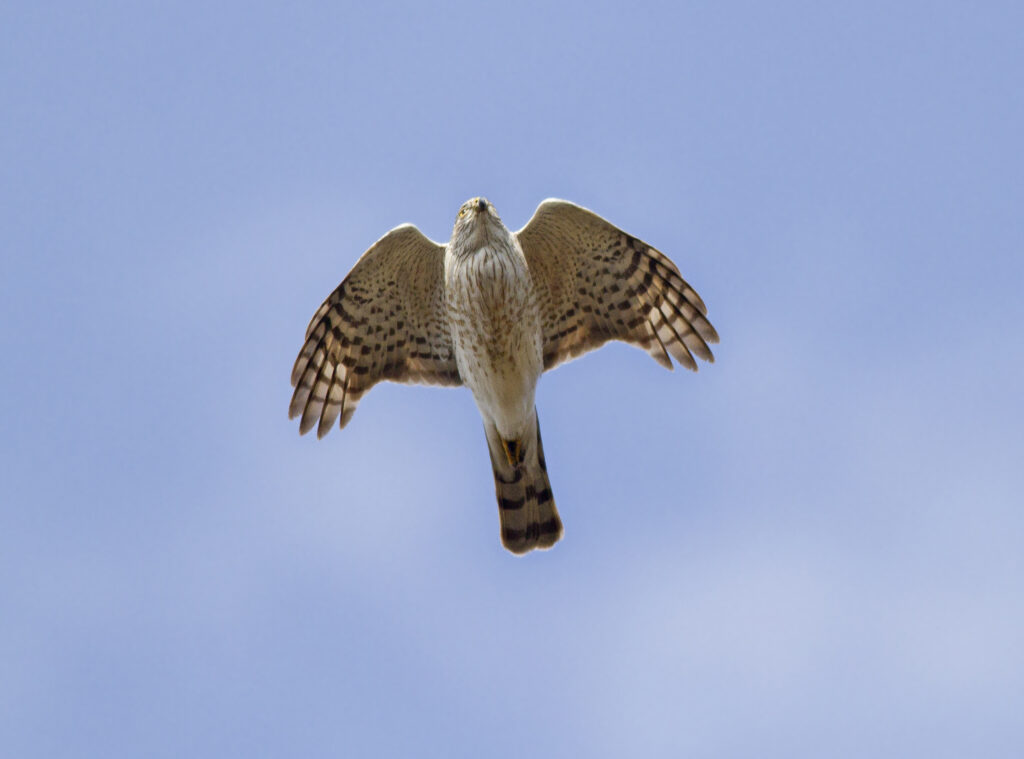
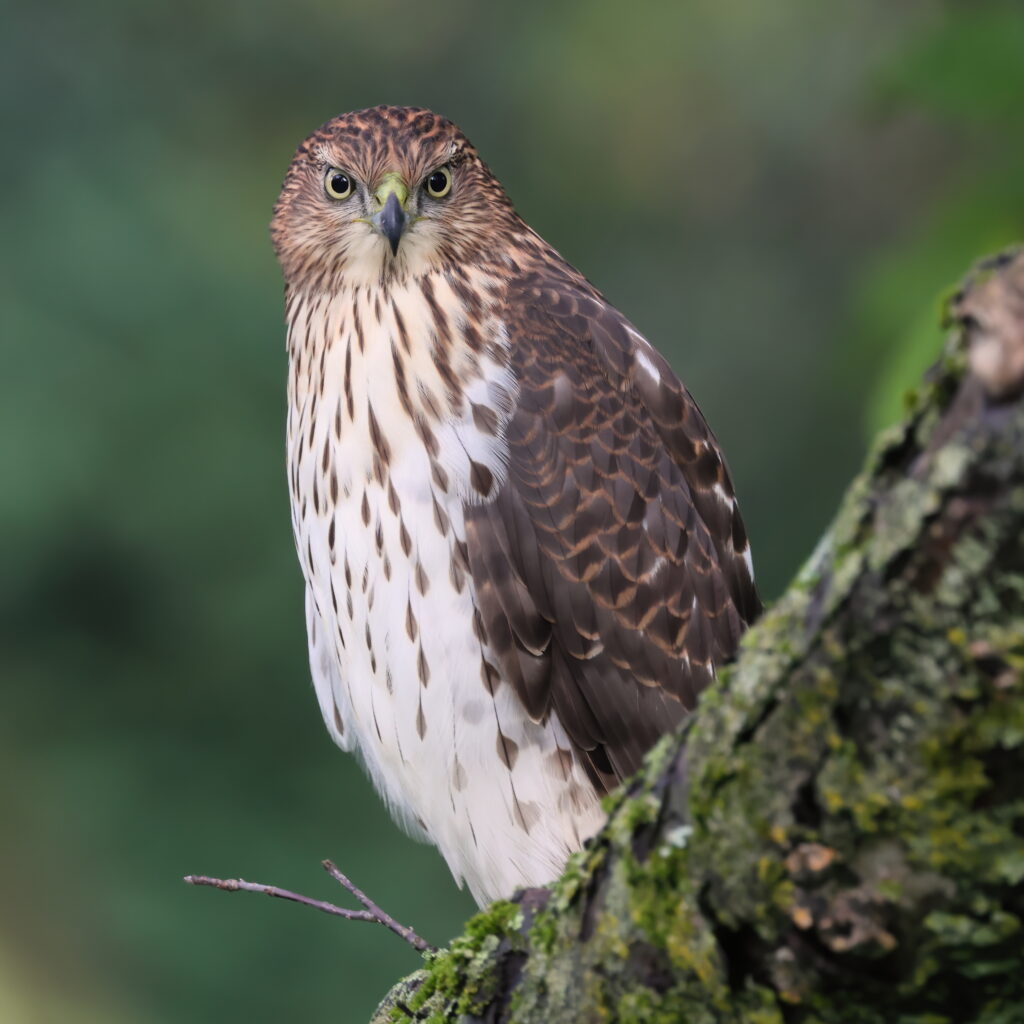
Backyards provide an abundance of food for birds of prey. Chipmunks, squirrels, and even songbirds are sources of food for birds like Sharp-shinned Hawks, Cooper’s Hawks, and Red-tailed Hawks. Sharp-shinned Hawks are the smallest hawks in North America, with males only getting slightly bigger than a Blue Jay and females growing to be about one third-larger than the male. They have a blue-gray colored back and rusty-colored bars on their breast. Juveniles are covered in brown streaks. Cooper’s Hawks have very similar coloration to the Sharp-shinned Hawk, but they are a larger bird. Both species are known to visit backyards with bird feeders, where they are notorious for ambushing songbird prey. Red-tailed Hawks are the most common hawk in our area. They can often be seen perched on trees or even telephone poles along highways and streets where they search the ground for mammals or snakes. Although not as common in neighborhoods, they are sometimes seen going after small mammals in backyards.
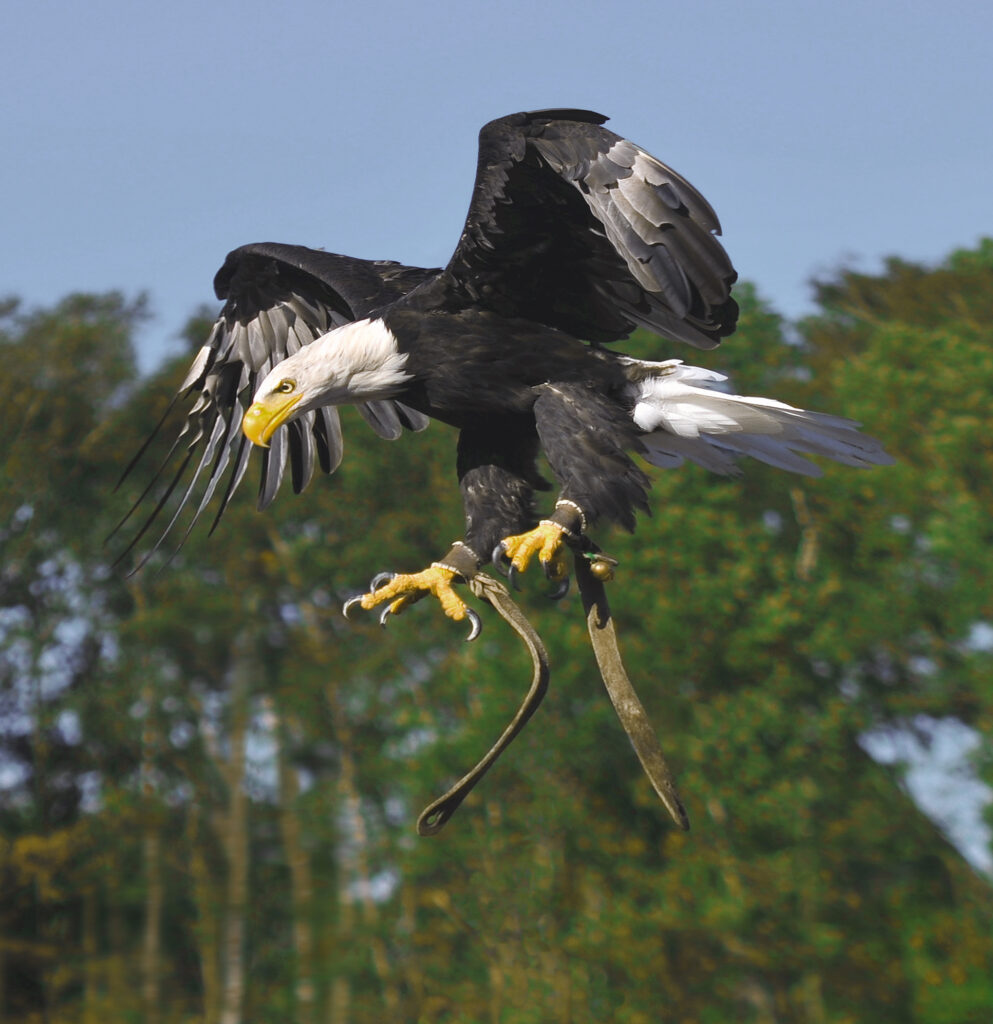
There are some birds of prey that specialize in catching fish. Bald Eagles and Ospreys can be seen flying over open water on their hunt for prey. Once uncommon, Bald Eagles have made a remarkable comeback in the United States. These large birds are found by most large bodies of water. Their diet is mostly fish, but they are opportunistic and will go after mammals and waterfowl and even scavenge off carcasses. Their bright white head and tail is their signature plumage, but they do not get this coloration until they are five years old. Juvenile Bald Eagles are a mottled brown and white but still have the wingspan of more than six feet and the large head and beak that are found on adults. The Osprey also has a large wingspan that can be more than five feet long, but its wings are thinner than that of the Bald Eagle. Ospreys and Bald Eagles both nest along water, building huge nests out of sticks. Osprey are known to nest on platforms and utility poles while Bald Eagles prefer trees. Bald Eagles and Ospreys can be seen competing over fish, especially due to the Bald Eagle’s habit of trying to steal fish from other predators, a behavior known as kleptoparasitism.
Open fields are another place to look for birds of prey. The Northern Harrier can be found flying low over fields and marshes as it actively hunts for its prey of small mammals. Males are gray and females brown, but both exhibit a bright white rump patch that can easily be seen above their tail feathers while in flight. The American Kestrel is a small falcon that will sometimes hover over a field as they pinpoint their prey before they strike. This small bird hunts small mammals as well as insects. They can be seen perched on phone wires along roadways and especially fields. Males and females have different plumage and the female is not as brightly colored, but they both have two vertical black bars that run down their face and a blueish-gray crown on the top of their heads.
Some birds of prey are found in towns and cities. Peregrine Falcons and Merlins are found even in the most urban environments. Peregrine Falcons will readily nest on bridges and buildings as well as on cliffs. These avid aerial hunters are often seen seen chasing after pigeons and starlings, which are both common in city environments, but are known to hunt a variety of birds. While in an aerial dive, Peregrine Falcons can hit prey at a speed of 240 mph, making them the fastest animal on earth. Merlins are aerial hunters that go after smaller prey such as shorebirds and house sparrows. House sparrows are often common in cities and backyards, giving Merlins an ample source of food. Merlins are smaller falcons than Peregrines and are stockier and lack the dark, helmeted head Peregrines exhibit.
If you spend any time looking to the skies this summer, you are very likely to see Turkey Vultures. They are known to glide the thermal waves on warm, sunny days and rarely flap their wings. The underside of their six-foot wingspan is a stark black and white contrast, another easily identifiable characteristic. Turkey Vultures are scavengers and are often seen feeding from carcasses they find with their advanced sense of smell.
Making your yard friendly for birds of prey is possible. Rodents are a big part of their diet, so never put out any rodenticides that kill the rodents birds of prey feed upon. Kestrels will make their homes nest boxes mounted high in trees near or in fields. Having a bird of prey in the neighborhood is a sign of a balanced ecosystem. While some may just be passing by, especially during migration season, others are resident birds that will stay all year long to patrol their territories for prey.
Liz Magnanti is co-owner of the Bird House in Brighton.
This article originally appeared in the May/June 2026 issue of Upstate Gardeners’ Journal.
Views: 9