

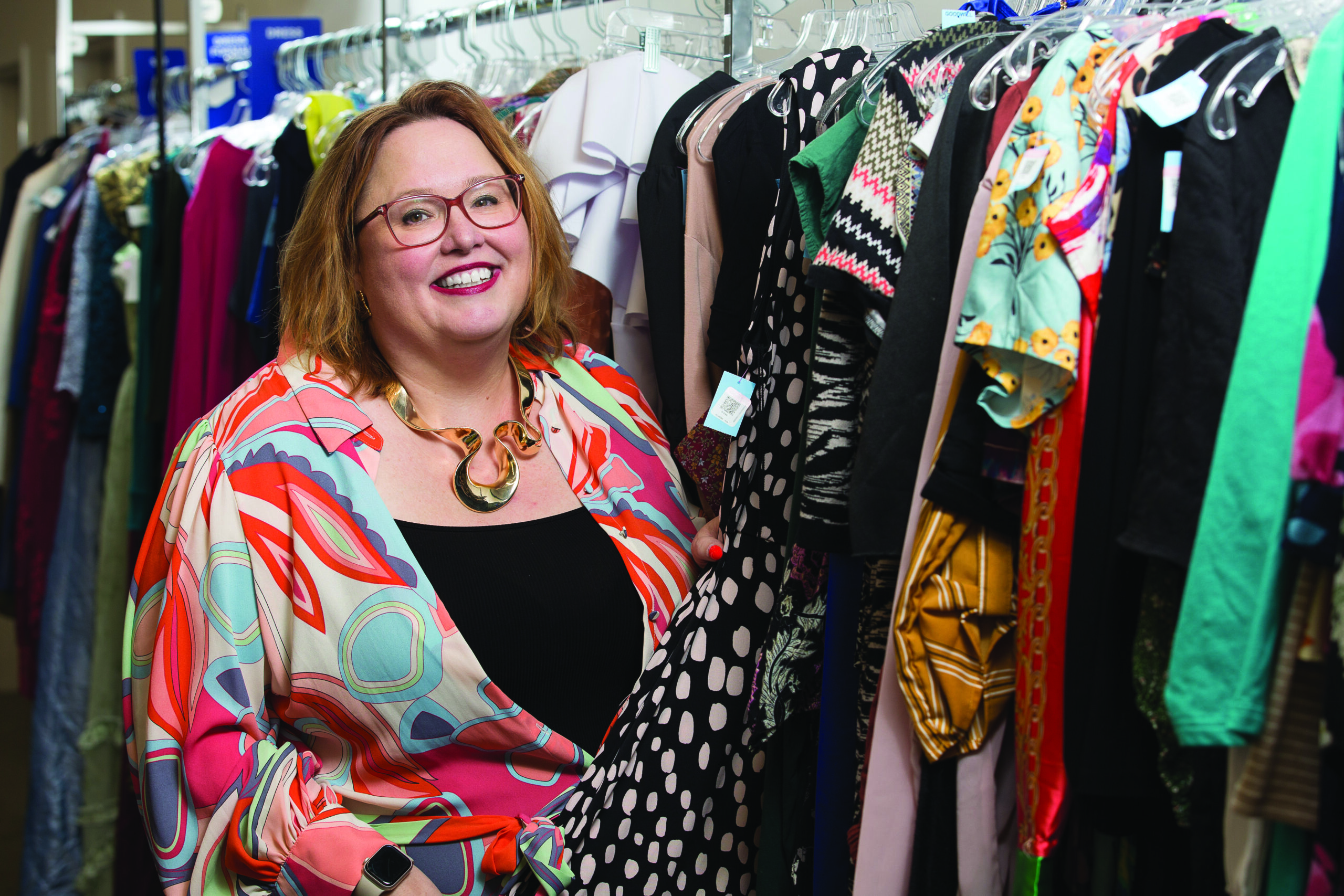
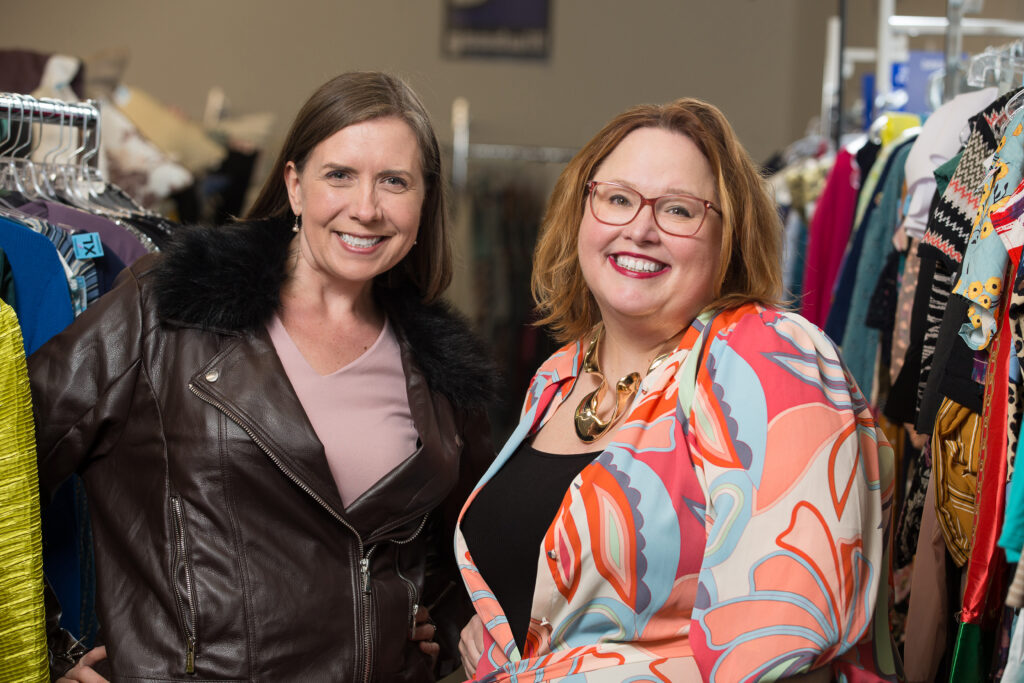
While many environmental issues may feel abstract or intangible, fashion is deeply individual—and a part of our everyday lives. The fast fashion industry accounts for up to ten percent of global carbon emissions, according to earth.org. That’s more than all international flights and maritime shipping combined. Since 1995, Goodwill of the Finger Lakes has championed sustainability in fashion (and household goods) through its donated-goods retail locations, giving those items a second life. “By encouraging people to rethink how they acquire, wear, and care for clothing, fashion can help make concepts like waste reduction and responsible consumption easy and fit into everyday choices,” says Jennifer Lake, president and CEO of Goodwill.
Bringing the cause to the runway
To celebrate sustainability and creativity in our community, Goodwill will host one of its signature events, Sustainability Under the Stars, on September 17 at the Highline Rochester.
The event is a one-of-a-kind fashion show, where five designers create new looks from Goodwill-sourced materials. This year, fifty-six designers from throughout the twenty counties served by Goodwill in New York State competed for a chance to show their work on the runway.
“[Our region is] home to a vibrant and diverse community of artists, designers, makers, and fashion enthusiasts … which makes narrowing the field both exciting and challenging,” says Sarah O’Brien, director of mission advancement at Goodwill, whose team oversees the fashion show.
She adds that designers were selected by a committee based on criteria evaluating “creativity, craftsmanship, originality, use of secondhand materials, and how effectively each design reflects the spirit of sustainable fashion.”
The final five designers were each provided with a $250 gift card to source materials and accessories from local Goodwill stores. Designs were to be constructed with seventy percent Goodwill finds, providing some leeway in sourcing elsewhere for items like thread, fasteners, and any additional materials required.
Last year’s designers showed unrestrained creativity with the materials they sourced, including one who made a wedding gown from a crocheted afghan and another who fashioned column dresses from curtains with oversized grommets.
In addition to original, inventive looks by regional designers, the event will also feature music, craft cocktails, hors d’oeuvres, and opportunities to mingle with likeminded individuals. Guests will have an opportunity to bid on curated raffle prizes to support Goodwill’s mission. Last year, 125 people attended the event.
This year, when all five designers have shown their work and the final model leaves the runway, success for O’Brien will look like a room full of attendees who are energized. It will look like excitement and surprise on their faces when they see firsthand what’s possible with thrifted and upcycled fashion.
“Ultimately, success is when people leave the event seeing fashion—and sustainability—a little differently than when they arrived,” she adds.
“Elevating people, community, and planet”
The organization’s mission is “elevating people, community, and planet for a good today and a better tomorrow.” Sustainability Under the Stars tackles each aspect of the mission by highlighting reuse while also acting as a fundraiser for Goodwill’s community programs and services.
More than 171,000 community members benefit from Goodwill’s services, which include Goodwill Vision Enterprise (formerly the Association for the Blind and Visually Impaired), helping people who are blind or who have low vision live independently; 211/LIFE LINE, connecting individuals to housing, healthcare, and legal assistance; 988 Suicide and Crisis Lifeline, providing support for those facing mental health or substance abuse challenges; Goodwill Learning Academy, helping adults earn their high school diploma; and the Good Neighbor program, providing donated clothes and household goods to other community-based organizations.
Retail store revenue covers about 80 percent of the cost of the organization’s programs and services, and the remaining 20 percent is met through fundraising, grants, and events like the upcoming fashion show.
Investing in the future
Sustainability Under the Stars can advance conversations around responsible consumption in a more direct way than traditional outreach, because the latter often happens at a distance. While someone can choose whether or not to watch a video or engage with a message, a live event turns audience members into active participants.
“In many ways, the event creates an emotional connection to the concepts of sustainability and responsible consumption, sparking conversations, challenging assumptions, and helping people see upcycled fashion through a new lens,” says O’Brien.
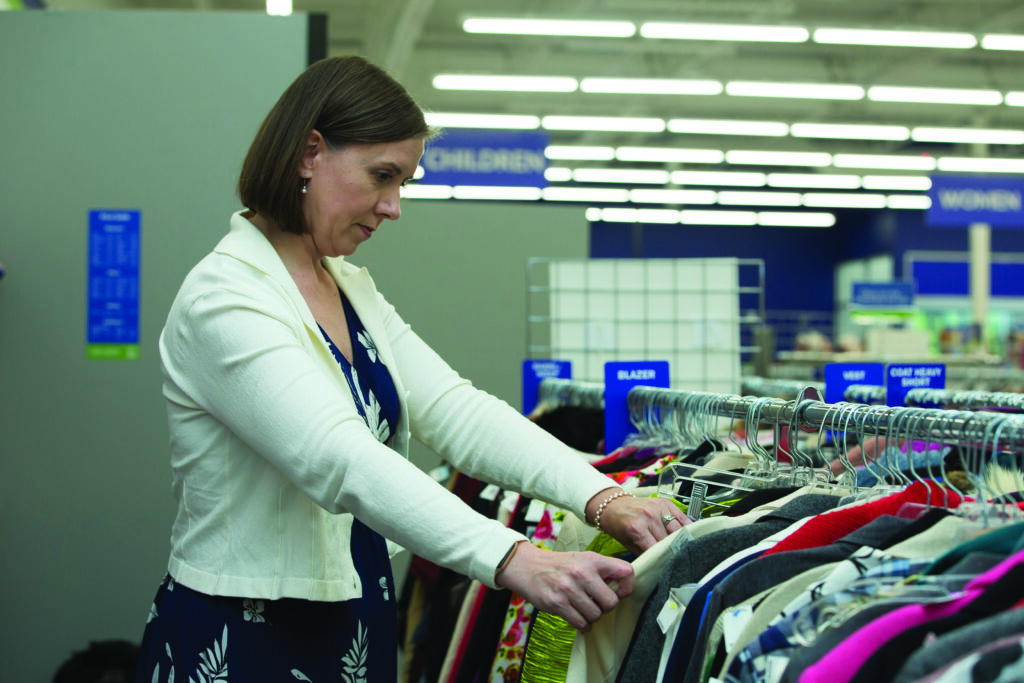
Concepts like reuse are central to Goodwill’s operations—specifically their retail stores. But lately, the organization has been thinking beyond reuse. Not every donated item is worthy of resale; some items are too worn or damaged to be sold. What happens then?
Soon enough, the organization will have more recovery options for these items, thanks to a $200,000 grant it received this spring from the New York State Community Resiliency, Economic Sustainability, and Technology program, which will be put toward a textile shredder.
The machine will transform the unsellable items into usable raw materials that can be repurposed for a variety of applications, at the rate of 2,500 pounds per hour. Shredded textiles can be used to produce recycled textiles or can be used in products such as insulation, sound-proofing materials, automotive components, and much more, Lake explains.
Using recycled material to make new products also uses less energy, water, and raw materials than manufacturing an item from scratch.
“Ultimately, what excites me most [about the textile shredder] is knowing that every donation will have an even greater opportunity to create positive impact—whether through reuse, recycling, environmental stewardship, or support for the programs and services that strengthen our community,” says Lake.
Last year, the organization kept nearly 29 million pounds of goods in circulation. With the implementation of a textile shredder (no timeline has been confirmed yet), even more fibers will be kept from a landfill or incinerator while also creating additional employment opportunities for individuals with barriers to employment.
Changing the mindset
If she could change one thing about how consumers think about clothing and sustainability, Lake would shift the mindset from “disposal to stewardship.”
“When consumers begin to see themselves as stewards rather than owners of clothing, their relationship with fashion changes,” says Lake. “Instead of asking, ‘How long will I wear this?’ they begin to ask, ‘What is the full life of this item?’ or ‘What is it made of?’”
“That perspective encourages people to buy more thoughtfully, care for garments longer, repair them when possible, and find responsible ways to pass them on when they no longer need them.” Learn more at goodwillfingerlakes.org.
This article originally appeared in the September/October 2026 issue of (585).
Views: 132