

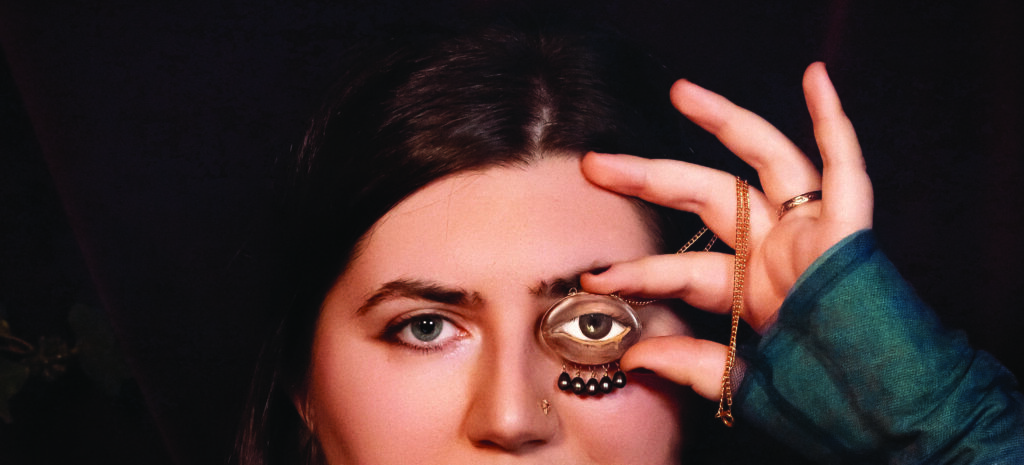
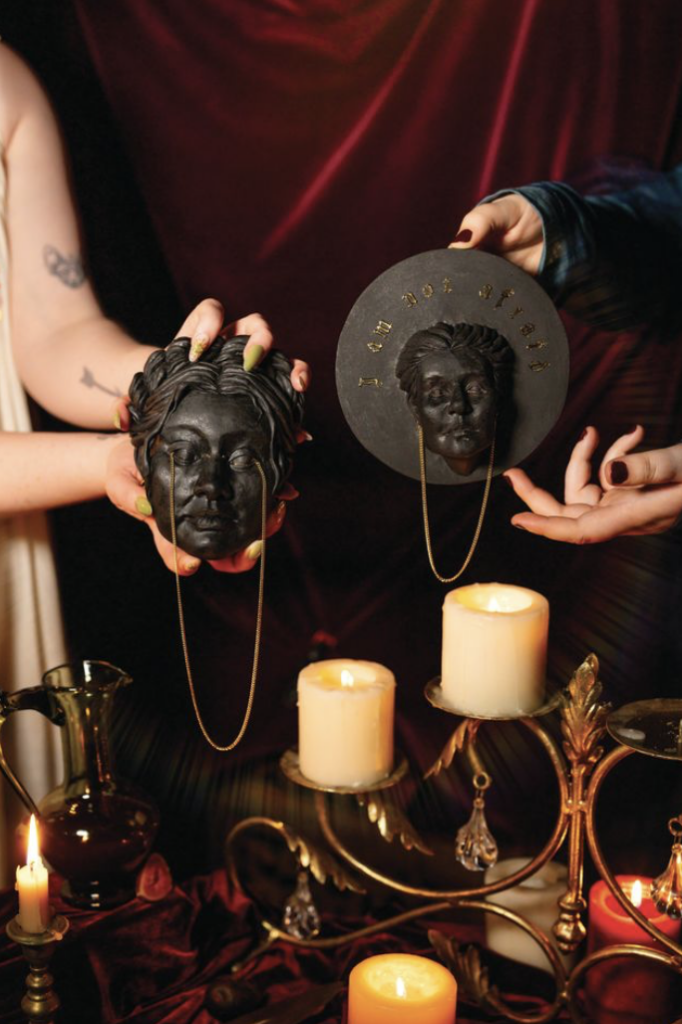
Zara Bronwyn has a way of crafting magic. Or at least that’s how it feels when viewing her striking pieces born from a love of mythology, a fervor for fantasy, a fascination with religion, and a devotion to the feminine experience. “I never really had another plan; I’ve always done art,” she answers when asked how she made her way into ceramics and jewelry making. As a child growing up in Albany, Bronwyn was surrounded by a plethora of creativity. With a photographer for a father and a mother devoted to fiber and digital art as well as jewelry making, it was never a question of “will she” but more a question of “what will she choose.”
“My biggest issue wasn’t deciding to become an artist; it was deciding what type of art I wanted to focus on.” Bronwyn had the great joy of trying many different art mediums before she took her first hand building class and found clay worked best for the pieces she wanted to create. After graduating from Rochester Institute of Technology’s ceramics BFA program, Bronwyn quickly confronted a stark reality: Much of the art she was accustomed to creating—sculptures and other large-scale pieces—was now inaccessible to her because of a lack of finances and other resources. Undeterred by this roadblock, Bronwyn sought a way to continue creating while maintaining her signature style.
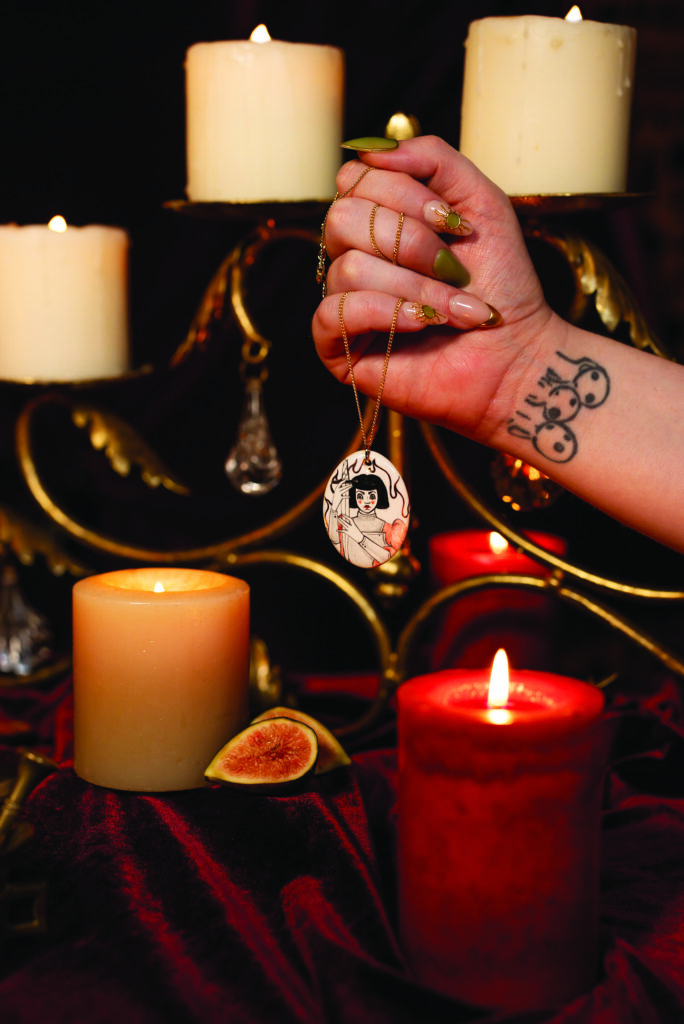
With a foundation in jewelry creation, thanks to classes taught by her mother throughout Bronwyn’s childhood, and visits with an aunt who makes jewelry full time, being a jewelry artist felt inevitable. Bronwyn had already found a connection by pairing her jewelry creations with her ceramic pieces for her senior thesis show, and, while working as an artist in residence at the Flower City Arts Center, she flipped the script and began to explore how her ceramics could fit into her jewelry creation. Scaling down the size of her work was in no way a limitation for Bronwyn. With a deep passion for history, she began to explore her fascination with miniature portraits, a style that has been repeated by many artists throughout the centuries. With a modern perspective, she paints intricate portraits and imagery onto her jewelry, making each piece not only a striking accessory but a wearable piece of art.
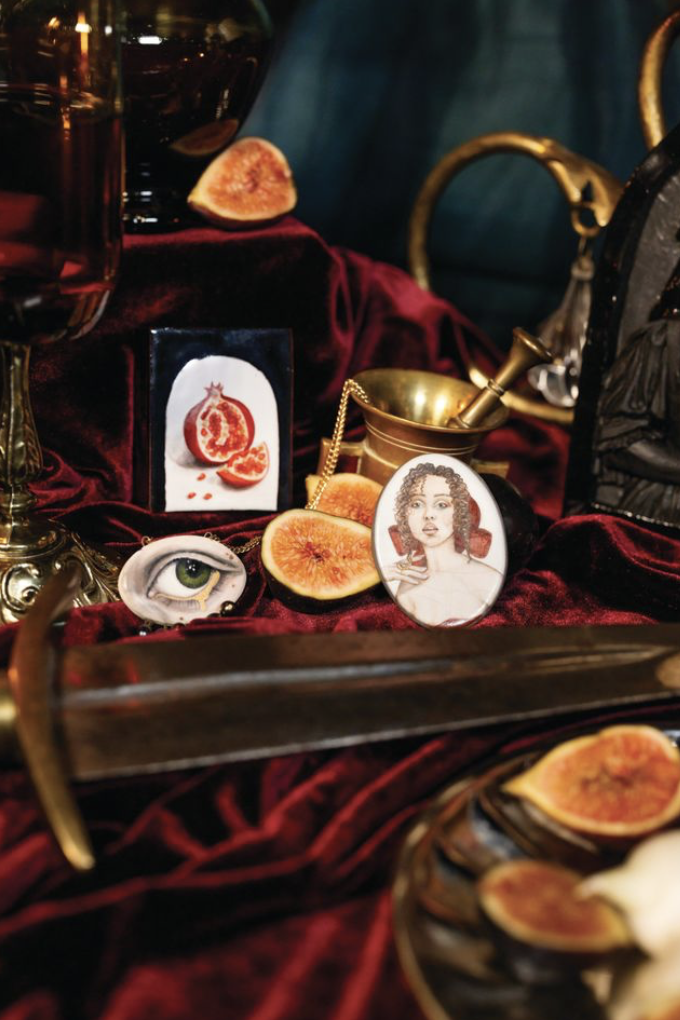
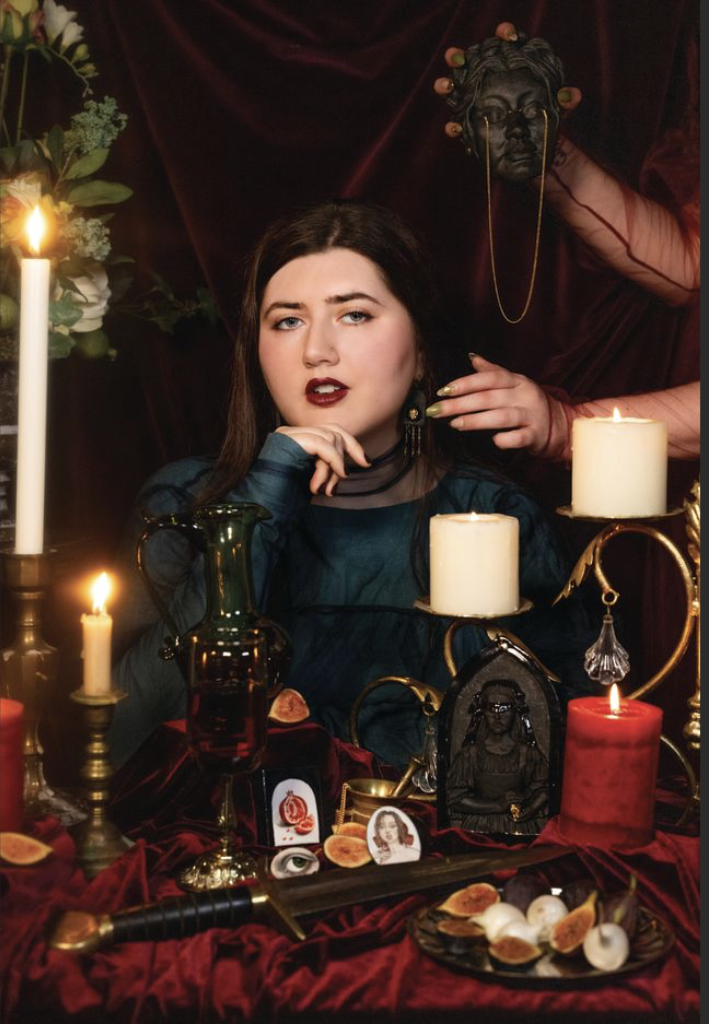

Among the most captivating of Bronwyn’s offerings is a detailed portrait of a human eye, inspired by the eighteenth-and nineteenth-century tradition of wearing a lover’s eye—“a miniature portrait that someone could carry around of an individual’s eye,” she explains. “This would normally be a lover but could also be [any] loved one. Having just the image of the eye meant that you could carry your lover with you …” Through these paintings, she embraces a tradition of devotion and connectedness.
Equally inspiring to Bronwyn is the female experience, particularly women throughout history who forged their own radical definitions of femininity. Among her inspirations is Joan of Arc, a young woman remembered centuries later while many girls of similar age and social standing have long been forgotten. “I think she’s come to represent a symbol of feminine strength and rebellion against social norms, someone who was prosecuted wrongly and murdered to flatter the egos of the religious male elite … I remember seeing a statue of her when I was seven, and this imagery of this young woman holding a sword has always stuck with me.” Bronwyn depicts that image on earrings and necklaces, one of a powerful woman clad in armor, brandishing a sword and ready for battle.
Bronwyn has always gravitated toward female and female-presenting bodies in her art. “I would like to represent women how I see them: with strength, beauty, agency, and a great deal of power.” Through her artistic lens, she hopes others find a sense of familiarity, something that feels old and ancient but new and fresh at the same time. Her work is currently available at The Store @ MAG, Shop One at RIT, the Flower City Arts Center, and her Etsy store, ZaraBronwyn.
Photographer: Autumn Layne (@autumnlaynephoto)
Model/Designer: Zara Bronwyn (@zarabronwyn_)
This article originally appeared in the July/August 2026 issue of (585).
Views: 9