



My husband, Mike, and I moved into the historic DeLand House in the village of Fairport in October 2018. The home we left behind, a perfectly nice 1970s colonial in Perinton, had all the basics most people look for: central air, reliable electricity, and decent plumbing. Our “new” house, built in 1856, greeted us with quite the opposite: knob-and-tube wiring that had to be replaced immediately, no insulation, which meant freezing and expensive-to-heat winters, and a massive plumbing mishap that nearly sent us to the poor house within months of closing on the property.
That first year was nothing short of brutal. Even now, when the doorbell rings, I feel a rush of panic, flashing back to contractors showing up with surprise invoices in hand.
But amid the chaos, there were silver linings. As we peeled back layers of the house’s history while fixing those issues, we uncovered some remarkable artifacts that brought its past to life. Some dated back to the original owners, Minerva and Daniel DeLand, heads of one of Fairport’s founding families, shedding new light on their lives and the history of the village itself.

The concealed shoe
Our first discovery was a child’s dress boot, tucked away in the rafters of the attic—the source of many of our treasures. Judging by its style, it likely dates back to the 1800s. When I began researching the boot, I learned that hiding shoes in attics, barns, chimneys, and even inside walls was a long-standing folk tradition rooted in Eastern Europe. Families believed these hidden shoes offered protection, warding off evil spirits and bringing good fortune to the household.
The practice eventually made its way to England and later to America, carried over by immigrants who brought their customs with them. In many cases, the shoes were children’s, symbolizing innocence and purity and thought to be especially powerful charms against misfortune. Historians refer to them as “concealed shoes.” Some countries even maintain public concealed shoe indexes, where people can register their finds, including details such as where the shoe was discovered, its style, and its condition to help track the custom and its regional patterns.
After learning about the concealed shoe tradition, I quickly returned the boot to the attic where I’d found it. The last thing I needed was to invite more misfortune into our already chaotic new home. I needed all the good luck I could get!
The gold pocket watch charm
Shortly after moving into the house, I connected with a local metal detecting group I’d found on Instagram to see if they were interested in scanning our property for buried treasure. Doug Craven and Steve Schalabba of ROC Diggers (read their story on 585mag.com) jumped at the chance, thrilled to be invited to detect on a historic property. As “responsible metal detectors,”
Craven and Schalabba always ask permission before searching and dig with care so they don’t leave holes across the yard. They’ve been to our property many times, and we now have drawers full of coins, tractor parts, and horse bridle bits to show for it.
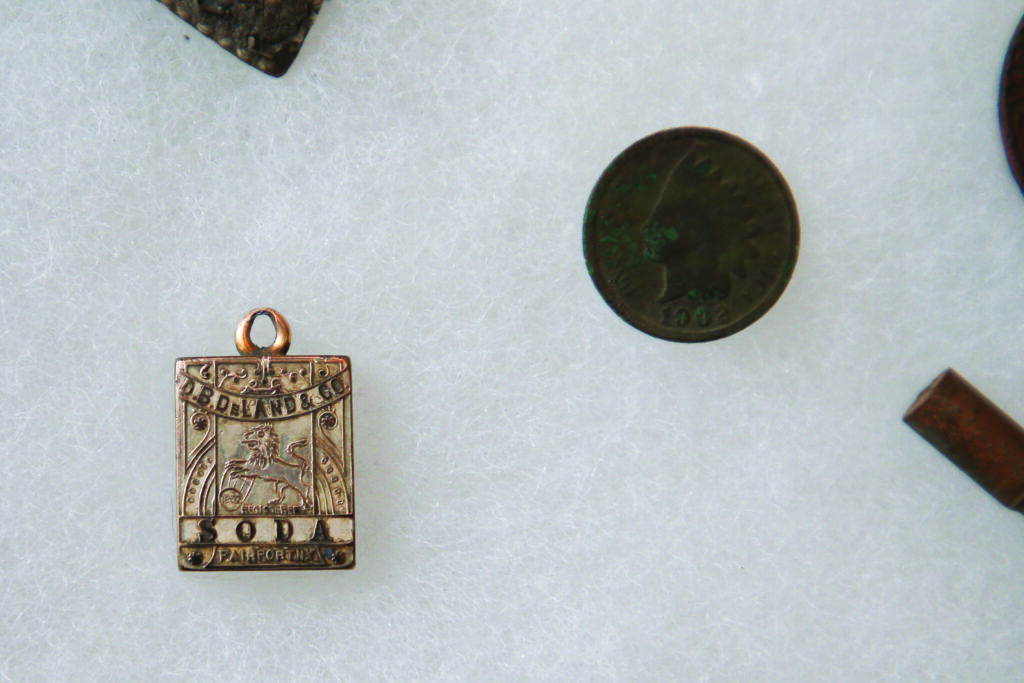
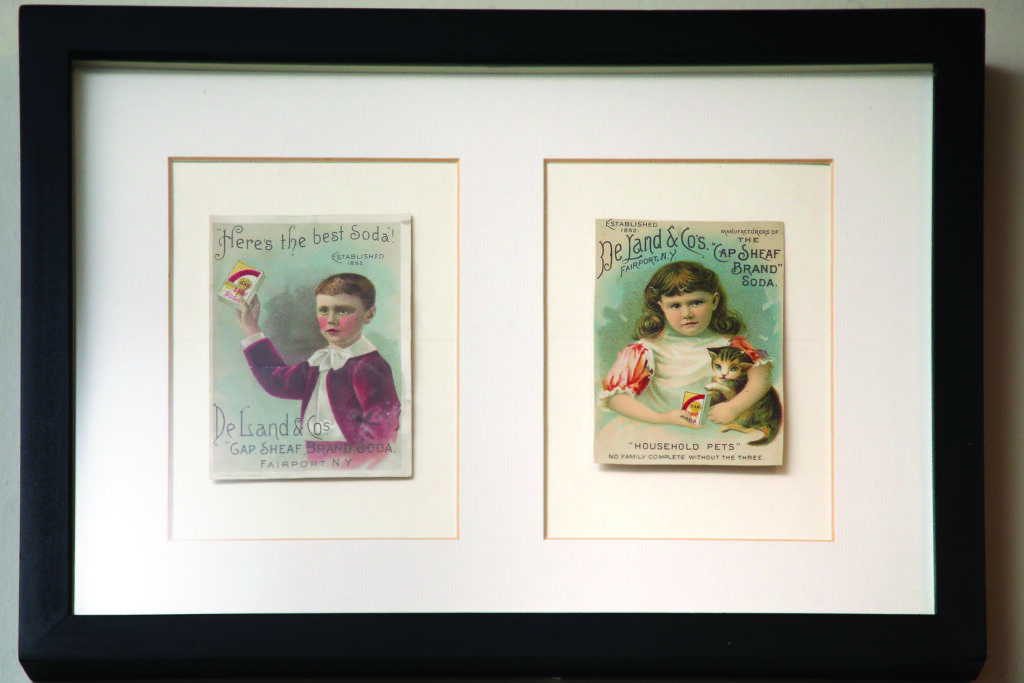
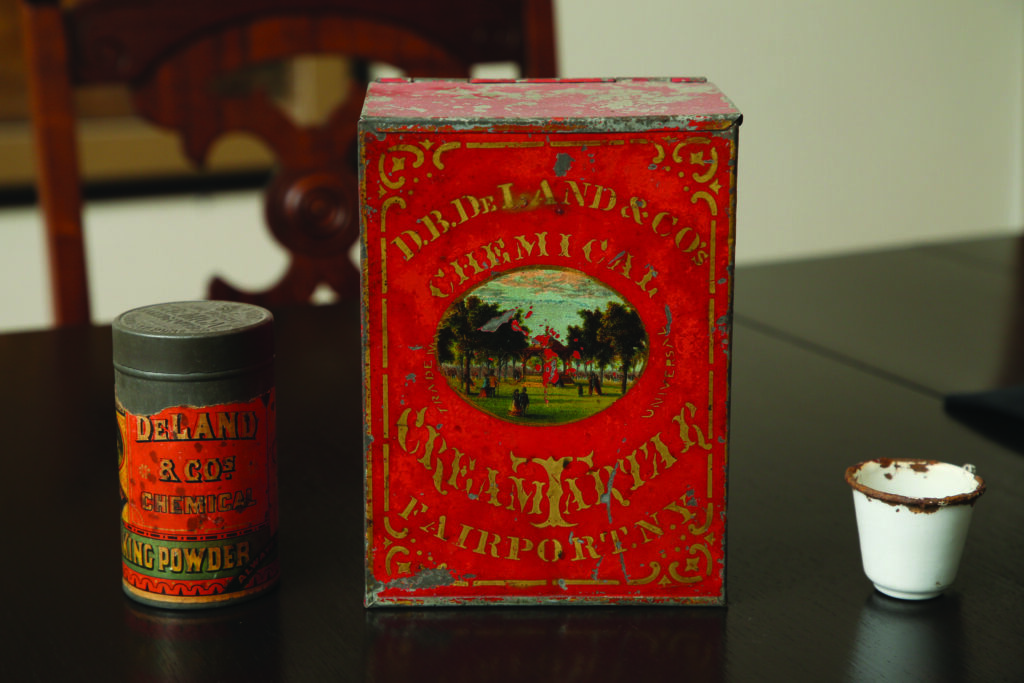
Their most epic find from our backyard was a gold-plated pocket watch charm crafted to resemble a DeLand Chemical Company baking soda box. Daniel DeLand, who built our house, made his fortune through the Fairport-based company and promoted it with advertisements, trading cards, and collectible tins. We suspect the charm was either a promotional piece or a personal gift from the company to him.
We shared the charm with our local historical society and town historian, and neither had ever seen an item like it connected to the DeLand family. Today, it sits in a shadow box in our home—it’s one of our most prized possessions.
The pencil drawings
The first big project we tack- led in the house was swapping out the outdated (and unsafe) knob-and-tube wiring with new, up-to-code electrical wiring. The urgency became clear when our electrician had us feel the ceilings near the light fixtures, which were warm to the touch. As he put it, it wasn’t a matter of if the house would catch fire, but when.
Our electrician quickly became like part of the family as he settled into the four-month-long project, rewiring the house and replacing every light fixture and electrical box. Much of his work took place in the attic, where he shimmied wires through walls and carefully removed floorboards to install central lighting into second floor bedrooms.
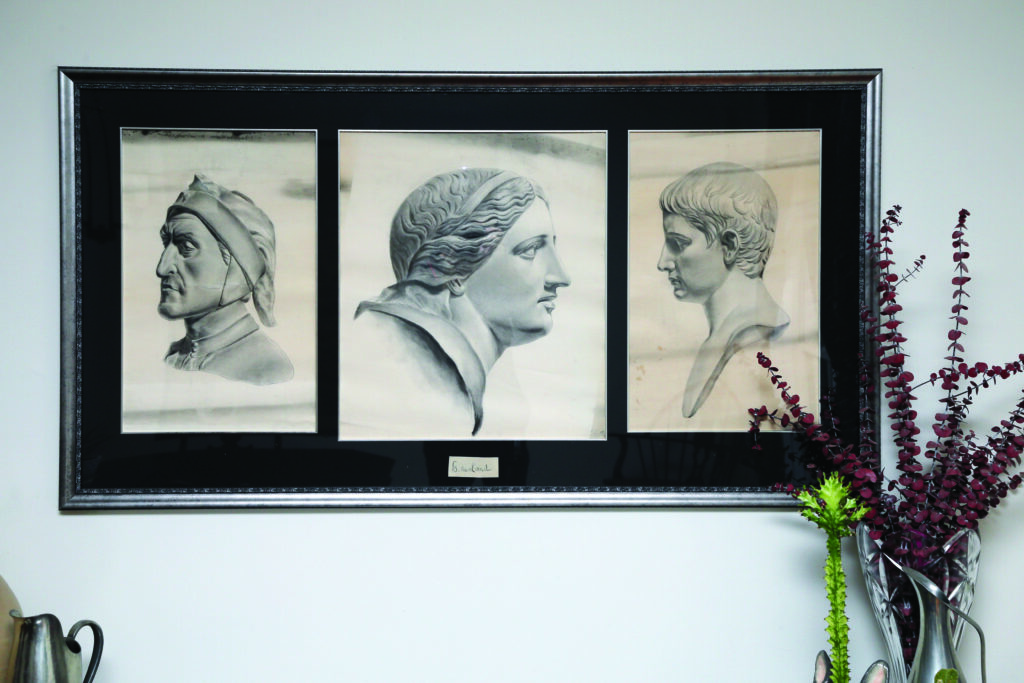
One afternoon while at work, my phone buzzed with a semi-cryptic text from him: Found something interesting in the attic you need to see. Never a text you want to read from your electrician. Expecting a project setback or some hidden disaster, I was relieved to come home and find a series of gorgeous pencil drawings spread across the kitchen counter. They were lifelike sketches of statues, and one was signed “Stella DeLand, 1883.”
Stella was the daughter of Daniel and Minerva DeLand and had grown up in the house. My research revealed that Stella was an art student at Vassar College, where it was common for students to practice by drawing from the school’s extensive collection of plaster cast replicas of Greek and Roman deities.
We’ll never know why Stella decided to hide her drawings in the attic walls, but they’re now framed and proudly displayed in our dining room.
The letters
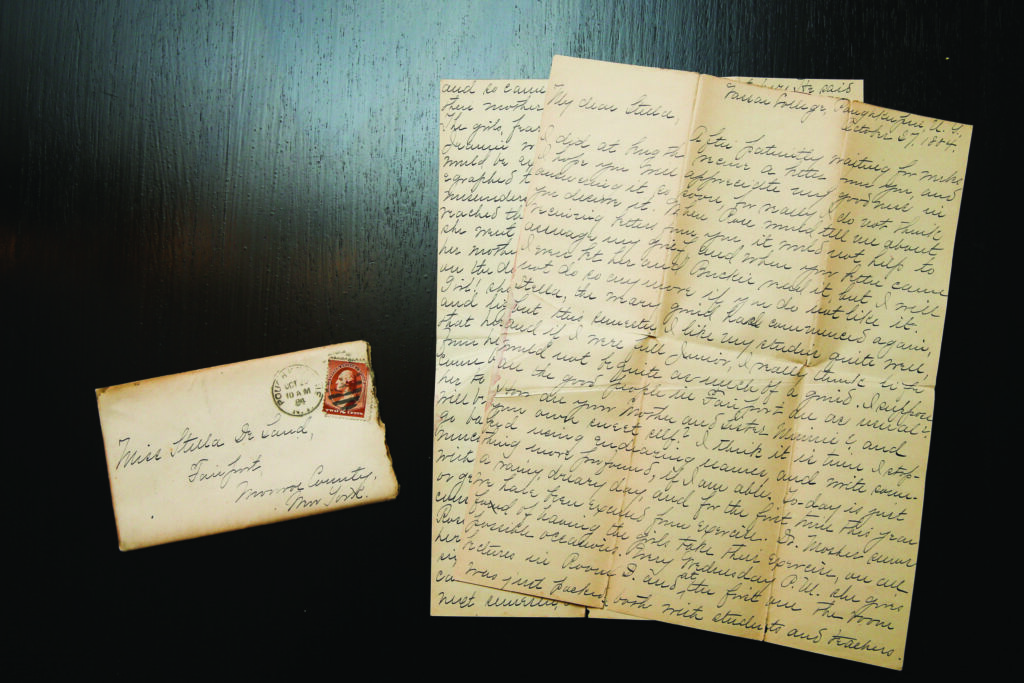
A few weeks later, the electrician lured me home again with another attic discovery. This time he’d found seven letters, carefully tied together with twine. The letters were all addressed to Stella DeLand and dated between 1884 and 1885. Clearly, we had uncovered Stella’s secret hiding spot!
Written by her friends Charlotte (Lottie) Acer from Pittsford and Emma Thompson from Shelburne, the letters capture the interests that shaped their days. In one letter, Lottie describes seeing Mark Twain speak at Founders’ Day, an annual celebration at Vassar College.
I find it endearing that, although there was nothing scandalous in those letters, Stella still chose to hide them away in the attic. In an era when communication was slow and deliberate, unlike the flood of texts and emails today, I love to imagine a time when a note from a friend was something to be cherished and saved. I had the letters carefully framed, to honor the friends’ stories and to continue keeping their memories safe.
These are only a few of the interesting items we’ve come across in the seven years we’ve owned the house. Most discoveries came in that first whirlwind year of repairs and renovations, but I still find myself snooping around the attic whenever I go up to store holiday decorations, hoping to find something new. I may have even hidden a few treasures for the next family to uncover … only time will tell.
This article originally appeared in the January/February 2026 issue of (585).
Views: 128