


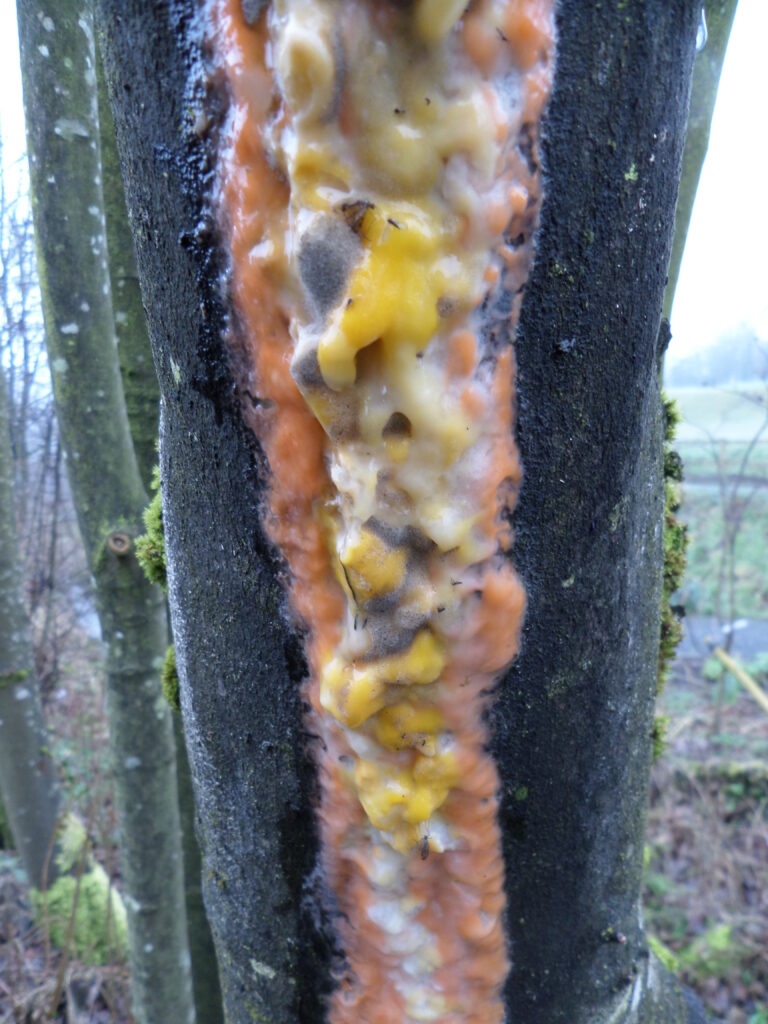
Picture this: you’re admiring your yard on a warm afternoon when you notice dark, wet streaks running down your favorite maple. The bark looks slimy and a sour, and a fermented smell hangs in the air. Before you panic, take a deep breath—your tree may simply be suffering from a bacterial condition called slime flux, and with the right care, it can recover.
Slime flux, sometimes called wetwood, develops when bacteria and yeasts invade a tree’s inner sapwood through cracks or wounds. It’s most often seen on silver maples, willows, elms, oaks, birches, and beech trees. “The bacteria feed on the sap inside the tree and produce gas, which builds pressure until the sap is forced out,” says Brian Eshenaur, senior extension associate with Cornell University’s Integrated Pest Management program. “The liquid you see seeping out is simply the tree relieving that internal pressure.”
It might look alarming, but in most cases, the best treatment is minimal interference. Think of it as natural first aid for a living patient; the goal is to help the tree heal itself, not perform surgery.
1. Clean the area gently.
Use a soft brush or cloth and plain water to remove buildup. Skip soaps, disinfectants, and sealants, as they can harm healthy tissue or can trap moisture.
2. Keep the wound dry and exposed.
Once cleaned, allow air to circulate. Avoid covering or painting over the area; a tree heals best when it can breathe.
3. Avoid outdated remedies.
Drilling holes to “drain” the ooze or inserting tubes were once common practices, but these cause more harm than good. “Drilling introduces new wounds and can make the infection worse,” says Eshenaur.
4. Protect the tree from new injuries.
Mower blades, trimmers, and careless pruning can create new entry points for bacteria. Apply mulch around the base to prevent lawn equipment from getting too close.
5. Support recovery through good care.
Provide consistent watering during dry spells and maintain a layer of mulch to regulate soil moisture. “The stronger the tree, the better it can seal off the infected area naturally,” Eshenaur notes.
6. Know when to call an arborist.
If you notice large cracks, soft wood, or mushrooms near the trunk base, there may be internal decay. “When slime flux is associated with internal rot, the tree may become structurally weak,” says Eshenaur. “A certified arborist can assess whether it poses a fall hazard, especially if it’s near a home, driveway, or sidewalk.” While the ooze and odor can be unpleasant, slime flux is rarely fatal and often resolves over time. Keeping your tree healthy and stress-free is the best medicine. With a little patience and care, your tree can bounce back—no emergency surgery required.
MYTHS VS. FACTS
Myth: Slime flux spreads from tree to tree.
Fact: It’s not contagious. The bacteria and yeasts responsible already exist in the
environment and only take hold when a tree’s defenses are lowered.
Myth: Slime flux always kills trees.
Fact: Most trees bounce back once the stress that triggered it passes. “It looks worse than it is,” says Eshenaur, “You just want to focus on helping the tree regain its strength.”
Myth: The ooze is toxic to humans or animals.
Fact: Though the liquid can smell sour and look alarming, it isn’t harmful. The only real risk is safety—its slick texture can create slippery spots if it pools near sidewalks and patios.
Myth: Vigorous scrubbing off the residue helps.
Fact: While it might seem like aggressive cleaning would assist, scrubbing can actually injure the bark and slow the healing. Nature takes care of it best—rain, sun, and time gradually clear away the streaks.
Myth: Fertilizer or chemicals will cure it.
Fact: There’s no product that eliminates slime flux. Trees recover on their own when they’re healthy enough to seal off the infection internally.
Elise Williams is a Rochester-based writer who always takes time to stop and smell the roses—and of course, the lilacs.
This article originally appeared in the November/December 2025 issue of Upstate Gardeners’ Journal.
Views: 136