


- Building a GIANT coffee brand
While working full time as a senior account manager at Mediavine, an ad management and technology company, Ashland Huckabee spent evenings and weekends building his own business.
“I wanted to build [a company] … around something I genuinely love, and I wanted to own every part of it—the brand, the product, the customer experience, the decisions,” says Huckabee, an Alabama native who moved to Rochester two decades ago.
Huckabee spent more than a year building GIANT Coffee Co. before launching on Juneteenth of this year. He says the date felt like “a powerful moment to introduce this brand to the world” as a Black entrepreneur.
The brand—a member of 1% for the Planet, committing 1 percent of revenue to environmental organizations—is truly a one-man show: Huckabee navigated sourcing, packaging, fulfillment, branding, and more on his own. When it came time to research potential flavors, he got right into his kitchen, spending months “buying ingredients, mixing things, and tasting to see what worked.” He then sat down and wrote flavor profiles, which grew into the brand’s first flavors.
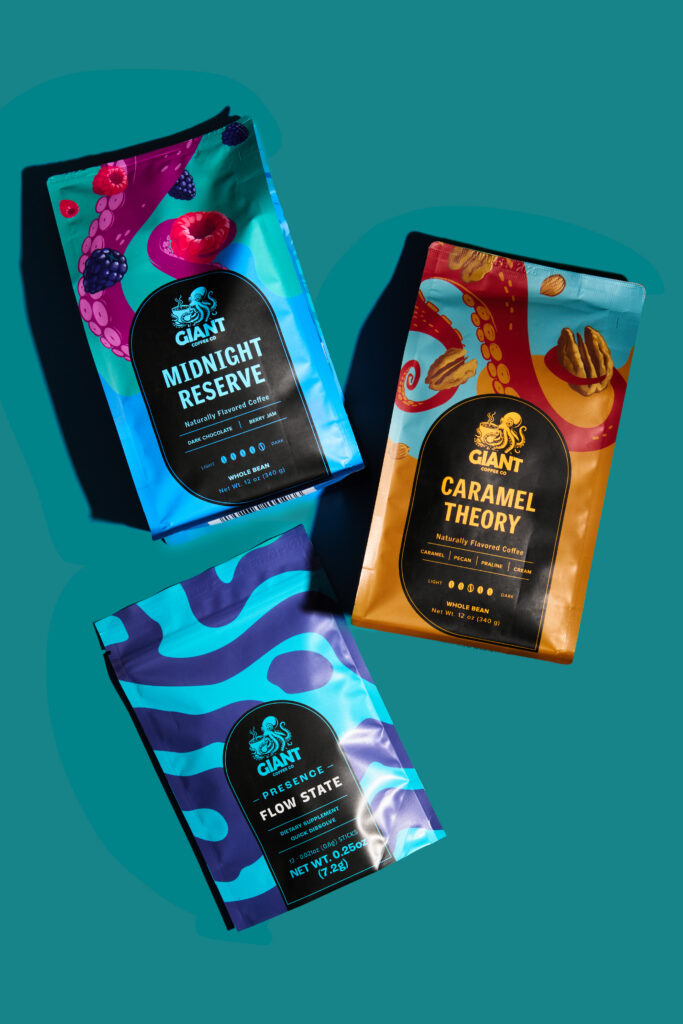
GIANT offers two flavors of coffee, Caramel Theory and Midnight Reserve, as well as a functional powder add-in called Flow State. The add-in includes L-theanine, an amino acid that promotes “a calmer, more even energy” and focus.
Originally, Huckabee hoped GIANT would be a functional coffee brand, meaning coffee infused with wellness ingredients for health benefits. Most of the professionals he consulted, though, tried to steer him toward mushroom coffee for good margins, but that’s not where he wanted to go.
“That forced me to sit back and really define the company,” says the founder.
“So GIANT became what it was supposed to be: flavor-first coffee that stands on its own, with optional add-ins for people who want to take their cup further.”
Today, GIANT’s coffee is sourced primarily from and roasted in Central America, and fulfillment is handled through a partner in Texas. The plan is to bring fulfillment—and possibly roasting—to Rochester in the future, with land, warehouse space, and a shipping team locally.
“Most of all, five years from now, I want GIANT to be a household name in flavored coffee and a real source of jobs here in Rochester,” says Huckabee. thisisgiant.com

- New career center connects job seekers with paths to success
RochesterWorks broke ground in August on a new career center that will be housed at Monroe Community College’s Downtown Campus.
Set to welcome students and job seekers in the fall of 2027, the $14.5 million RochesterWorks Comprehensive One-Stop Career Center at MCC’s Downtown Campus will occupy a 24,000-square-foot, modern facility.
The partnership between the two local organizations made sense for many reasons, according to Dr. DeAnna R. Burt-Nanna, president of MCC.
“RochesterWorks brings expertise in employment services, career coaching, employer engagement, recruitment, and workforce funding, while MCC provides education, training, credentials, and academic pathways,” she says.
Today, a job seeker or student would need to visit one location for career counseling, another to explore skills training, another for supportive services (to address barriers such as childcare or transportation), and yet another for employment connections. Next year, all of these services will be available at the Career Center.
The proximity to MCC’s Finger Lakes Workforce Development Center, a training facility, allows RochesterWorks to connect residents with advanced manufacturing and technology training for in-demand jobs.
Dave Seeley, CEO of RochesterWorks, says there’s a strong employer demand across advanced manufacturing, health care, skilled trades, information technology, and other sectors. “Employers are also looking for shorter and more flexible training options that allow people to develop skills quickly,” he adds.
In the future, Seeley says, he hopes the center changes how people view workforce development.
“It should not be seen only as a place someone turns after losing a job,” he says. “It should be a front door to opportunity for anyone entering the workforce, considering a career change, seeking new skills, or looking for a better-paying career.” rochesterworks.org
- Seneca Park Zoo welcomes Felix the elephant
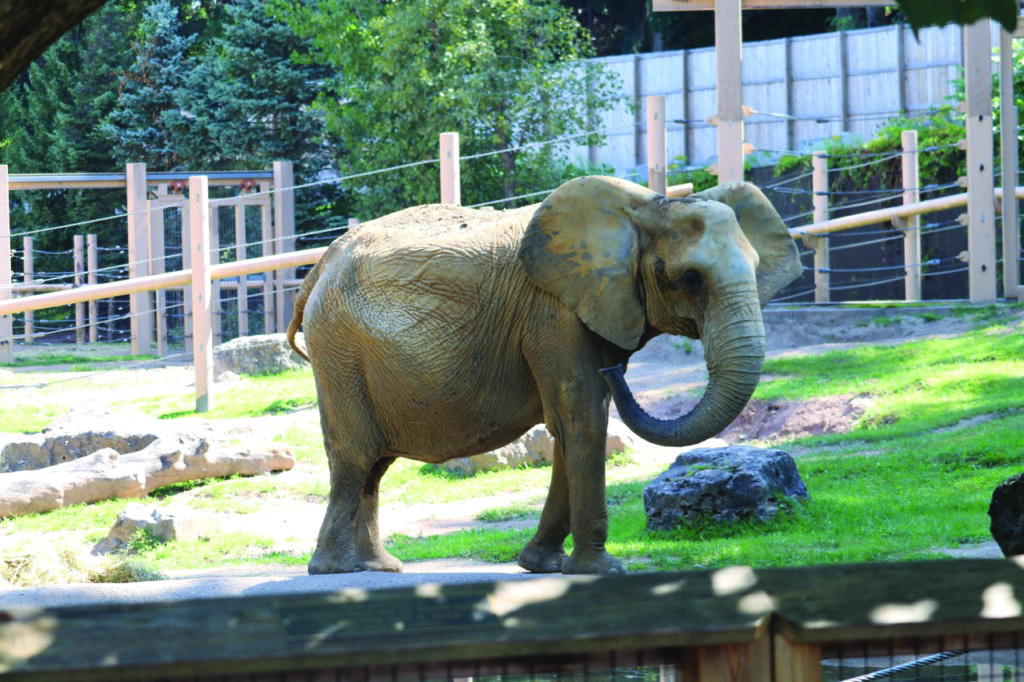
Felix, a forty-three-year-old elephant born in Zimbabwe, arrived at Seneca Park Zoo in late August this year.
The female elephant spent twenty years at the Maryland Zoo, but when the zoo decided to host only male elephants, Felix needed a new home. The Seneca Park Zoo’s assistant curator visited the Maryland Zoo months ahead of time to develop a plan to best facilitate the move.
It did not take long for Felix to settle into her new home, according to Pamela Reed Sanchez, president and CEO of the Seneca Park Zoo Society. “Staff have noted her sweet personality and her love of being near people,” she says.
To facilitate the transition, elephant care staff first introduced Felix to the Seneca Park Zoo herd—which includes females Lilac, Genny C., and Moki—by allowing for visual contact and then slowly bringing her into their space. Felix would spend a few hours at a time with the other elephants while the staff maintained a close watch.
The Seneca Park Zoo was chosen as Felix’s new home by the team at the Maryland Zoo because of its expertise in caring for older, post-reproductive female elephants. As each elephant ages at the local zoo, individualized care plans are designed based on their specific needs. Animal care and animal health teams work closely together to adjust plans as the animals’ needs change.
Felix is in good health overall, and, although she is blind in one eye, she has learned how to navigate her surroundings.
By caring for older female elephants, Seneca Park Zoo creates space for other organizations to focus on breeding and growing herds. Currently considered an endangered species, there were 5 million elephants in nature in 1950, and, today, Reed Sanchez says, there are just 350,000.
“At the zoo, [we teach guests] that endangered means there is still time to act,” she says, “and that we can all do something to make a difference for animals near and far.”
Over the past ten years, the zoo society has contributed nearly $100,000 to support antipoaching programs and efforts to mitigate elephant/human conflict. senecaparkzoo.org
To learn more about elephants at Seneca Park Zoo, read our summer 2026 issue of (585) Kids at 585kids.com.
This article originally appeared in the November/December 2026 issue of (585).
Views: 0