


The population of Rochester surged in the 1920s, fueled by a rapidly expanding industrial base that spanned industries from optics to photography and precision engineering. People came to the area for work and stayed to raise their families, lured by the promise of a comfortable, upwardly mobile middle-class life. The city’s building pace doubled between 1920 and 1923 to keep up with the housing demand, and new neighborhoods within walkable distances to manufacturing sites became incredibly desirable.
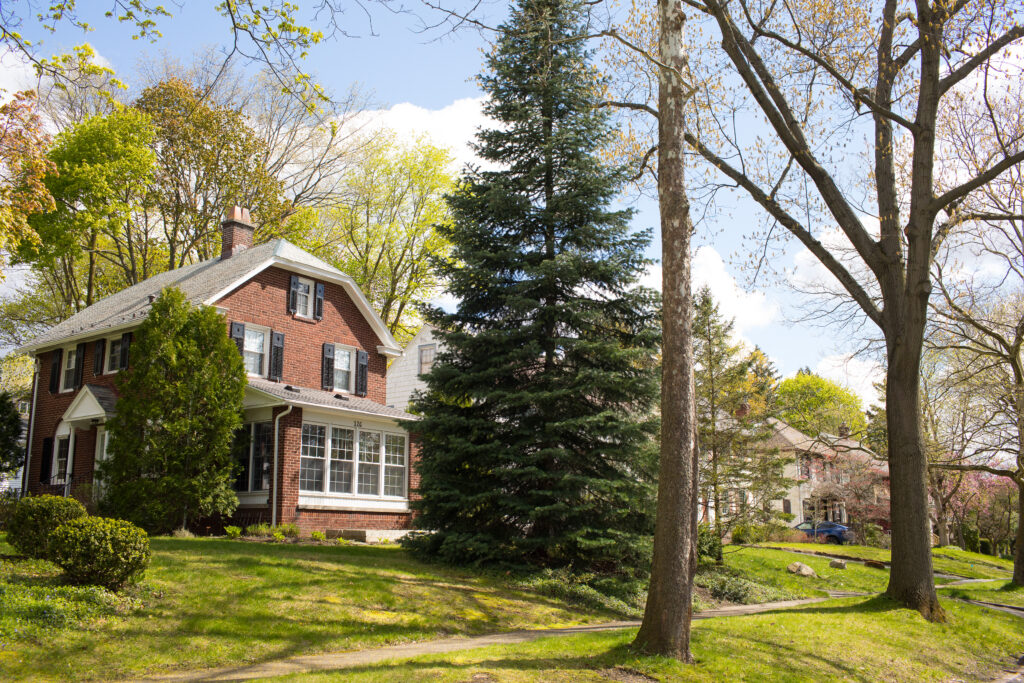
The houses along Nunda Boulevard near Cobb’s Hill were part of this growth, designed for a growing professional class seeking space, greenery, and a sense of permanence just beyond the city’s center. Originally developed to meet the housing demand for employees of the Gleason Corporation, the neighborhood still stands as a clear example of what early suburbia and community looked like in the Rochester area.
The Gleason legacy
William Gleason came to Rochester from Ireland in 1855 and founded Gleason Works in 1903. The company manufactured machines, tools, and systems for producing, finishing, and testing all types of gears, with a particular focus on bevel and cylindrical gears. Gleason Works thrived during this period, due in part to the rising demand for gears used in bicycles and automobiles. As the company grew, it required a larger facility, and in 1905 Gleason built a new factory on University Avenue, the same site that remains home to Gleason Works today.
His daughter was Kate Gleason, one of the first women in the US to study mechanical engineering and a pioneering business leader. She began as a bookkeeper with the company at just fourteen years old and later played a critical role in guiding and growing the company during its critical growth years. Beyond her business acumen, Gleason was a vocal advocate for affordable housing and community development. Gleason Works was likely influenced by Gleason’s approach to supporting the workforce. Her impact continues to be recognized at the Kate Gleason College of Engineering at Rochester Institute of Technology, the first engineering college in the US named for a woman.
Building a community
Architect Carl Schmidt of the architectural firm of Gordon and Kaelber was enlisted by Gleason Works in the 1920s to design and build the houses of Nunda Boulevard, a street just two miles away from its factory. Ultimately, forty-one houses were built by Gleason Works as housing for its workers, with the corner brick homes designed for management and the others for “non-management” residents.
Schmidt’s houses sold for between $8,000 and $13,000 and were a collection of Greek Revival and American architectural styles. The single-family homes varied in size, most offering three to four bedrooms and 1,500 to 2,500 square feet of living space. The homes along Nunda Boulevard are among the few in the Rochester area built on a true boulevard-style street, featuring a grassy green strip, or “mall,” down the center that offers residents a charming off-road space to walk dogs, play, or connect with neighbors.
Coming home to Nunda Boulevard
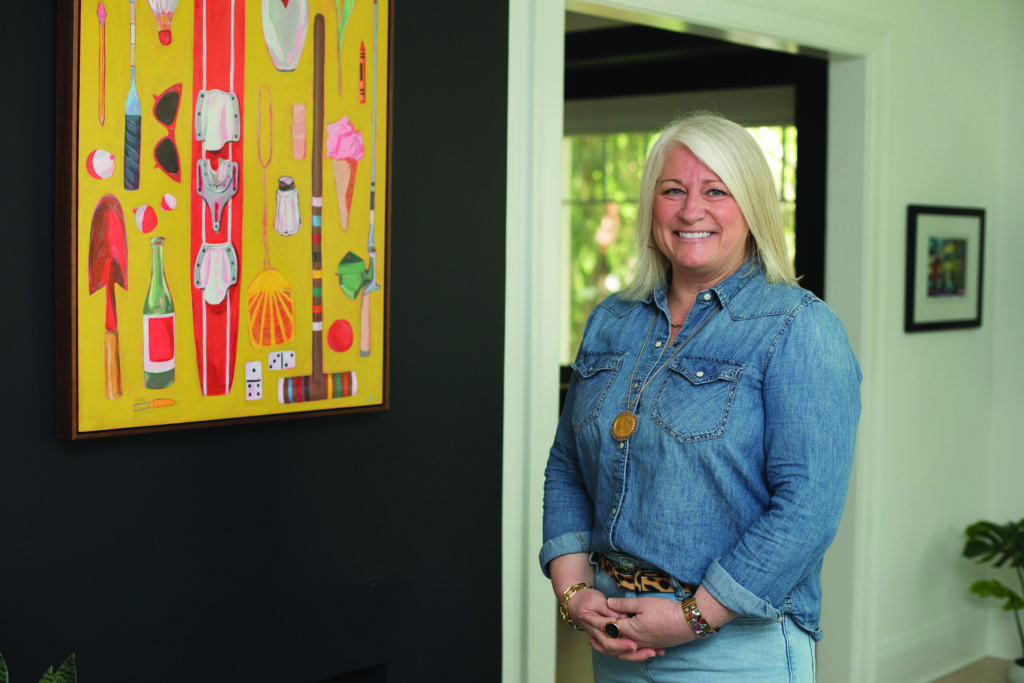
Penfield native Leah Wojda always pictured herself back in Rochester. After living in Cleveland, Gettysburg, Atlanta, and Alexandria, she found herself drawn back by familiarity and family.
When she returned in April 2024, she began searching for a home almost immediately, navigating a fast-moving market where decisions had to be made quickly. At first, she gravitated toward mid-century modern homes in the suburbs, but something didn’t quite fit. “I loved the character of the houses,” she recalls, “but wasn’t in love with the neighborhoods.”
Nunda Boulevard offered both.
At first glance, the house she ultimately chose didn’t stand out. “It photographed terribly,” she says. “It looked like a brown square box and lacked the charm of other houses I was considering.” But stepping inside revealed a different story. Where others might have seen limitations, Wojda saw possibility. “I could just see what I wanted to do. I didn’t want a turnkey house; I wanted something I could make my own.” She made an offer the same day.
What followed was an ambitious, deeply personal renovation, one that unfolded during a particularly emotional chapter in her life. Shortly after purchasing the home, Wojda lost her mother, a loss that subtly shaped both the pace and the meaning of the work that followed. For several months, she stayed at her mother’s home nearby while overseeing a full-scale transformation of her own.
“It took about seven months,” she says. “I did everything—new windows, insulation, floors, doors. Everything.”

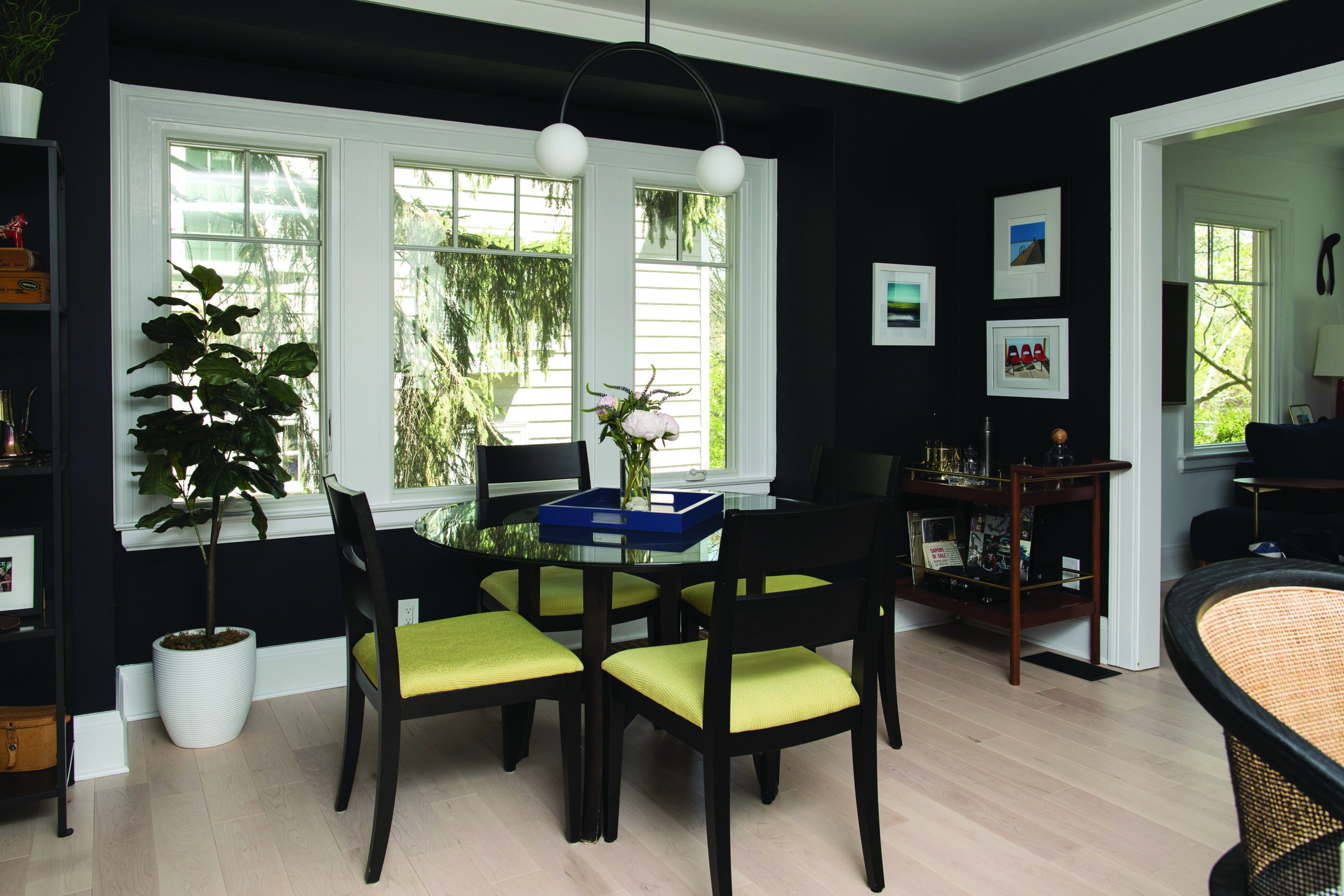
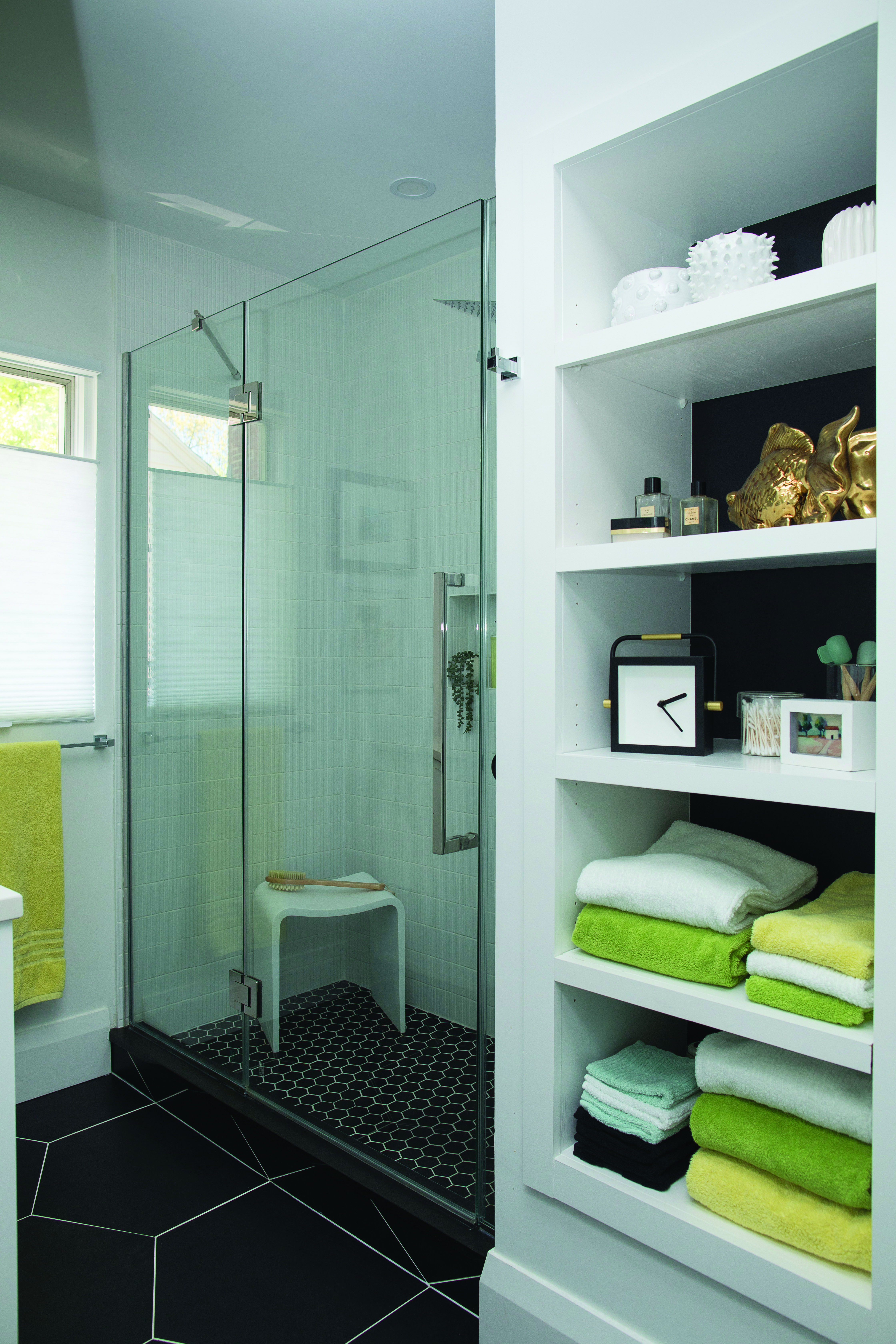
Yet despite the scope of the renovation, the home’s original character remains intact. Much of the trim, casements, and overall structure date back to the 1920s, offering a foundation that Wojda was careful not to erase. Instead, she approached the house with a philosophy that feels both modern and intuitive: Honor the past but don’t feel bound by it.
“I don’t think you have to match the inside of your house to the outside,” she explains. “I like the character, but I also wanted it to feel like me.”
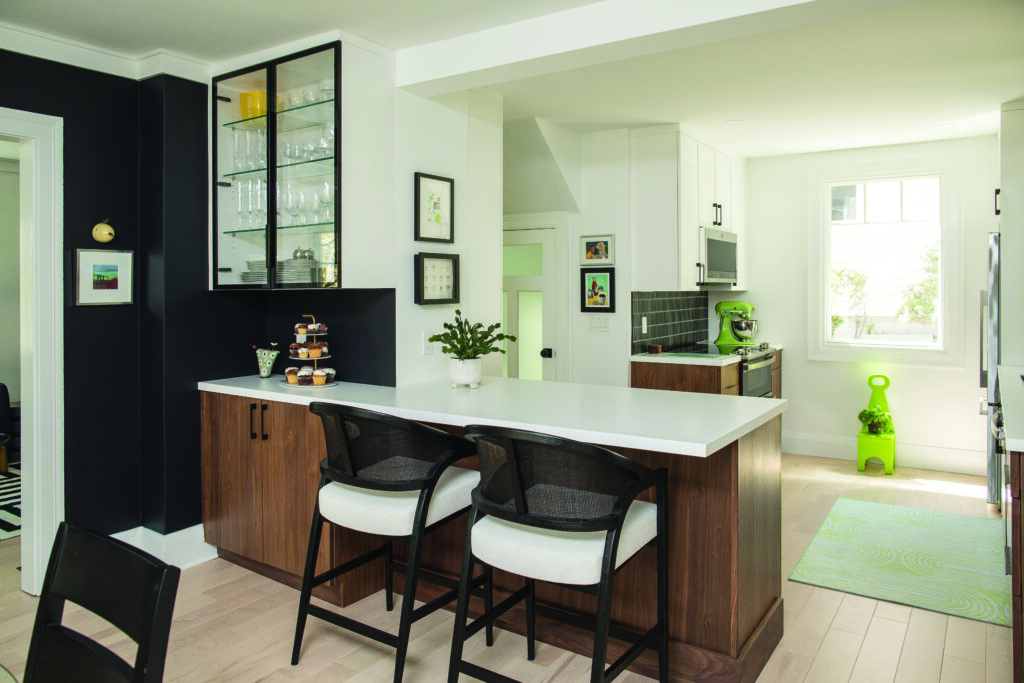
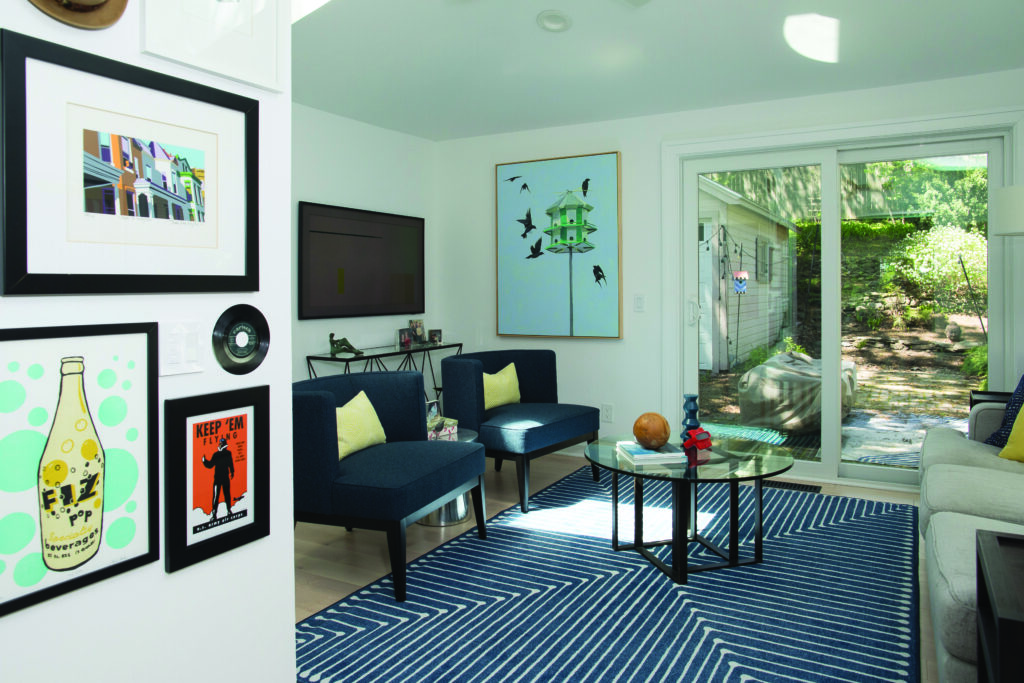
That sensibility is evident throughout the home. Walls have been opened to create flow between the kitchen and dining space. An awkward diagonal entry was removed entirely. A former attic door has been repurposed. Even structural limitations, like a necessary beam or chimney column, have been embraced as design elements rather than obstacles.
Wojda’s aesthetic leans toward mid-century modern, but the home resists any single definition. Much of what fills the space is deeply personal: a chair that belonged to her mother, artwork from local and regional artists, pieces collected over time rather than purchased all at once. “I’m very sentimental,” she says. “If I like something, I just like it.”
That philosophy extends beyond the interiors and into the way she experiences the neighborhood itself. Like many residents of Nunda Boulevard, she quickly discovered that the appeal of the street goes far beyond its architecture. From holiday traditions like an annual visit from Santa emerging from the woods of nearby Cobb’s Hill Park to informal gatherings along the boulevard’s grassy median, the neighborhood retains a sense of continuity that feels increasingly rare.
“People love this neighborhood, and once they move here, they stay here,” she says.
Less than a year after moving in, Wojda is still settling into the rhythms of both her home and the neighborhood. There are still projects ahead, but the groundwork is firmly in place. And like so many homes along Nunda Boulevard, hers now carries both history and a distinctly personal imprint, proof that even within a century-old neighborhood, each chapter can feel entirely new.
This article originally appeared in the July/August 2026 issue of (585).
Views: 441