

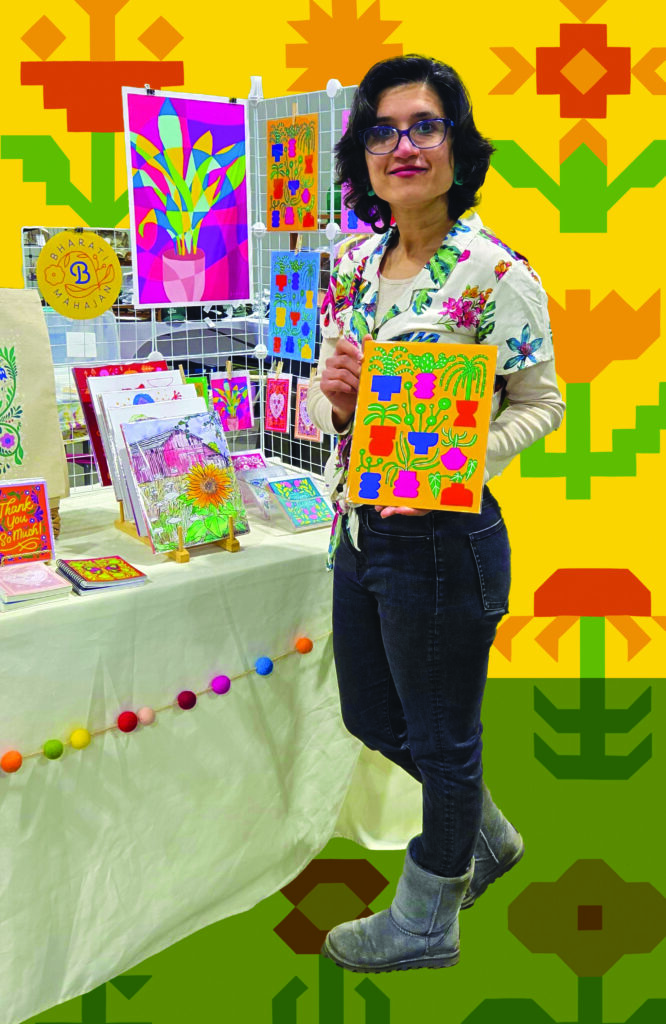
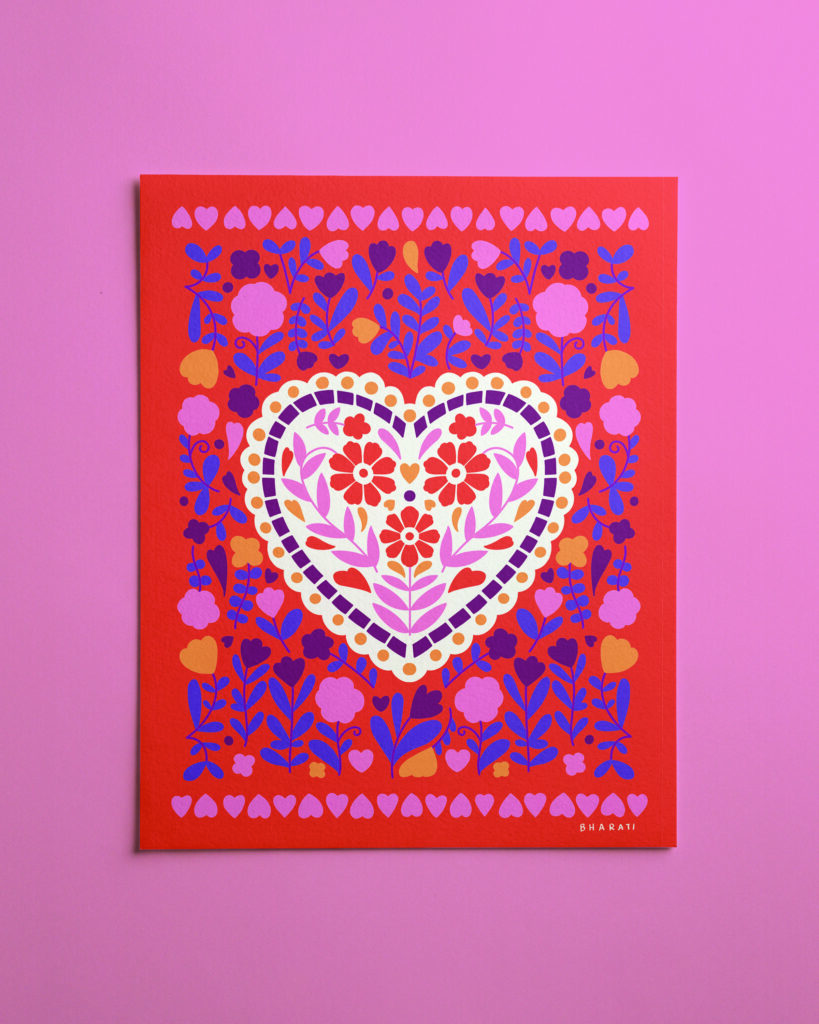
Playful is the first word that comes to mind when you look at Bharati Mahajan’s art. Her work is bold and colorful with a folk-art flair that radiates joy. Read our Q&A with Mahajan to learn about her process and inspiration.
Tell us about yourself and how you chose illustration and art as a career.
My path has been anything but straight. I started out in graphic design, moved into design leadership, and later worked in UX [user experience design] and digital product design. Somewhere along the way, I found my way back to illustration.
That winding path turned out to be a gift. Working across different, collaborative fields taught me that great work rarely happens in a silo, and I bring that same spirit of collaboration to every illustration project I take on. My design background also gave me a deep appreciation for research, typography, storytelling, and composition—all of which continue to shape how I see and make work today.
I’m entirely self-taught as an illustrator. At my core, I’m a visual person, and illustration gives me a way to express things I sometimes can’t quite put into words.
Today, I work as a freelance illustrator, taking on editorial illustration, visual identity, and other creative projects. I also create and sell my own products—including totes, notecards, notebooks, and art prints—through local cafés, pop-up markets, and my online shop.
I also teach art to children at Syracuse Chinese School, which has been a really rewarding way to stay connected to the local community.
I’d love to know about your process and the tools you use—and what fuels your creative spark.
I like to keep things fresh by moving between traditional and digital media. On the traditional side, I work with ink, watercolor, acrylic, painted paper, and collage—glue and scissors included. Digitally, I work primarily in Procreate on my iPad.
Moving between the two keeps me from getting too comfortable. I love the unpredictability and texture that come from working by hand, while digital tools give me the flexibility to experiment, edit, and build on those ideas. I often find that the tension between experimentation and control is where the most interesting work happens.
As for what fuels my creative spark, I find inspiration in changing my scenery: museums, libraries, botanical gardens, cafés, new places, new cultures, and new people. Bright colors always catch my attention, too.
But most of all, I’m inspired by projects that feel connected to the community I’m part of and give me an opportunity to tell stories that matter.
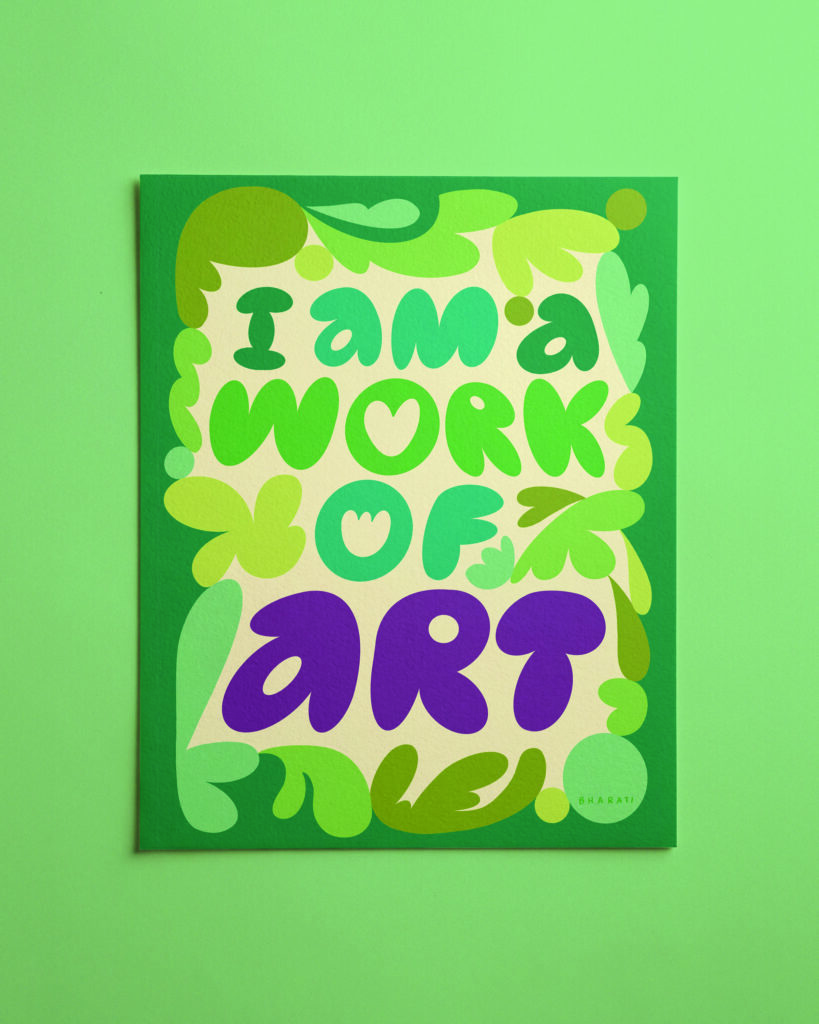
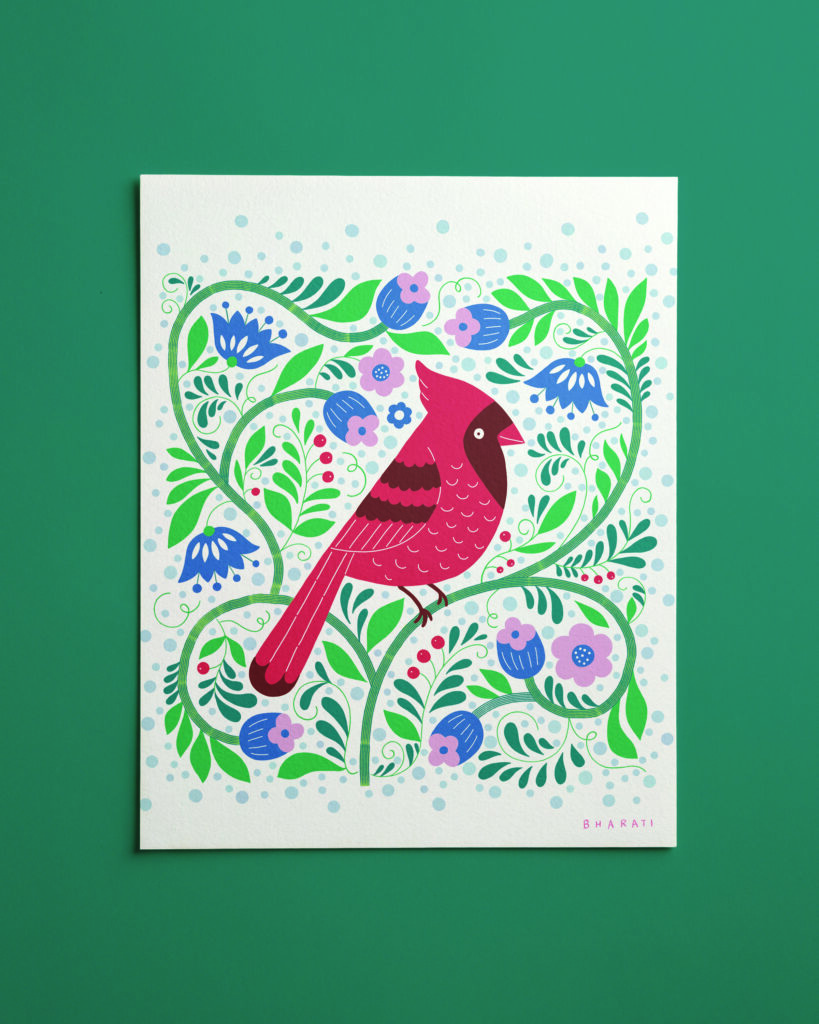
You’ve mentioned being “passionate about capturing the quiet beauty, rhythms, and stories found in nature and gardens.” How does the natural world shape your art and your life?
I love long walks in nature, and I try to get up to the Adirondacks to camp whenever I can. We’re lucky to have so many beautiful lakes, parks, and natural spaces around us, and the colors, textures, and small details I notice there have a quiet way of finding their place in my work.
A few years ago, I started growing native plants in my backyard, and it has brought me more joy than I expected. Watching new visitors arrive—hummingbirds, monarch butterflies, bees, and other creatures—feels like a small miracle each time.
Drawing and painting those moments is my way of paying attention. It slows me down and helps me notice things I might otherwise overlook. And hopefully, when I share those observations through my work, some of that joy reaches other people, too.
You’ve mentioned Robin Wall Kimmerer as an inspiration—someone our readers may recognize from a (585) interview a few years back. Why does her work resonate with you, and who else inspires your life and art?
Robin Wall Kimmerer’s work has had a lasting impact on me, especially her book The Serviceberry. Her ideas about reciprocity, community, and the gift economy—the idea that real wealth can be found in the quality of our relationships rather than simply in what we accumulate—feel both radical and necessary right now.
Those ideas have shaped how I think about my work and why I make it. I’m increasingly interested in the question of how art can create connection and contribute to a sense of belonging.
As for who else inspires me, honestly, life does. I know that sounds broad, but I mean it sincerely. Every day, something new catches my attention, and inspiration doesn’t always come from a famous artist or public figure.
The people who inspire me most are often the ones closest to me: family, friends, acquaintances, and members of my community—people who are following their hearts while also finding ways to support and care for one another.
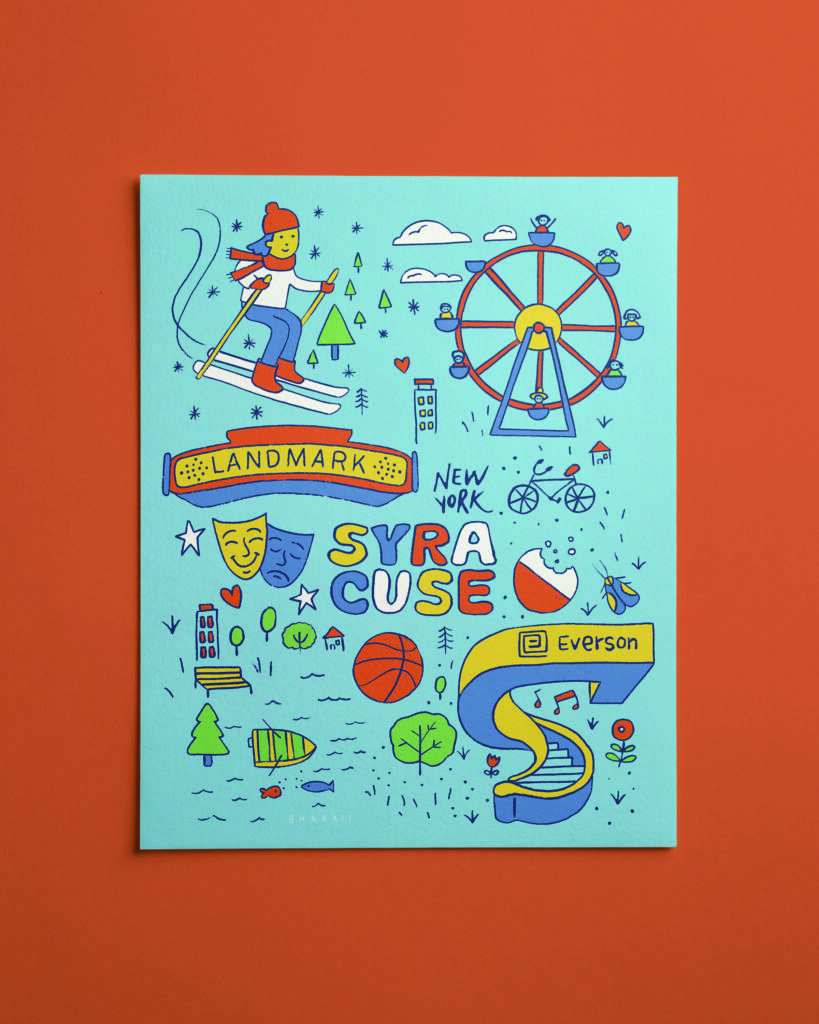
In 2025, you were selected as the artist for the Syracuse-Onondaga Food Systems Alliance (SOFSA) annual Food Justice Gathering. Tell us about that work and why it was meaningful.
The theme of the 2025 Food Justice Gathering was Interwoven, and I created a series of illustrations that were used across the event’s visual materials, including the poster, flyers, stickers, tote bags, and presentation slides.
It was exciting to see the illustrations carry through the entire gathering and help create a cohesive visual identity for the event. But what made the project especially meaningful was how closely it aligned with what I believe about the role of art in a community.
Alongside creating the artwork, I also helped lead a postcard-making-and-writing activity. We carved our own stamps using linocut, sat together, and wrote to our elected officials. It was a simple but powerful experience—people making things together, sharing a table, and taking action around issues they cared about.
To me, that’s where art can be especially powerful: not just as something to look at but as a way to bring people together, start conversations, and remind us that genuine care for one another is a source of strength.
What’s coming up that you’d love readers to know about?
I recently finished an editorial illustration project for Hamilton magazine, and I’m looking forward to starting work on my next collection.
I’ve also been fortunate to collaborate with some amazing people here in Syracuse on community-based projects, including garden signage for Alchemical Nursery, the communication design for the Lipe Art Extravaganza, and illustrations for the Westcott Street Cultural Fair.
Those projects have made me realize how much I enjoy creating work that has a life beyond the page—work that becomes part of a place, an event, or a community.
So, my next bucket-list project is a mural. If you know of a space or organization that might be a good fit, I’d love to hear from you!
Some of the best projects I’ve been part of started with an unexpected conversation. So if you have an idea brewing—or simply think there might be an interesting way to work together—I’d love to hear from you.
You can find my work at bharatimahajan.com.
This article originally appeared in the November/December 2026 issue of (585).
Views: 19