


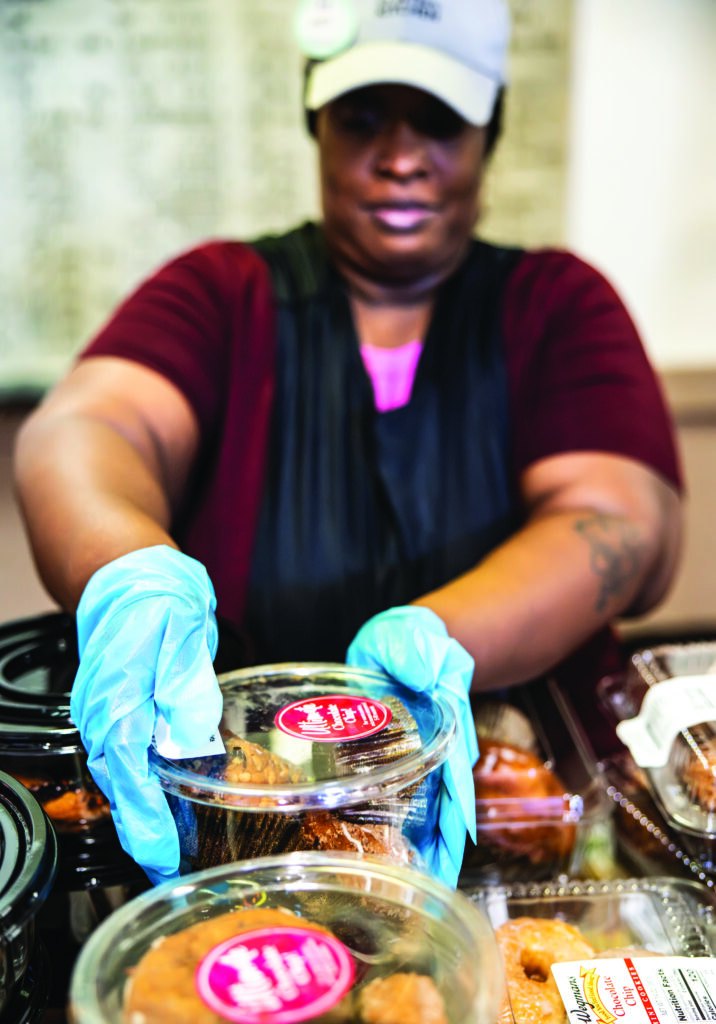
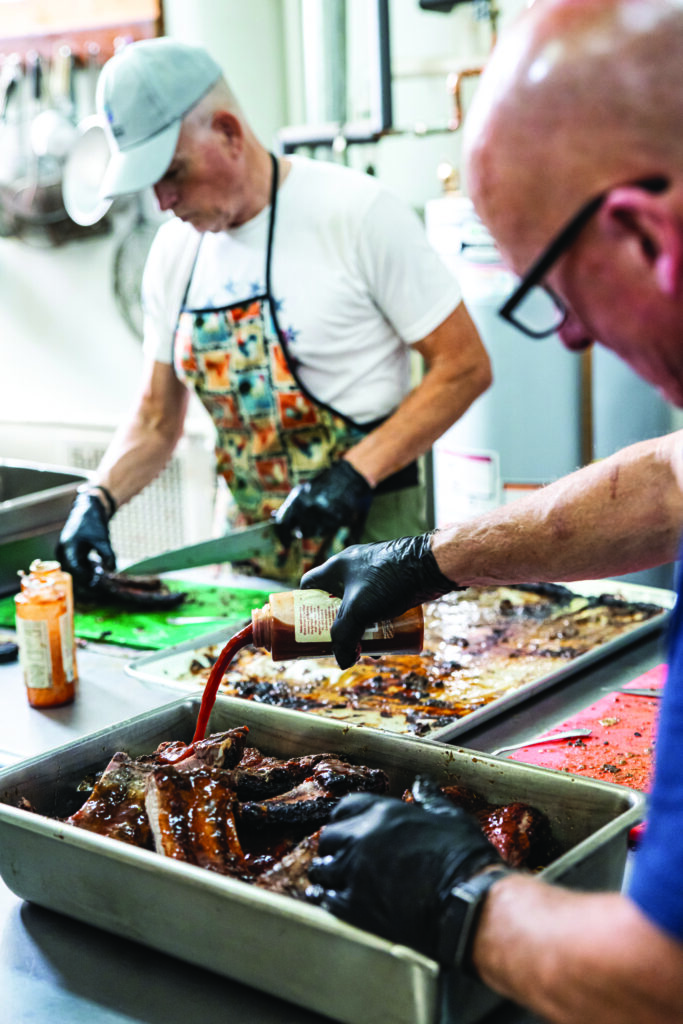
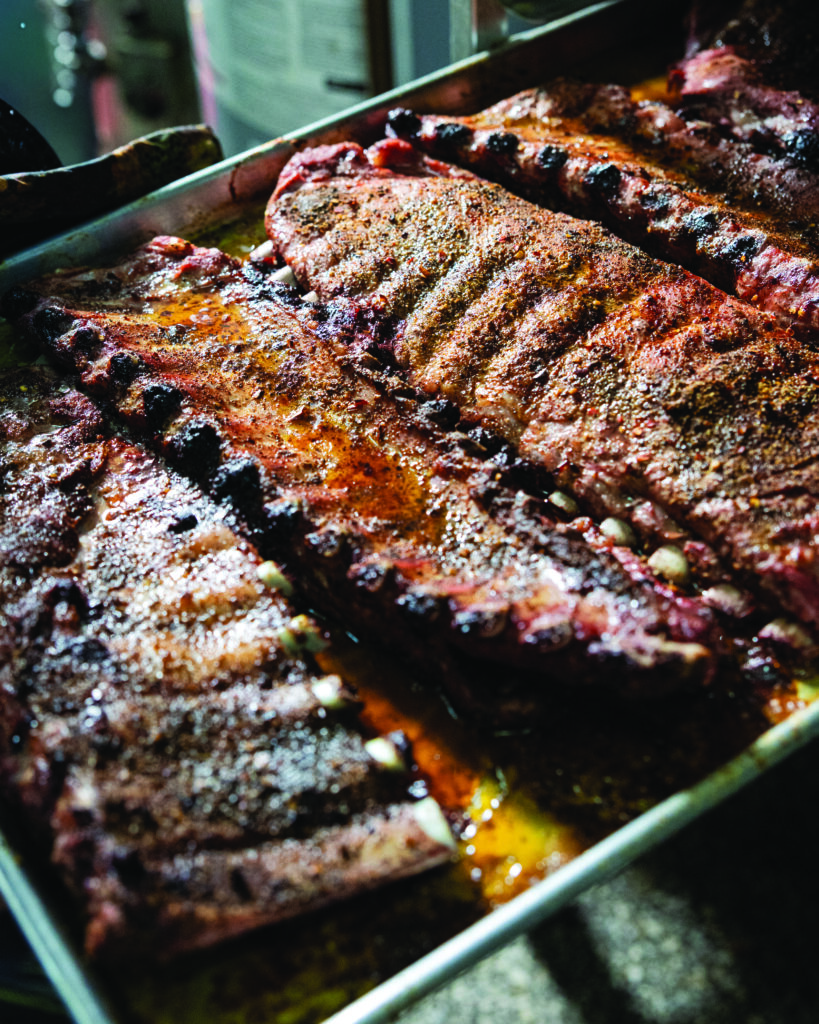
Six mornings a week, long before the lunch line begins to form, the staff and volunteers at St. Peter’s Kitchen tie on their aprons and get to work preparing lunch for the 300-plus guests who will walk through its doors midday. Outside, the aroma drifting from the kitchen evokes Thanksgiving dinner. Inside, it’s even more inviting as team members move quickly from station to station while smiling and laughing with one another as they work.
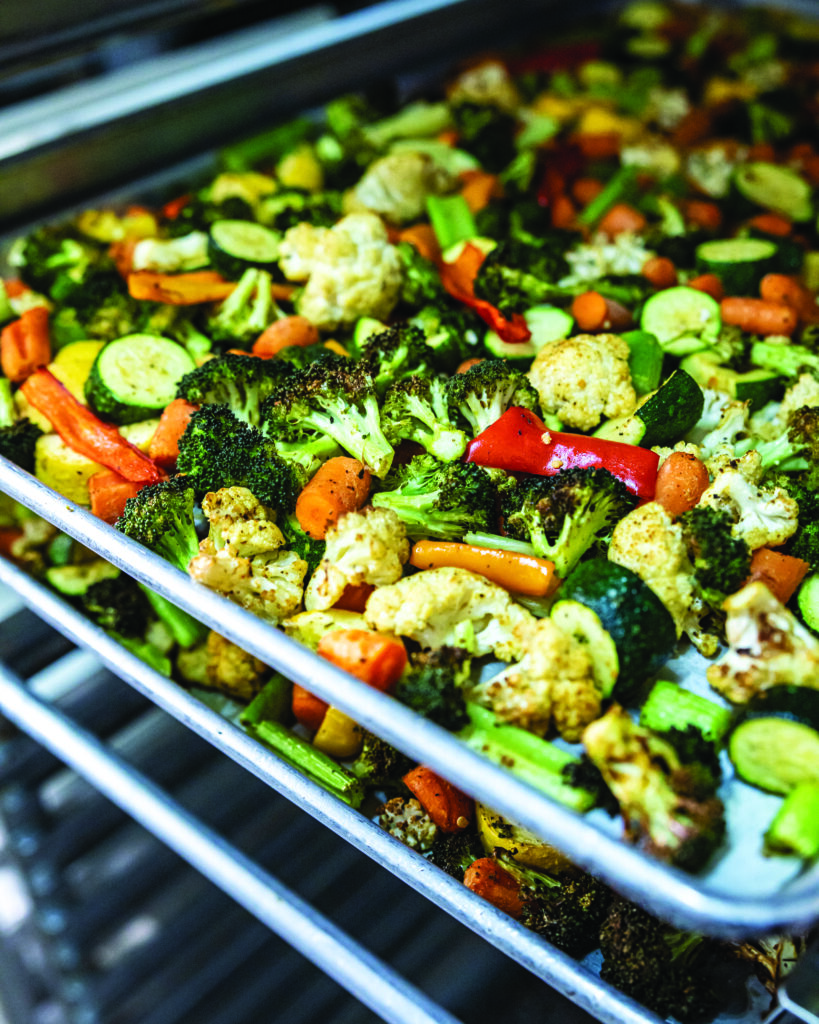
On this particular morning, whole chickens are butterflied, seasoned, and slowly roasted while pasta salad comes together in oversized mixing bowls. Fresh vegetables are washed, chopped, and tossed into salads. By noon, the food will be plated and served as part of St. Peter’s Kitchen’s daily lunch program, providing nutritious meals to neighbors facing food insecurity.
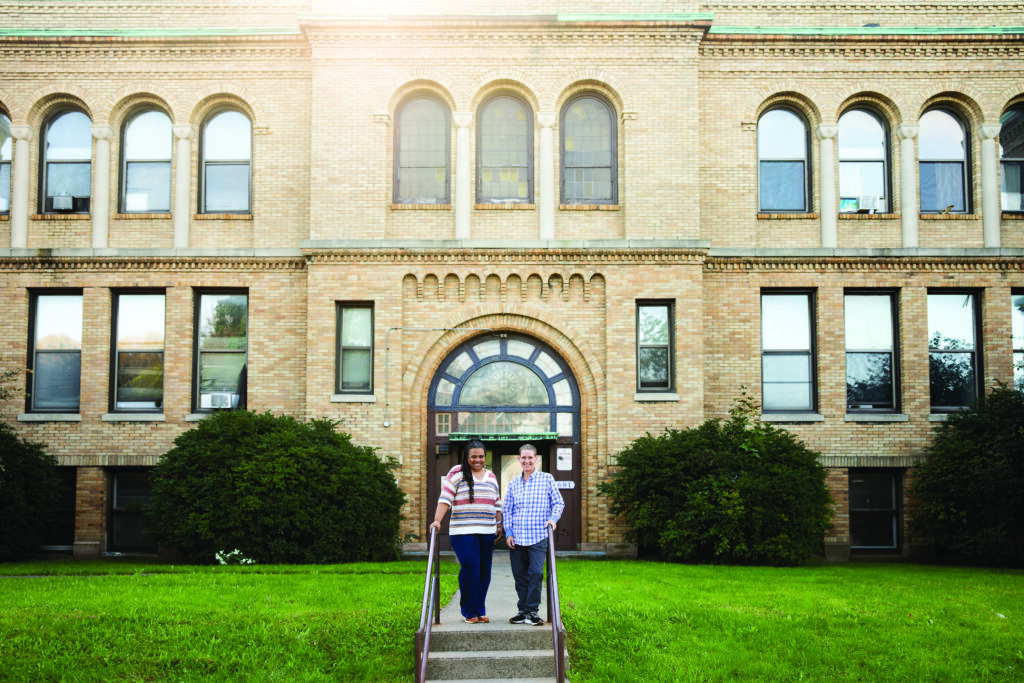
The bustling operation is housed in the former parish school on the historic Saints Peter and Paul campus, a National Register of Historic Places property on the edge of Rochester’s Susan B. Anthony neighborhood. While the kitchen’s mission is focused on feeding the community today, the building itself has been serving Rochester’s west side for generations.
Church of Saints Peter and Paul Complex
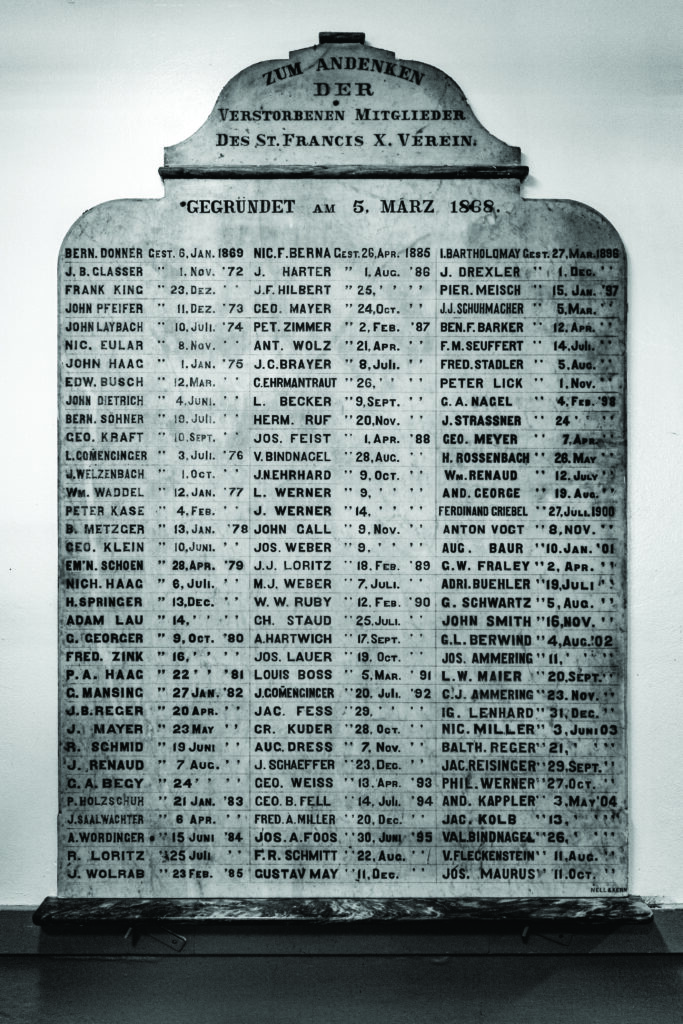
Saints Peter and Paul Parish dates back to 1843, but the building on Brown Street was actually its third home, a grand final chapter built when the parish outgrew two earlier churches on the same three-acre site. Construction finished in 1911, with a school following in 1912 and a rectory and garage rounding out the complex in 1926. The church alone could originally seat 1,100 people, making it the largest building on the property by a wide margin.
The building’s overall design is modeled on the Basilica of St. Paul Outside the Walls, one of the oldest church sites in Rome. Its signature feature, a 145-foot bell tower, is a near-copy of the tower at the Cathedral of San Martino in Lucca, Italy. Even the bells have history—the three housed in the tower today were salvaged from the parish’s original 1842 church, and cornerstones from both that 1842 building and its 1859 successor are embedded in the current church’s walls.
The school building on campus opened in September 1912 and, like the church, is in the Italian Renaissance style. Once filled with classrooms, today the building’s upper floors have been converted into twelve apartments, while the kitchen continues its original purpose, now providing meals to the community for more than four decades.
Compassion in action
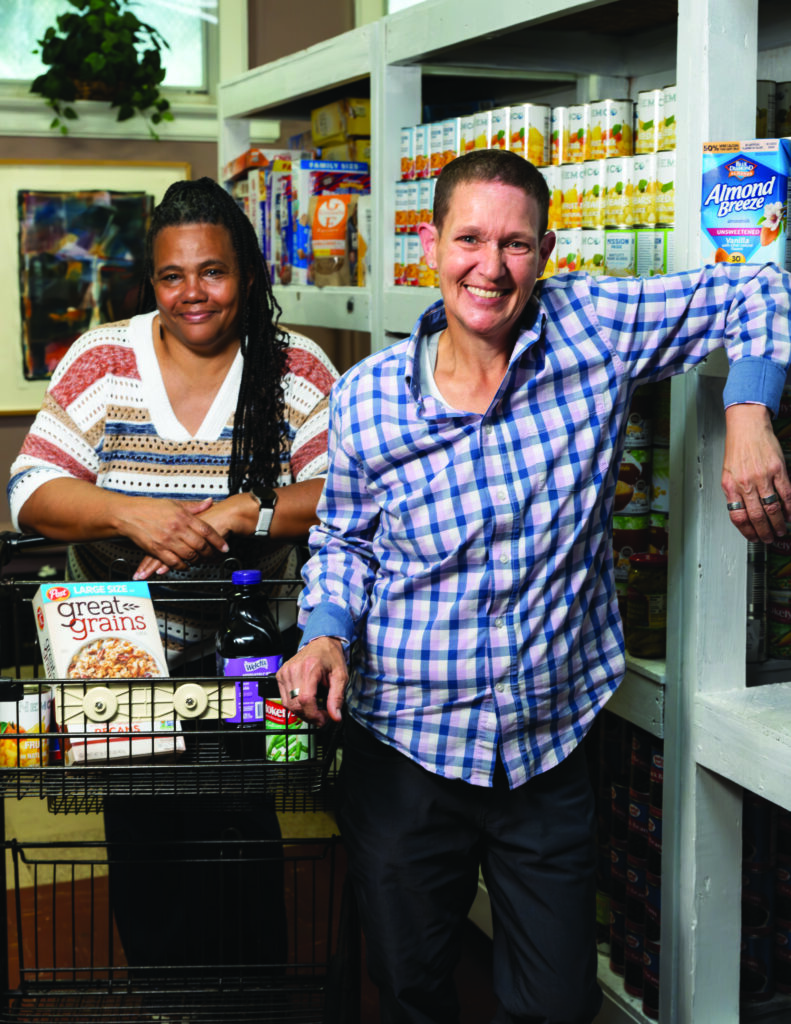
St. Peter’s Kitchen has been serving meals out of the school’s basement since 1982, when it started as a simple soup-and-sandwich line. Leading the organization is executive director Dr. Nicole Gibbons, whose decades of experience in food service and nonprofit leadership guide St. Peter’s Kitchen’s mission, while Amy Mincer, the community services director, ensures guests have access to food, community resources, partnerships, and support services.
“We used to serve just soup and a sandwich, but we now offer a five-course meal,” says Gibbons. “We serve anywhere from 300 to 450 lunches in one hour, between 12 and 1 o’clock, and it’s run mostly by volunteers who are dedicated to coming in every day. We wouldn’t be able to operate without them.”
The impact of St. Peter’s Kitchen on the Rochester community is extraordinary. During its 2025–2026 fiscal year, the organization served more than 213,000 lunches, supported nearly 2,000 pantry households, and accepted more than 447,000 pounds of donated food.
In addition to its lunch program, St. Peter’s Kitchen also serves as a lifeline for the community by operating a client-choice food pantry, delivering food to homebound residents, and connecting individuals and families with resources ranging from housing assistance to holiday meals and school supplies.
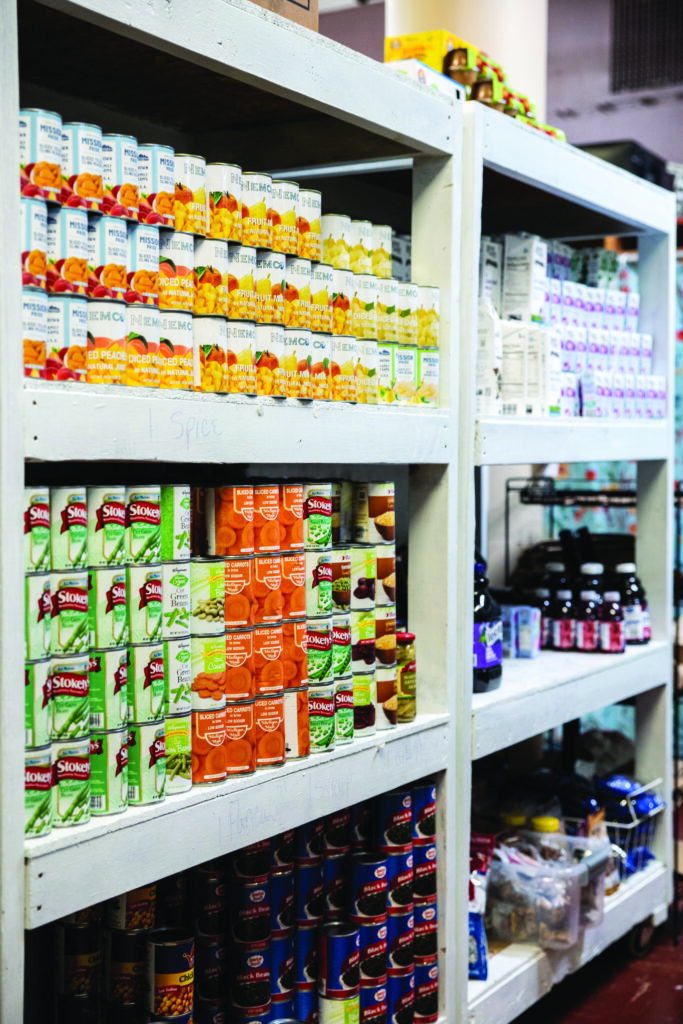
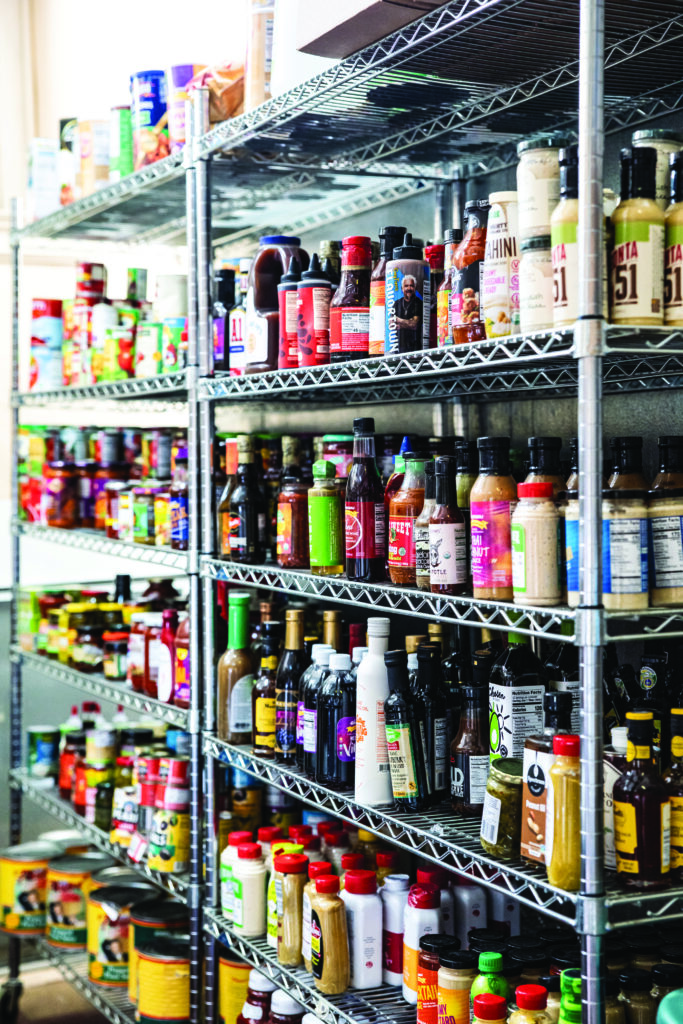
“The food pantry is a self-choice model,” explains Mincer. “Guests pick their own items rather than receiving a prepacked box. The pantry serves seven west-side zip codes, soon to be eight. Gluten-free and plant-based options are available, along with kitchen staples like can openers and pots and pans.”
Gently used shoes are always in high demand and offered to guests in need. “The first thing I do, as a social worker, is look at their shoes when they come in,” Mincer says. “Your feet are one of the most important things, which is why I keep a small stash of donated shoes on hand for anyone who needs them.”
The holiday season brings an expanded slate of programs, providing meals, gifts, and support that help make the season brighter for hundreds of local families. Through its pantry program, families can receive Thanksgiving meal baskets complete with a turkey or chicken and all the traditional fixings. In December, the basement transforms into a version of Santa’s workshop where parents, grandparents, and guardians can select new toys, books, blankets, and coats for children, allowing families to experience the joy of giving even during difficult times.
Holiday meals, complete with traditional favorites, fellowship, and live music, bring neighbors together to celebrate the season. Many guests linger long after their dinners are finished, talking with volunteers and one another before heading back into the neighborhood. More than a century after it first opened its doors, the former school continues to fulfill its original purpose of bringing people together and serving the community. “This is a place for nourishment and hope,” says Mincer. “It’s a safe place. We’re like family here.”
For more information about St. Peter’s Kitchen, including how to volunteer and donate, visit stpeterskitchen.org.
This article originally appeared in the November/December 2026 issue of (585).
Views: 0