


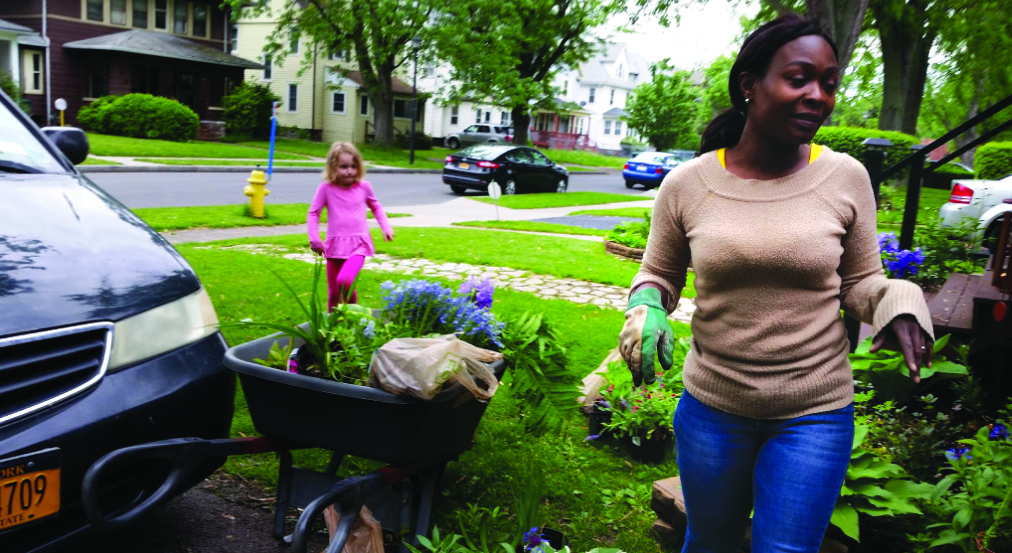
Rochester is home to a very special neighborhood beautification program. Blocks in Bloom transforms lower-resourced neighborhoods, one block at a time, by helping residents plant front yard flower gardens. Volunteers from the Rochester community and certified Master Gardeners from Cornell Cooperative Extension work with residents to prep, plant, and maintain perennial gardens that will enhance the appearance of neighborhoods for years to come. Now in its twelfth year, Blocks in Bloom has served more than 100 blocks, and 1,000 households have participated. The program improves the way neighborhoods look, but it also fosters relationships among community members, which is very important to the program’s founder, Kathy Lewis.
After becoming a Master Gardener herself, Lewis wanted to launch a project with a different model than a community garden. Although community gardens are great, she says, she wanted to try something different: “I had become fascinated by systems and policy change.” Lewis had worked in human services and with various local nonprofits for many years, and, as she envisioned piloting this program, she specifically wanted to work with people who were neighbors. Blocks in Bloom was designed to be a grassroots effort that combined her community organizing skills with her passion for gardening.
Blocks in Bloom was launched as a pilot program in 2014, starting with two blocks. “There was skepticism but not pushback” from local leaders, Lewis explains. She and another Master Gardener identified neighborhoods with fewer resources, and the program quickly grew from there. In the beginning, Lewis and her fellow volunteers had to do a lot of outreach to recruit more block participation, but now new blocks are signed up through word of mouth. Cornell Cooperative Extension’s mission is to bring fact-based gardening knowledge to the public, Lewis explains, and this program is just one way that CCE shares its expertise. CCE’s Master Gardeners are trained volunteers who work in partnership with their county Cooperative Extension office to extend information throughout the county.
For a block to participate in the program, first there must be someone on the block who is willing to act as a block captain and sign up a minimum of six neighbors. Typically, eight to ten house- holds will end up participating. Two volunteer mentors are assigned to each block, and they act as coaches. “In the beginning, mentors were all Master Gardeners,” Lewis says. But as the program expanded, former block captains became mentors as well. The block captains were matched with Master Gardeners until they gained some experience. This “really tore down the lines between being served and serving,” Lewis says. There is a new class of mentors every year. “Everything we do starts with an experiment. We get lots of feedback.” One former block captain is a teacher who had her five-year-old students learn about Blocks in Bloom as a class project. “We went to the kids’ presentation, and some of the parents wanted to sign up.”
The program runs on volunteer initiatives and the hard work of neighborhood residents. All the materials and plants are provided to residents at no charge, and both homeowners and renters can participate. “If you have a front yard, that’s your space,” Lewis says. Volunteers visit the neighborhood gardens periodically during the growing season to help with maintenance.
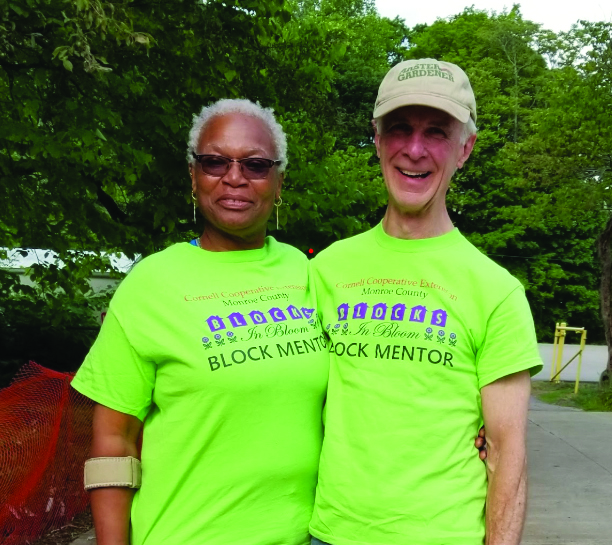
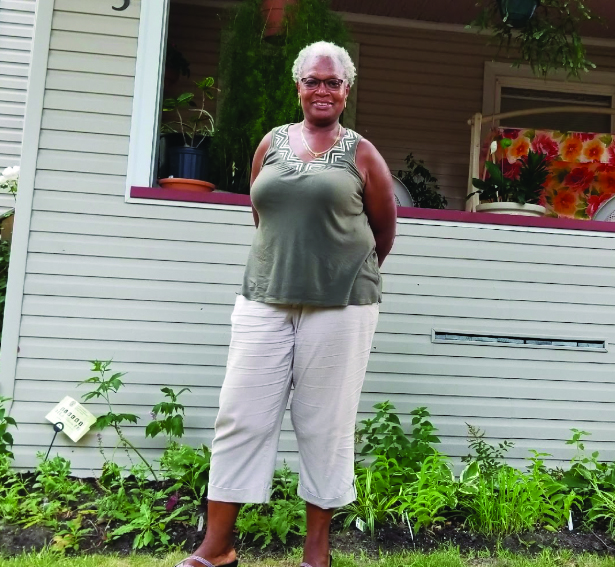
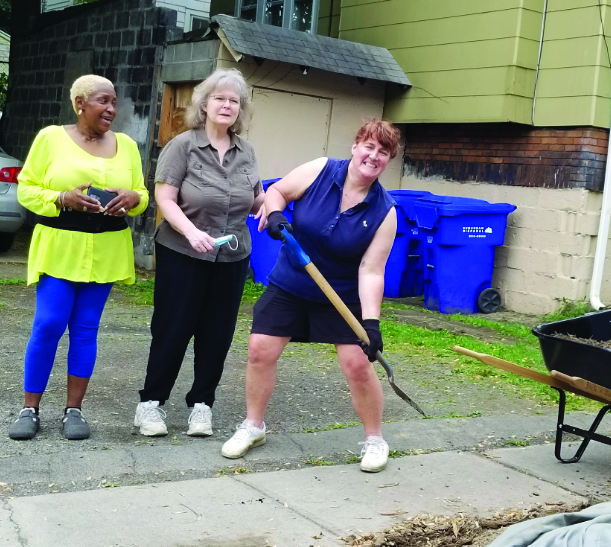

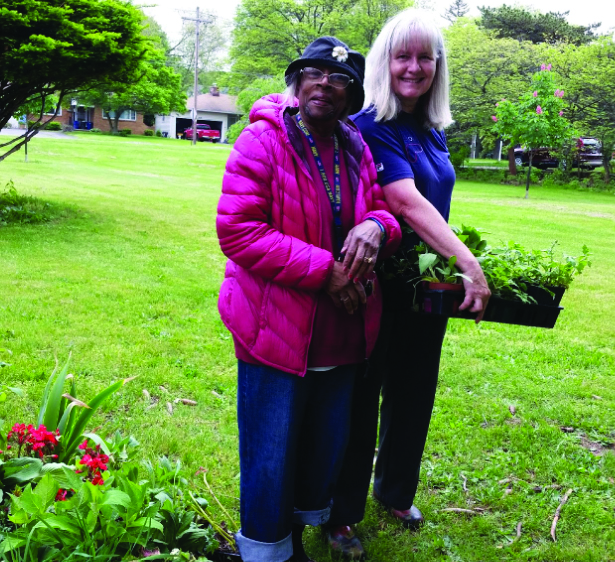
Potting parties, where volunteers sort, inspect, repot, and label plants, are held in the spring. Blocks in Bloom meets four times per year, and meetings last only one hour. As a veteran of non-profit work, Lewis was burned out on excessive meetings and is now enjoying retirement, so this is by design. There is an annual ice cream social for volunteers and a “celebration supper” potluck in September in Highland Park’s Olmsted Lodge that includes a free tour of the Lamberton Conservatory. At this event, people from different blocks can meet each other, and participants have an opportunity to present their accomplishments. In December, a holiday event takes place that is made possible by the Rochester Garden Club. Participants make holiday door decorations from donated greens, ornaments, and ribbon. People bring their kids and grandkids, Lewis says, “and make amazing things.”
Because the Blocks in Bloom program is based on a unique model developed by Lewis and the other volunteers, they have made it available for others to replicate. The program has won many awards, both national and local, including a Community Greening Award from the American Horticultural Society and an Environmental Innovation Award from the Seneca Park Zoo Society. “We applied for awards specifically to get publicity for replication,” says Lewis. Blocks in Bloom has now been replicated in several small communities and in Syracuse. Free training materials are available for communities looking to replicate the program.
The donated plants come from a variety of sources. The program likes to “put the word out among everyone,” Lewis says, to do what they call “plant raising.” Local gardeners, Lowe’s, the Rochester Garden Club, and other clubs donate most of the plants. The City of Rochester has been very supportive of the program, she says, and it is a major partner in a variety of ways. The city supplies compost, mulch, work gloves, and flats of annuals. Volunteers span all ages, from kids to retirees. The plants the program needs most are “tough-as-nails perennials,” she says. Their favorite plants to receive as donations are any kind of hardy daisy, daylilies, coneflowers, rudbeckia, and asters, as well as shade perennials like hostas, coral bells, Lenten rose, and cranesbill (perennial geranium). “We smile big smiles when people donate those,” she says.
Among the ripple effects from this program are the relationships people build. Neighbors get to know each other and talk, and many have gone beyond just talking about gardening and have become friends. Sometimes neighbors also come together to tackle other neighborhood problems after working together on Blocks in Bloom—for example, having speed bumps put in or having a vacant dilapidated house torn down. One block captain decided to create a garden out of a run-down area at the end of a dead-end street. “We do keep in touch with blocks that want to keep in touch,” Lewis says.
Lewis herself still mentors a block almost every year and deeply values the connections she makes through the program. “I would never get away from that,” she notes. “It really gives purpose to my life.”
To get involved, visit monroe.cce.cornell.edu/horticulture/blocks-in-bloom.
This article originally appeared in the May/June 2026 issue of (585).
Views: 75